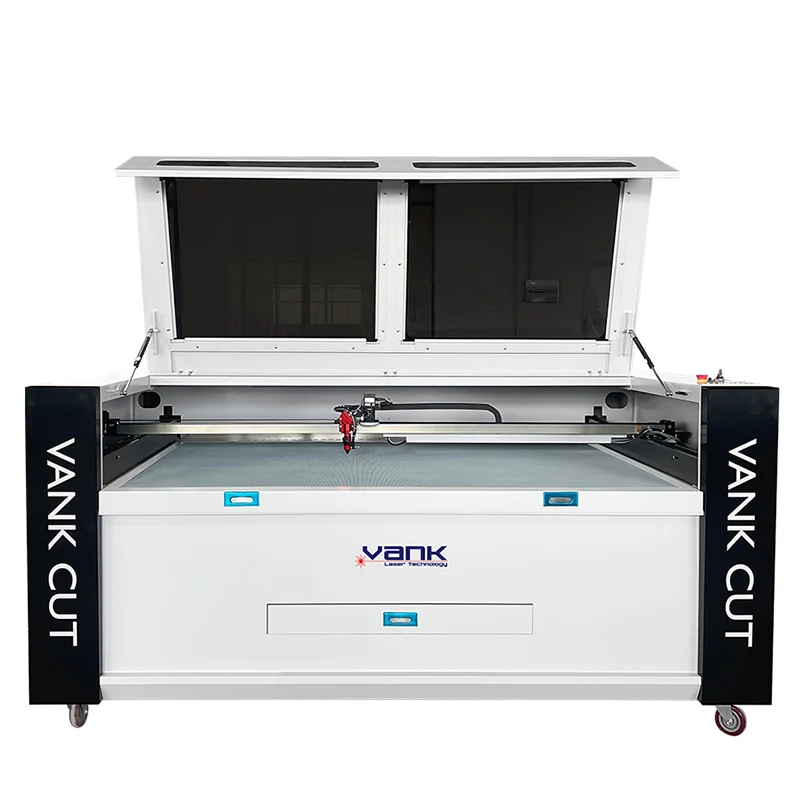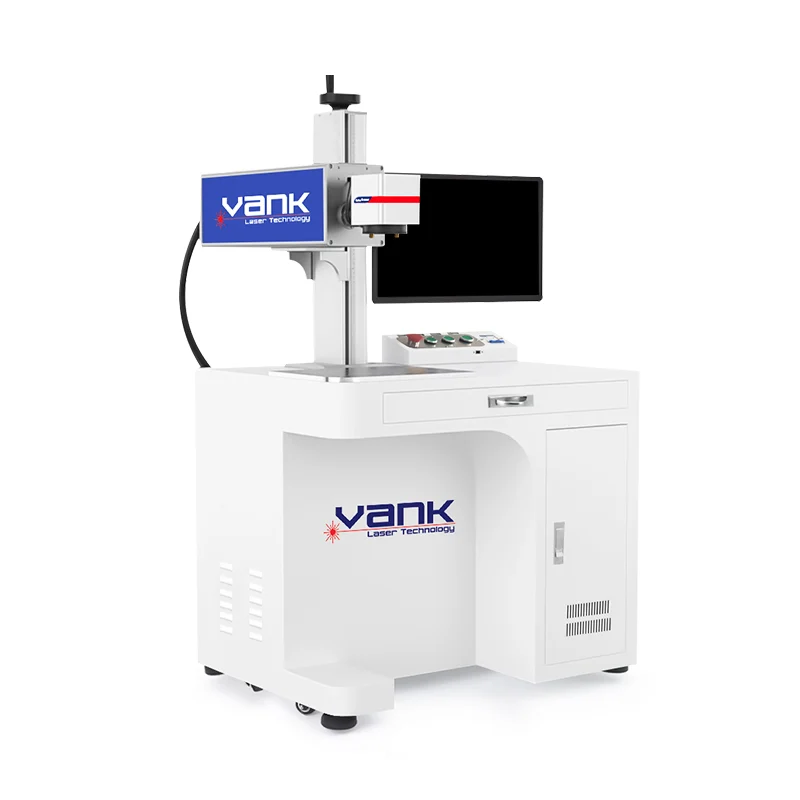



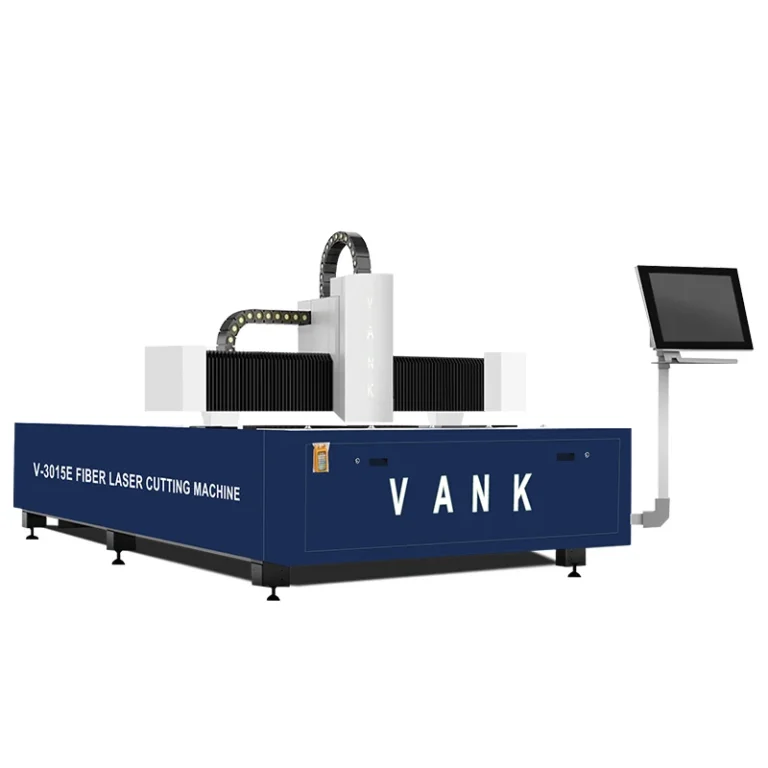
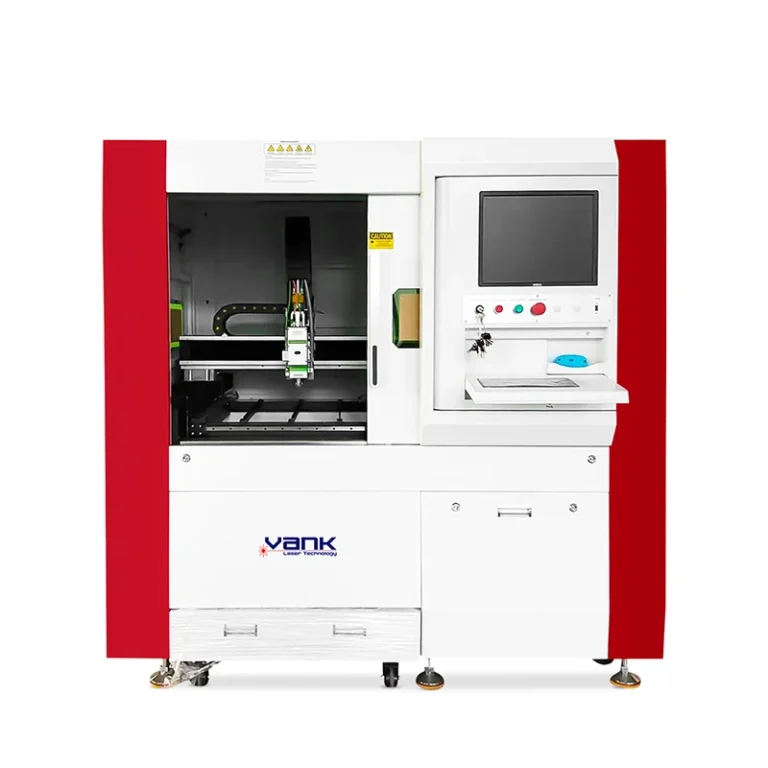
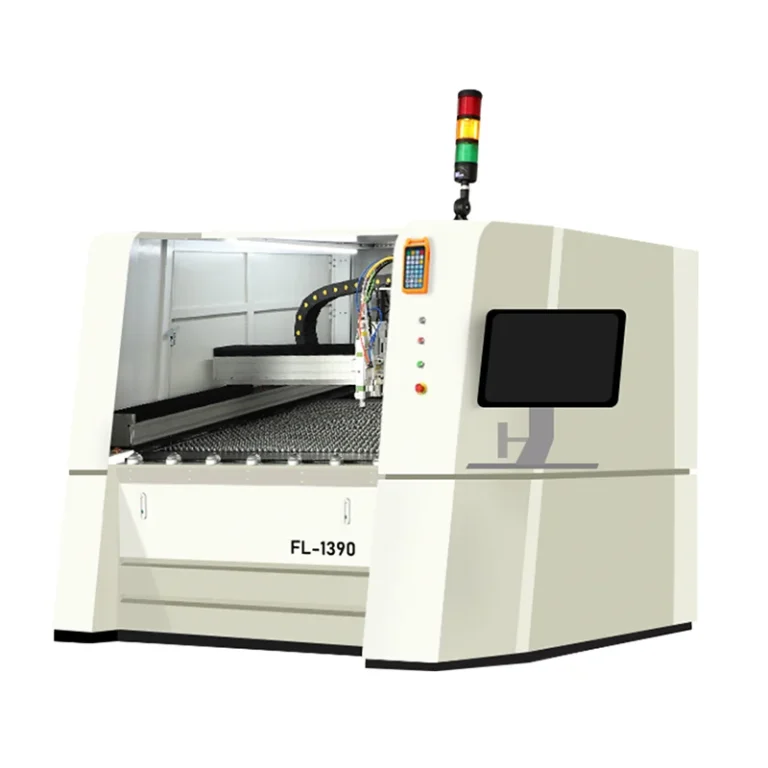
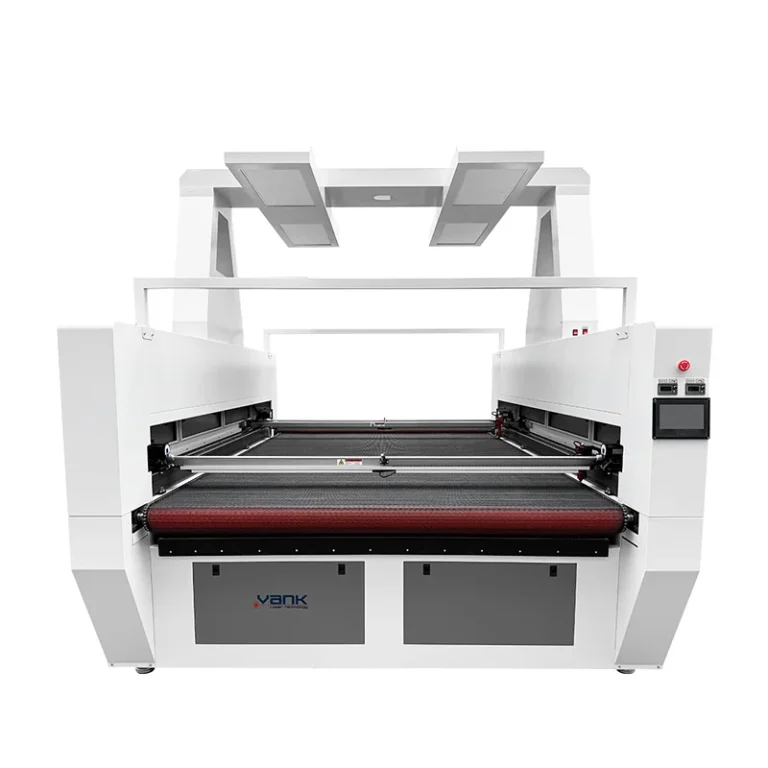
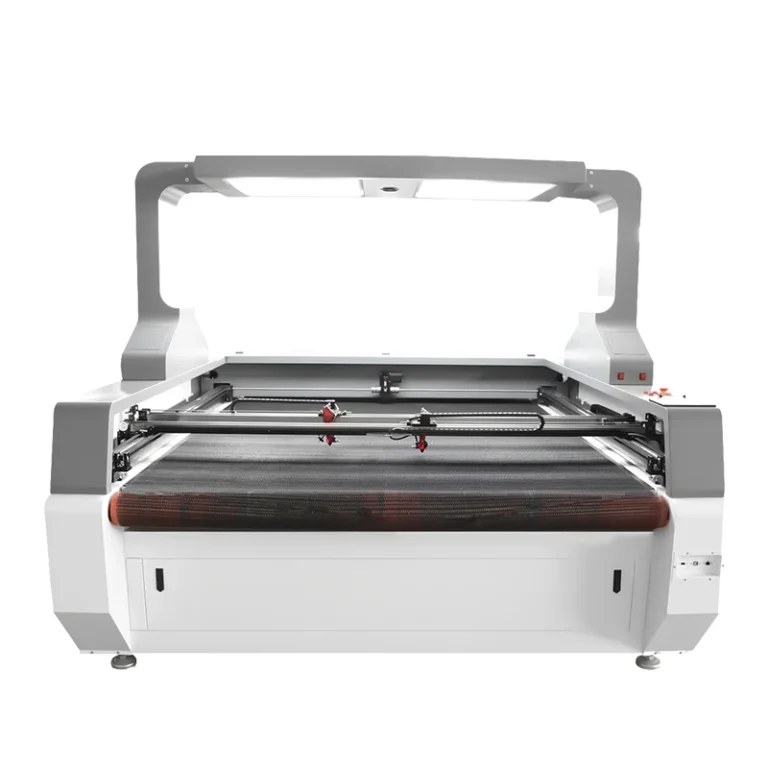
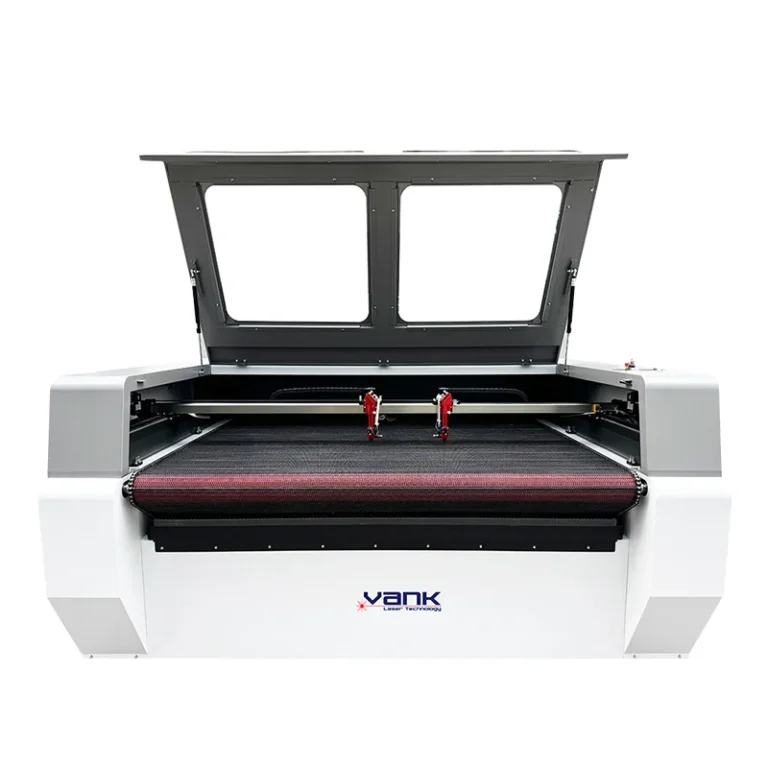
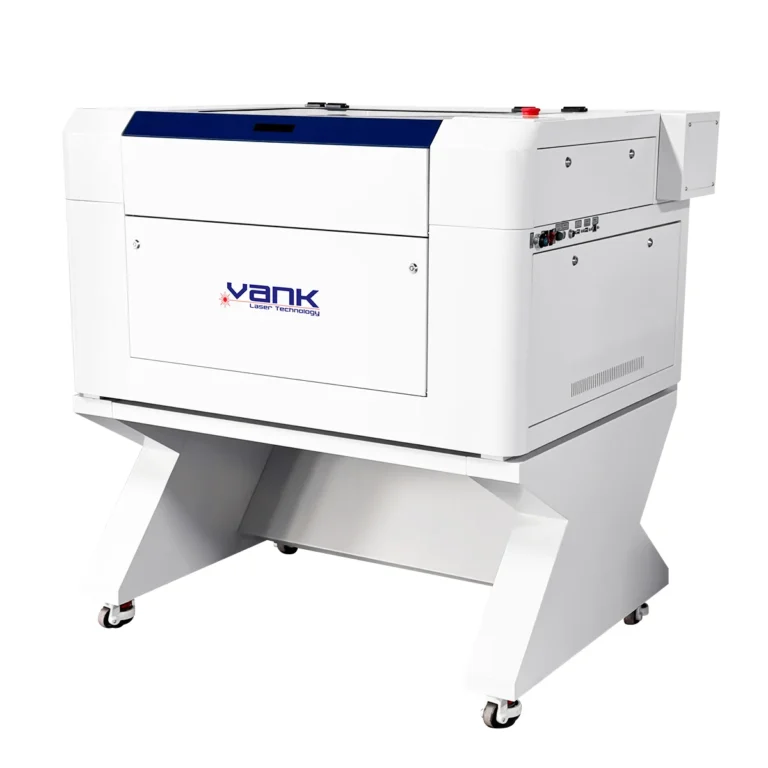
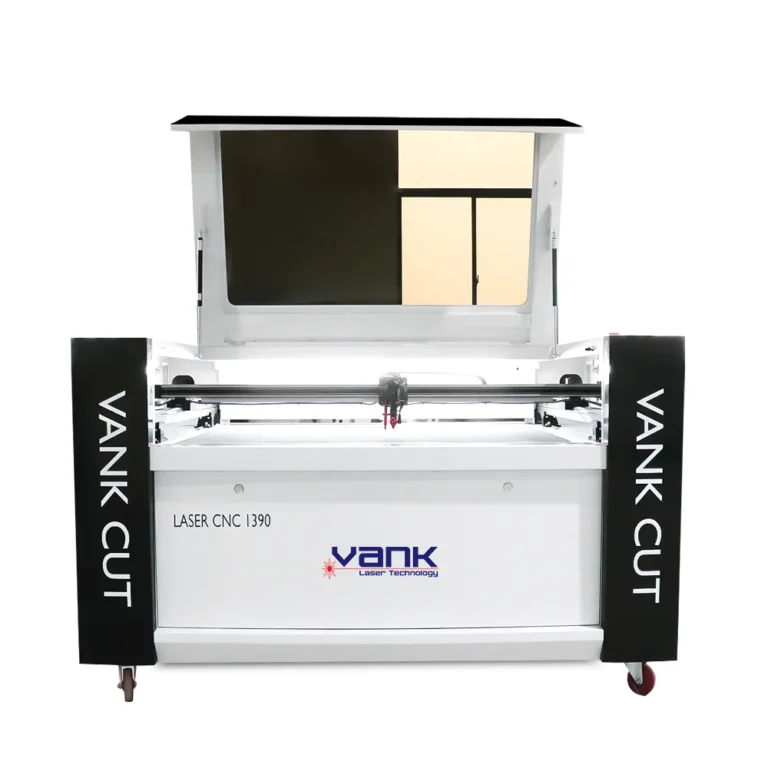
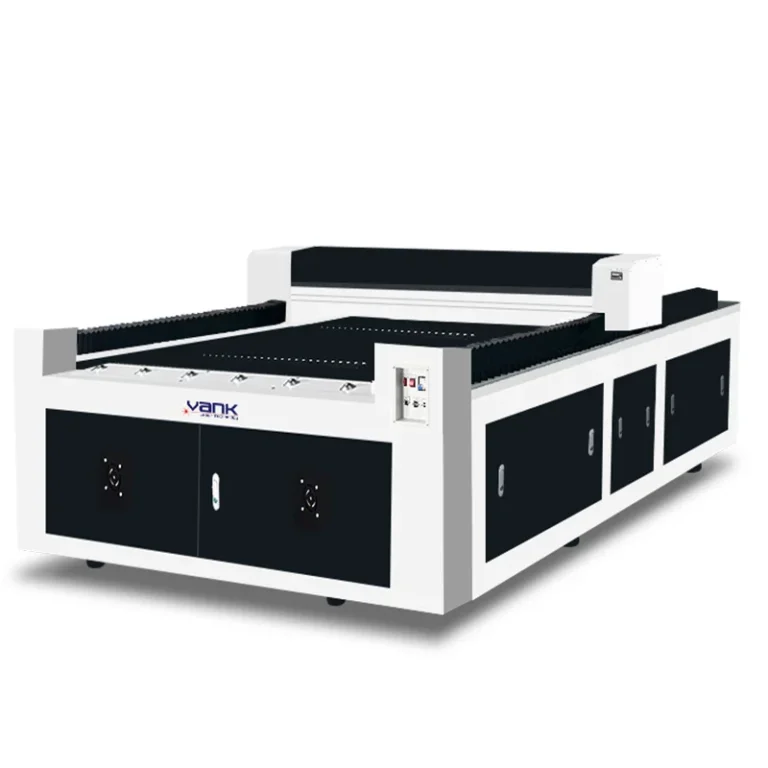
An industrial CO2 fabric laser cutting line should be justified by accepted output, changeover demand and integration with the factory’s printing, material handling and quality systems. Machine speed alone does not establish line capacity.
Define the current bottleneck, product mix, shifts, roll logistics, registration task, accepted-parts target, utilities and staffing. Then compare a fixed bed, conveyor, vision, single-head or multi-head configuration with the same production files and materials.
Fabric Laser Cutting Machines for Clothing and Textile provides the platform overview. This article focuses on line integration, capacity evidence, FAT/SAT and ownership boundaries for factory projects.
Why Factories Automate Fabric Laser Cutting
Manual, knife, die and laser processes each have valid uses. Automation is valuable when frequent style changes, printed registration, continuous rolls or labor-intensive handling create a measurable constraint.
CO2 cutting is noncontact, but edge behavior depends on composition. Some thermoplastics may seal; natural fibers and blends can char or discolor. Material identity, extraction, fire control and accepted edge criteria remain mandatory.
Build the business case from line-level evidence:
- Accepted parts per hour across loading, registration, cutting and unloading;
- Measured changeover time between representative styles;
- Roll utilization, nesting yield, scrap and restart losses;
- Registration error and reject rate for printed work;
- Labor by station before and after the proposed change;
- Utilities, consumables, maintenance and planned downtime;
- Cost per accepted part at routine and peak demand.
Approve automation only when the complete process, staffing and downstream capacity support the target output.
Factory Applications and Line Requirements
Sportswear and Sublimation Factories
Printed panels require the cutting process to compensate for scale change, local distortion, rotation and feed skew. Use production artwork, real prints and the normal roll workflow in the qualification test.
CO2 Laser Fabric Cutter with Auto Feeding and Vision Camera is a platform direction for roll-fed registration. Confirm usable width, camera field, calibration, feeder limits and accepted output.
Measure contour error at several positions, first-to-last-part consistency, indexing repeatability, cycle time and scrap during a representative continuous run.
Textile Printing and Soft Signage
Printing and finishing can change dimensions before cutting. The line specification should identify print method, ink, coating, curing, expected distortion, roll geometry and how artwork or fiducials reach the cutting software.
Vision must be qualified as a complete workflow from file import and calibration to contour generation, cutting and code or dimensional inspection.
Representative jobs include:
- Sublimation rolls from the normal printing process;
- Soft signage at maximum approved width;
- Printed flags with representative distortion;
- Display textiles with real coatings and inks;
- Advertising fabric with normal roll handling;
- Printed panels at production nesting density;
- Custom graphics over a representative shift window.
Prioritize registration evidence, feed stability and accepted output over headline laser power.
Garment and Apparel Factories
Apparel lines often mix sampling, short runs and repeat orders. Record CAD import, nesting, material staging, style change, cutting, sorting and bundle handoff for representative workflows.
A digital laser process can reduce die dependence, but the factory must still plan file control, approved parameters, operator permissions, part identification and downstream sewing capacity.
Size the system from the product mix, roll widths, shift demand and bottleneck analysis rather than an average daily total.
Lace, Embroidery and Applique
Fine or raised work needs stable support, controlled heat input, suitable lighting and measurable contour accuracy. Test minimum webs, internal cutouts, browning, residue and small-part retention.
1812 Top Vision Fabric Laser Cutting Machine is one vision-platform direction. Verify camera coverage, calibration, usable area and repeatability on real embroidery or print.
Compare automated trimming with the current process by accepted parts, rework, setup, inspection and labor, not by one demonstration sample.
Home Textiles and Furniture Fabrics
Curtains, upholstery and large panels emphasize usable width, roll weight, long-part indexing, material support, extraction and downstream handling.
Document these line inputs:
- Maximum roll width, diameter, core and weight;
- Sheet, roll or mixed stock and staging method;
- Representative nesting and repeat length;
- Blank or printed registration workflow;
- Accepted sets per shift and downstream capacity.
Use these inputs to define the conveyor, feeder, work envelope and utilities, then prove the result in a representative run.
Industrial and Technical Textiles
Filter media, insulation, composites and automotive textiles require exact composition, binder, coating and SDS review. “Technical fabric” is not sufficient material identification for laser approval.
Specify edge function, dimensional tolerance, emissions control, residue, particulate, duty cycle, traceability and downstream bonding or assembly requirements.
Do not process PVC/vinyl, unknown halogenated materials or any composite that lacks a qualified safety review.
Core Subsystems for an Industrial Textile Line
Roll Unwinding and Automatic Feeding
Specify the unwinder, tension control, edge guiding, conveyor and take-up as one material-handling system. Include minimum and maximum roll width, diameter, core, weight, elasticity and surface condition.
A feeder is qualified only after repeated indexing with the production roll.
Record:
- First-to-last-part dimensions over a representative run;
- Indexing error, skew, wrinkle and tracking limits;
- Loading, joining, restart and roll-change procedures;
- Usable conveyor width and belt-material compatibility;
- Accepted output, scrap and operator intervention.
CO2 Laser Fabric Cutter with Auto Feeding and Vision Camera is a product direction; the signed quotation must identify the exact feeder and acceptance limits.
Vision Registration for Printed Fabric
Define whether vision detects fiducials, printed contours, natural features or a complete overhead field. Include expected print distortion, lighting variation and material movement.
Specify the camera, lens, field coverage, calibration method, software correction, file path and measured tolerance across the usable area.
Use a qualification set covering:
- Sublimation panels with real distortion;
- Printed textile at different positions and rotations;
- Labels with minimum contour features;
- Raised embroidered patches under production lighting;
- Applique with actual backing and adhesive;
- Approved leather with documented composition;
- Soft signage at full width;
- Irregular printed parts over a continuous run.
CO2 Laser Cutting Machine with CCD Camera Visual is a platform reference. Do not carry nominal work areas from another model into the quotation.
Multi-Head Capacity
Multiple heads improve throughput only when nesting, head spacing and synchronized motion keep them productive. They can also reduce usable area or add collision and setup constraints.
Compare one and multiple heads on the same job using accepted parts per hour, changeover, scrap and intervention.
- Garment accessories with repeatable spacing;
- Labels with measurable registration limits;
- Patches nested for parallel work;
- Repeated textile parts at production density;
- Lace and applique with minimum features;
- Batch orders with representative style changes.
VankCut CO2 Laser Fabric Cutter with Auto-Feeding and Vision Camera is one direction; approve it through a timed one-head versus multi-head study.
Conveyor and Work Envelope
Confirm usable X/Y travel, conveyor width, belt support, focus range, camera limits, loading clearance and any area lost to multiple heads or fixtures.
Match the conveyor to:
- Maximum approved fabric width;
- Material mass and surface behavior;
- Roll diameter, core and feeder limits;
- Longest part and index sequence;
- Required feed and registration tolerance;
- Routine and peak accepted output.
Run first-to-last-part checks at normal tension and production speed.
Extraction, Fire Control and Air Quality
Extraction must be engineered from the approved materials, bed volume, duct route, pressure loss and local discharge or filtration rules. Odor alone is not an exposure assessment.
The line specification should cover:
- Required airflow and pressure at the machine;
- Capture zones, duct connections and cleaning access;
- Filter stages, monitoring and disposal responsibilities;
- Material-specific emissions and SDS information;
- Supervision, housekeeping and suitable fire response;
- Local environmental and occupational requirements.
Validate extraction during the representative process and define who supplies ducting, filtration, commissioning measurements and ongoing maintenance.
How to Engineer the Complete Cutting Solution
Start with a production specification, process map and bottleneck study. Price comparison is meaningful only after scope and acceptance criteria are aligned.
1. Material and Process Approval
List every trade name, composition, coating, ink, adhesive, backing, SDS and thickness range. Define edge quality, emissions, residue and downstream performance.
Process real production lots and retain approved samples and parameters.
2. Stock and Work Envelope
State sheet or roll format, maximum width, diameter, core, weight, longest part, nesting margin and required pass-through or take-up.
Confirm usable area and external footprint, including service access, material staging and operator zones.
3. Print and File Workflow
For blank stock, define CAD/CAM, nesting and parameter recall. For printed stock, add artwork versioning, fiducials or contours, distortion handling, camera calibration and result verification.
Test the complete file-to-part workflow with the buyer’s software and production users.
4. Capacity and Line Balance
Capacity evidence should include:
- Usable work area and nesting yield;
- Validated laser process and duty cycle;
- Loading, feeding and roll-change time;
- One- or multi-head accepted output;
- Extraction capacity and maintenance stops;
- Conveyor tracking and restart behavior;
- Downstream sorting, sewing or assembly capacity.
5. Quality and Traceability
Define dimensions, registration error, edge condition, minimum feature, accepted visual sample, code or bundle identity, sampling plan and reject rules.
6. Current Bottleneck and Target State
Document baseline method, staffing, output, scrap, changeover, downtime and constraints before claiming improvement.
Typical bottlenecks include:
- Manual cutting cycle and operator variability;
- Die cost and tooling lead time;
- Printed-fabric registration rejects;
- Labor-intensive loading or sorting;
- Frequent short-run changeovers;
- Insufficient usable width or roll capacity;
- Inconsistent edge quality or fume capture.
Set a measurable target for each bottleneck and test the proposed line against it.
Factory and Site Acceptance Testing
An industrial buyer should approve the process with representative materials, files, shifts and operators before shipment and again after installation where site conditions affect performance.
Vank Laser and the buyer should agree the FAT method before the order is finalized.
Record at minimum:
- Accepted edge, dimensions and registration results;
- Complete-job cycle time and accepted parts per hour;
- Material identity, batch and approved parameter window;
- Smoke capture, odor observations and extraction readings;
- Camera calibration and full-field accuracy;
- Feed tracking and first-to-last-part consistency;
- Exact laser source, optics, heads and controller;
- Usable table, conveyor and feeder configuration;
- Alarms, interlocks, emergency stops and fire procedures.
Reject underpowered, oversized or incomplete configurations when the evidence does not meet written criteria.
Project Scope and Responsibility Matrix
A factory project needs a line-level scope covering equipment, interfaces, utilities, installation, commissioning, training and support.
Assign an owner and acceptance document for:
- Production requirements and approved-material list;
- Samples, artwork, nesting and quality limits;
- FAT video, data and signed acceptance record;
- Revision-controlled machine and accessory BOM;
- Work envelope, layout, utilities and extraction;
- Camera, controller, software, backups and licenses;
- Manufacturing inspection and shipment documents;
- Installation, SAT and production ramp-up;
- Training, warranty response and spare-parts plan.
Distributors, factories and integrators should agree these ownership boundaries before payment and shipment.
Vank Laser Platforms to Shortlist
Continuous Roll Cutting with Vision
CO2 Laser Fabric Cutter with Auto Feeding and Vision Camera
Evaluate it for:
- Approved roll fabrics with documented composition;
- Sublimation textile with measured distortion;
- Sportswear panels with registration criteria;
- Soft signage at the required usable width;
- Printed fabric with production artwork;
- Lace with minimum-feature criteria;
- Continuous runs with accepted-output targets.
Full-Field Vision and Contour Work
1812 Top Vision Fabric Laser Cutting Machine
Evaluate it for:
- Printed fabric with full-field coverage requirements;
- Embroidered fabric under production lighting;
- Approved leather with known chemistry;
- Flexible materials with defined support needs;
- Measured vision-registration tasks;
- Roll workflows proven by representative testing.
Multi-Head and Parallel Cutting
VankCut CO2 Laser Fabric Cutter with Auto-Feeding and Vision Camera
Evaluate it for:
- Printed textiles with repeatable nesting;
- Sublimation fabric with accepted contour error;
- Home-textile parts that support parallel work;
- Soft-signage jobs with suitable head spacing;
- Lace with proven minimum features;
- Batch production with measured changeovers;
- A documented one-head versus multi-head study.
CCD Cutting for Mixed Approved Nonmetals
CO2 Laser Cutting Machine with CCD Camera Visual
Evaluate it only for separately approved materials:
- Fabric with known fiber and finish;
- Labels with identified adhesives and backings;
- Leather with documented chemistry;
- Acrylic with verified grade and film;
- Wood products with known binder and coating;
- Paper and board with fire controls;
- Printed nonmetals with registration criteria;
- Mixed-material workshops with separate process windows.
Automatic Laser vs Existing Factory Process
| Cutting Method | Typical Factory Fit | Required Qualification |
|---|---|---|
| Manual cutting | One-offs, repair and simple samples | Labor, operator variation, cycle time and repeatability |
| Die cutting | Stable high-volume designs | Tooling cost, lead time and change flexibility |
| Knife cutting | Compatible textiles and stack workflows | Tool wear, material movement and exact-textile testing |
| CO2 fixed-bed cutting | Digital sheet jobs and frequent design changes | Material approval, usable area, extraction and process window |
| Auto-feed CO2 cutting | Approved roll fabric and continuous indexing | Roll limits, tension, tracking, first-to-last-part quality |
| Vision-guided CO2 cutting | Printed contours, fiducials and embroidery references | Calibration, full-field accuracy and file workflow |
Compare the proposed line with the current method using equivalent materials, artwork, quantities and quality limits. Include tooling, setup, labor, utilities, scrap, rework, downtime, maintenance and cost per accepted part.
Information Required for an Industrial RFQ
Send a production brief that supports capacity modeling, layout and acceptance:
- Company, plant location and project owner;
- Industry, product family and downstream process;
- Material trade name, composition, coating and SDS;
- Routine and maximum thickness range;
- Roll geometry or sheet dimensions and weight;
- Blank, printed, embroidered or mixed workflow;
- Representative artwork, nesting and product photos;
- Accepted output by shift and peak-demand window;
- Baseline method, staffing, scrap and bottleneck;
- Feeder, conveyor and take-up requirements;
- Vision task and registration tolerance;
- Single- or multi-head capacity study;
- Voltage, air, extraction, floor space and environment;
- Budget after the required scope and acceptance method are defined.
Vank Laser can then issue a model-specific BOM, layout, utilities, sample plan, FAT/SAT method, commissioning scope and commercial quotation.
Industrial Textile Laser FAQ
Can CO2 laser cutting support mass production?
Yes, when the complete line is validated for the approved material, nesting, feeding, registration, extraction, duty cycle and accepted output. High volume alone does not justify automation or multiple heads.
When is automatic feeding required?
Use automatic feeding for validated roll workflows that require repeated indexing. Specify roll limits, tension, tracking, usable width, repeatability, restart and roll-change procedures.
When is a vision system required?
Use vision for a defined registration task such as fiducials, printed contours or embroidery references. Approve measured full-field accuracy with production artwork and material.
Can the line process fabric and leather?
Only after separate material identification and safety approval. Exclude PVC/vinyl, unknown halogenated materials and chromium(VI)-containing leather; validate emissions, extraction and edge quality for every approved material.
Does laser cutting eliminate fabric fraying?
No. Some thermoplastics can melt and seal, while natural fibers and blends respond differently. Approve edge appearance, strength, residue and downstream performance on production lots.
How is the machine size selected?
Select usable width and travel from the largest approved stock, part, nesting margin, feeder and camera constraints. Also verify footprint, service access, material staging and downstream handling.
Request an Industrial Textile Cutting Line Study
Send representative materials, SDS or composition data, production files, roll dimensions, quality limits, baseline performance and target accepted output.
Vank Laser can compare platform, feeder, vision, head count, extraction, controller and software options, then define the exact BOM, utilities, FAT/SAT and ramp-up responsibilities.