

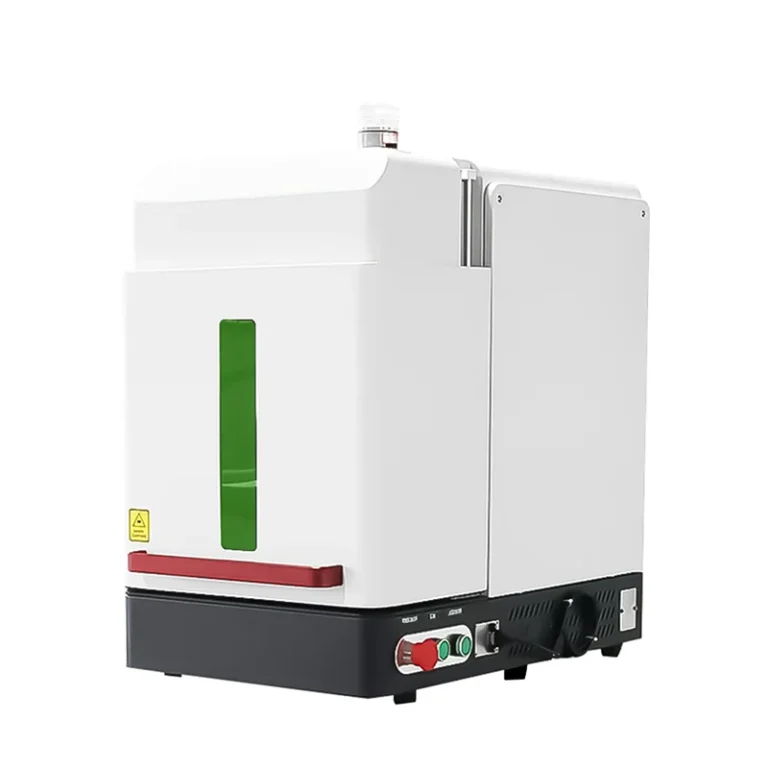
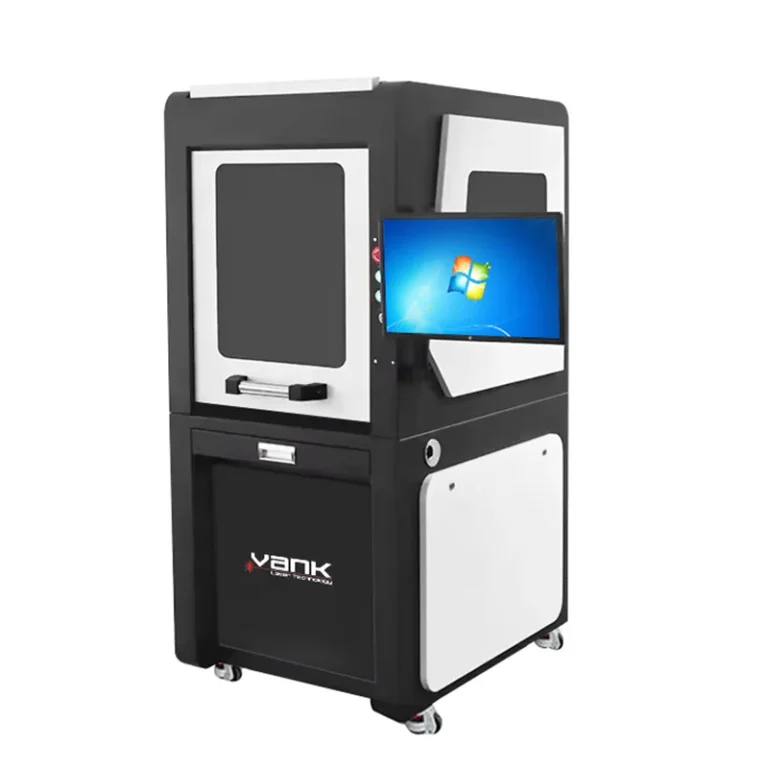
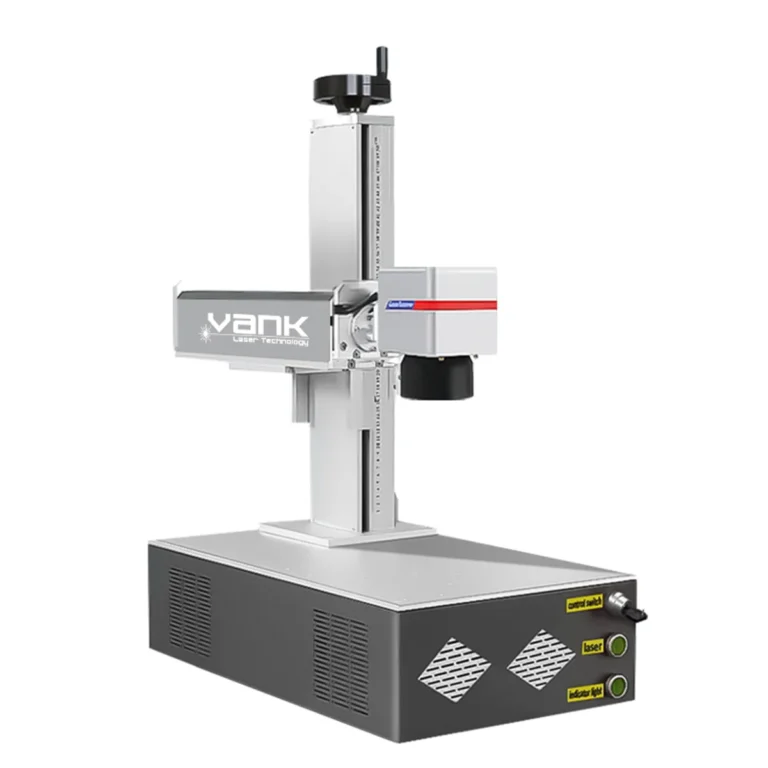
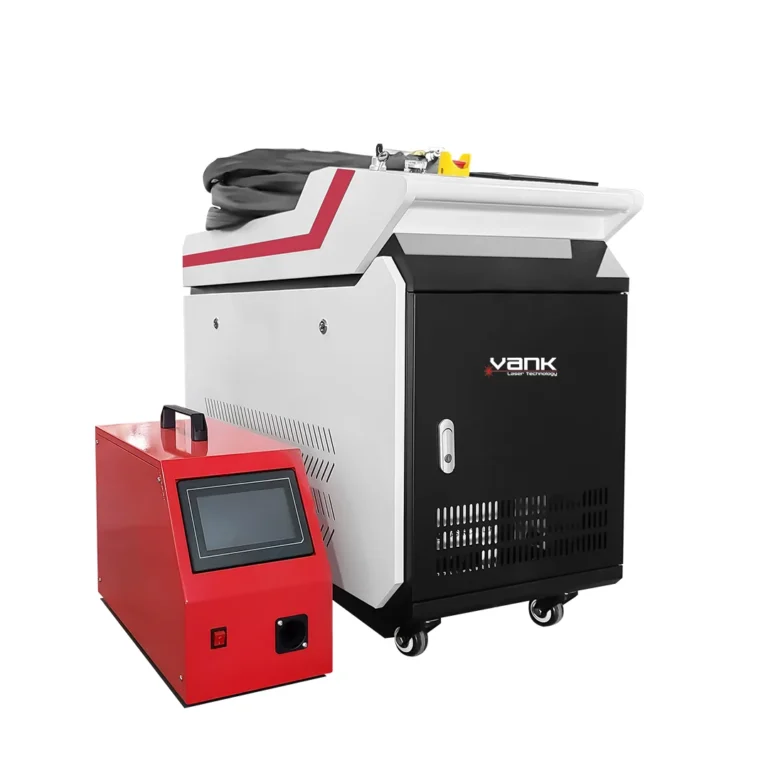
Enclosed Fiber Laser Marking Applications
- Electronics and components: serial numbers, Data Matrix codes and logos on qualified metal housings, connectors and coated parts after contrast and heat testing.
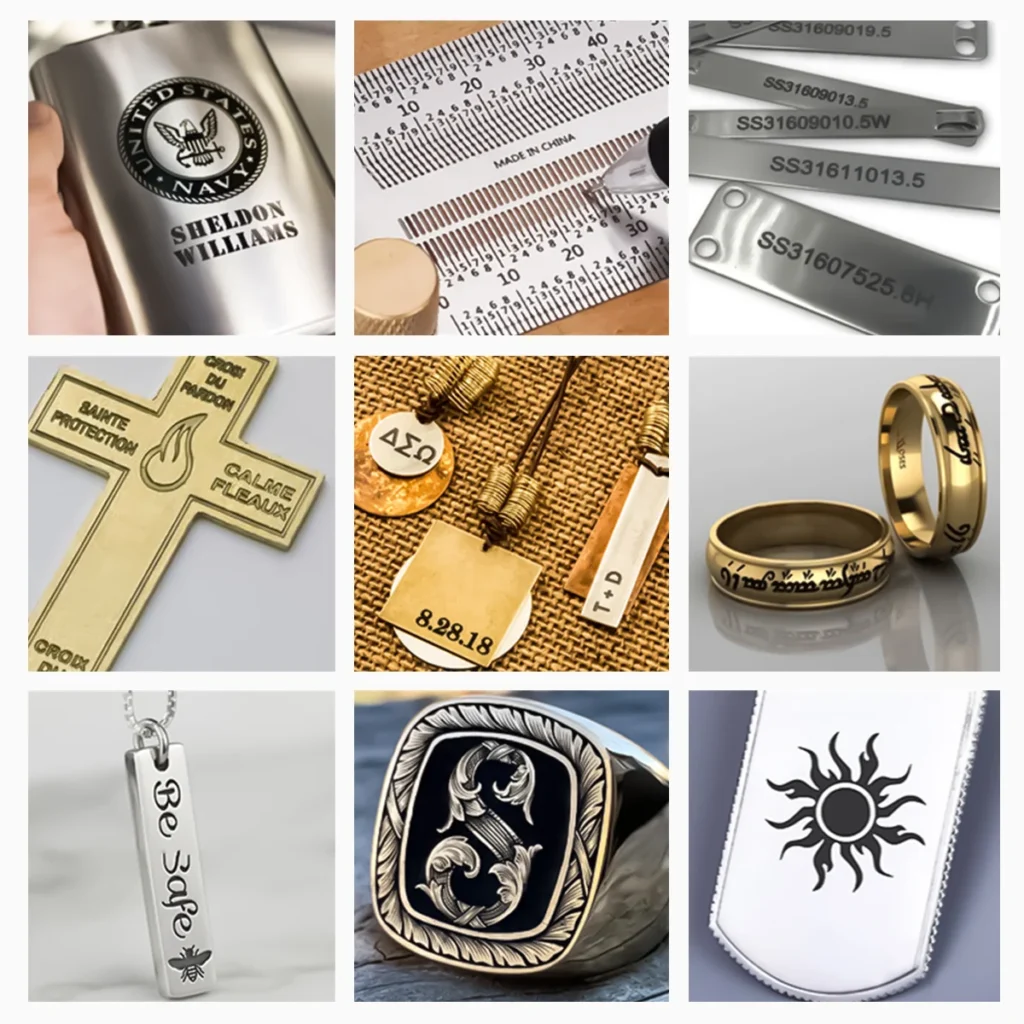
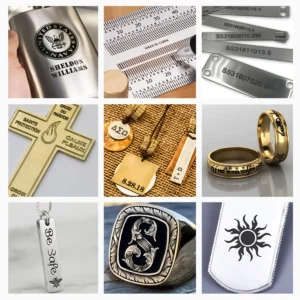
- Jewelry and watch parts: fine surface marking, texture and controlled-depth engraving on approved precious metals; inside-ring work requires a matched rotary fixture and sample approval.
- Medical-device traceability: identifiers on stainless instruments and components when the customer validates material effects, cleaning, corrosion resistance and regulatory requirements.
- Industrial metal parts: permanent IDs, scales, logos and traceability codes on steel, stainless steel, aluminum, brass, copper and coated nameplates.
- Automotive and aerospace supply: part codes and traceability marks on qualified alloys; safety-critical parts require customer process approval and documentation.
- Consumer and promotional products: logos and personalization on metal tools, hardware, gifts, drinkware and approved coated accessories.
Send the exact alloy or polymer grade, coating, part geometry, artwork, required contrast or depth and throughput target for a marking test. The approved sample defines the source, lens, parameters, fixture, extraction and acceptance criteria.

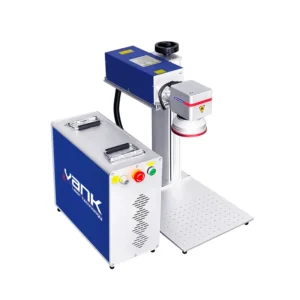
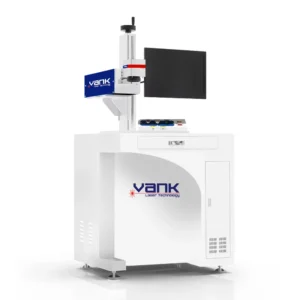
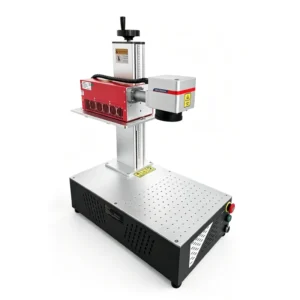
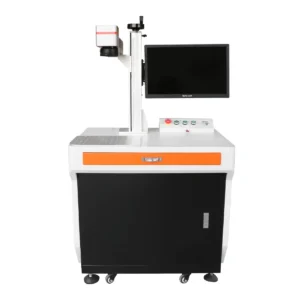
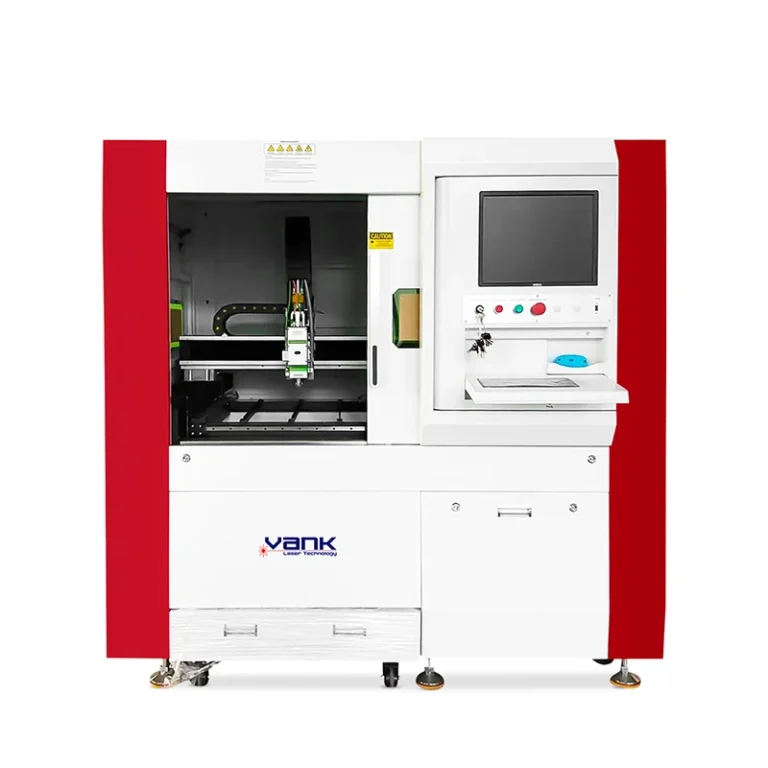
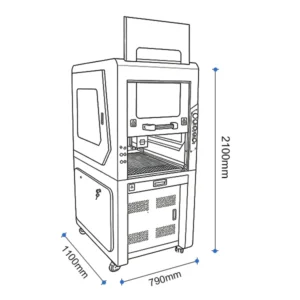
Enclosed Workstation Configuration
Technical Specifications
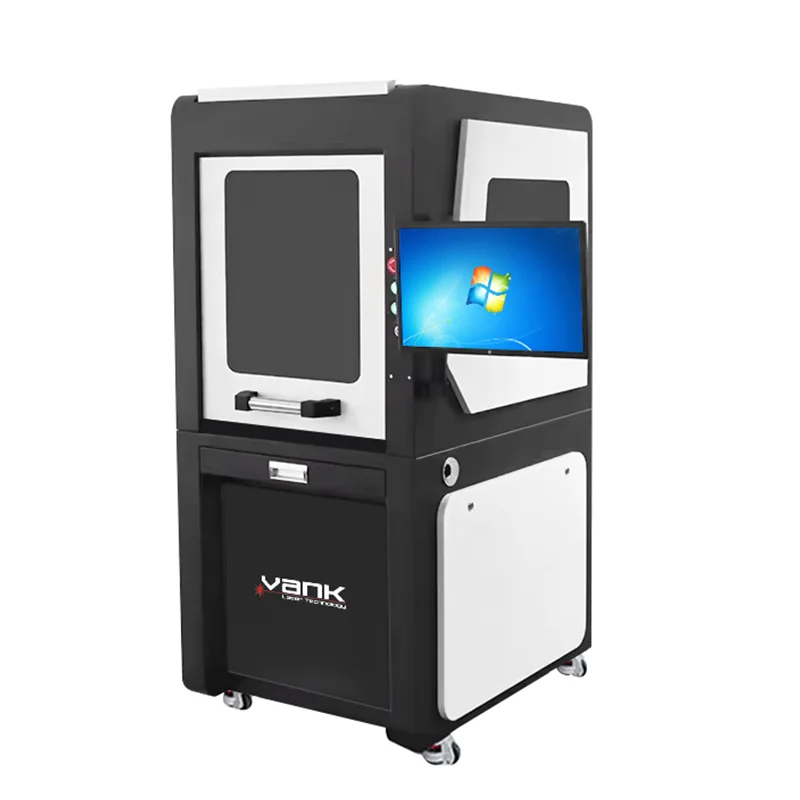
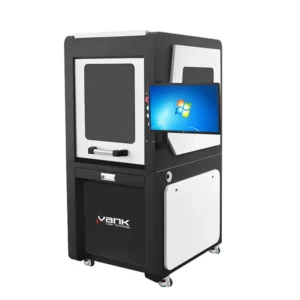
| Model | VankMark-E enclosed fiber laser marking workstation |
| Laser Process | Galvo marking and controlled-depth engraving; cutting capability is not assumed |
| Nominal Wavelength | 1064 nm pulsed fiber laser |
| Rated Power Options | 30 / 50 / 60 / 70 / 100 W as quoted |
| Source Architecture | Q-switched or MOPA source selected for the required pulse behavior, material and mark result |
| Pulse Frequency | Exact range depends on the quoted source model and must follow its datasheet |
| Pulse Width | Fixed or adjustable by source model; MOPA range confirmed in the quotation |
| Marking Field Options | 75 × 75 / 110 × 110 / 150 × 150 / 175 × 175 / 200 × 200 / 300 × 300 mm, subject to lens and enclosure clearance |
| Field Lens | F-theta lens matched to field size, spot requirement and working distance |
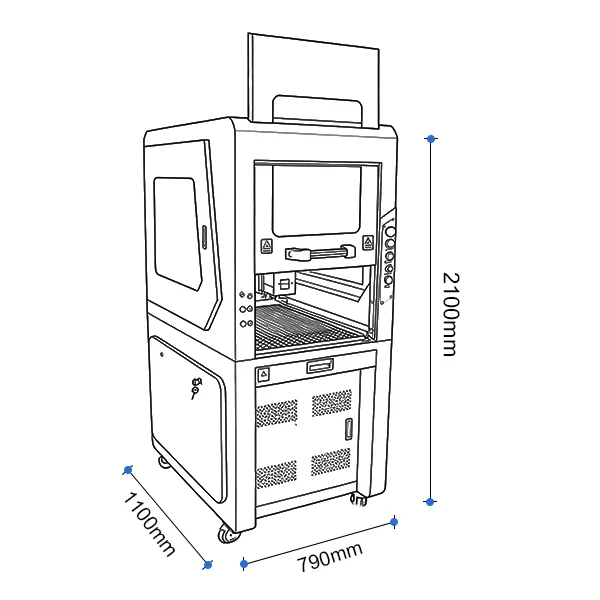
| Enclosure | Fully enclosed workstation with wavelength-rated viewing window and configured access door |
| Laser Safety Classification | Determined only for the tested complete product and destination market; the embedded source may expose Class 4 radiation during service |
| Safety Controls | Door interlock, emergency stop, key control, emission indication and service access provisions confirmed in the final safety file |
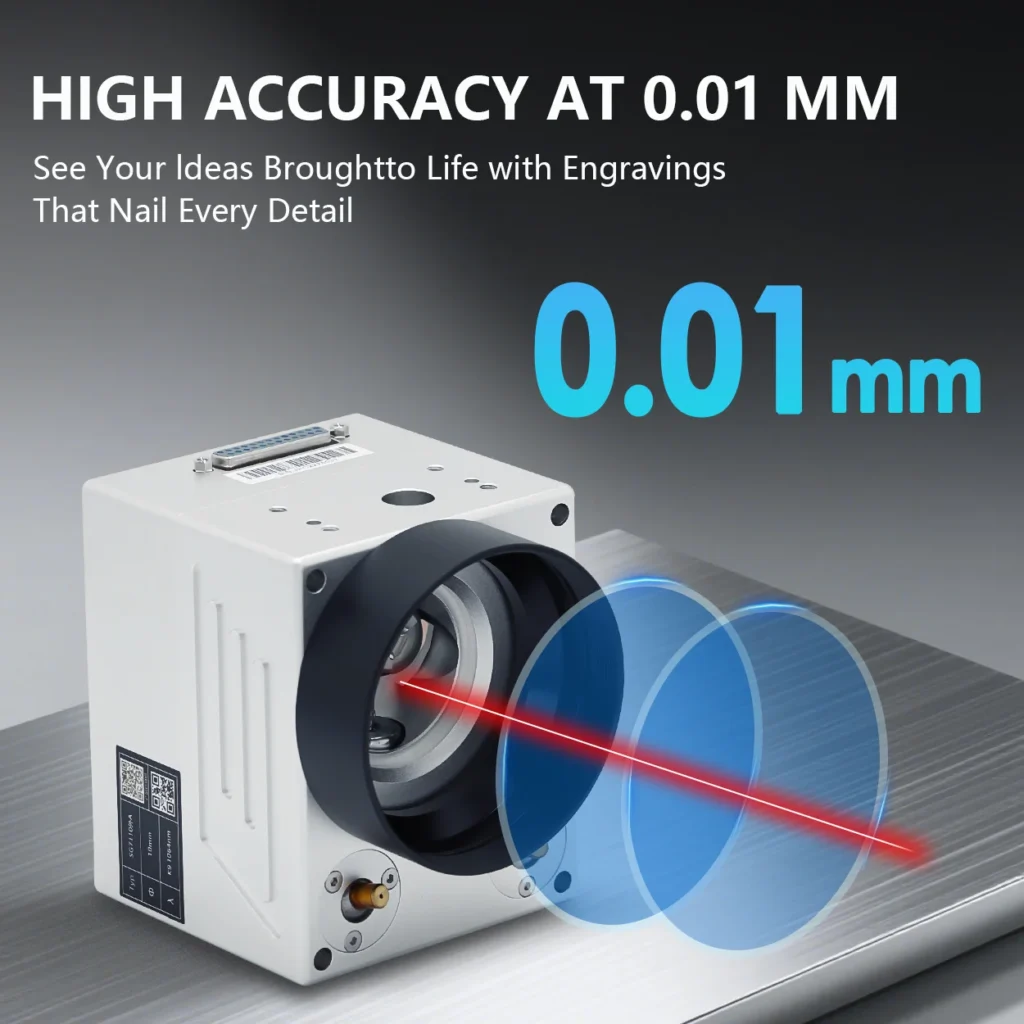
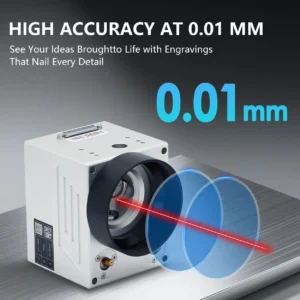
| Scan Head | Dual-axis galvanometer and correction file matched to the selected lens and working field |
| Production Speed | Qualified by sample for artwork, fill density, material, contrast, depth and heat limit; scanner travel speed is not a cycle-time guarantee |
| Mark Quality | Line width, character size, field distortion and repeatability verified on the approved sample and fixture |
| Cooling | Air-cooled unless the exact source or enclosure configuration specifies another method |
| Controller | JCZ/EZCAD2-compatible control card or other quoted controller; exact model and firmware confirmed |
| Software | EZCAD2 workflow; LightBurn Pro only when the supplied board, driver and current software version are supported |
| File Workflow | Vector, raster, text, serial number, barcode and Data Matrix imports subject to the supplied software and customer file test |
| Rotary and Fixtures | Optional ring, cylindrical or flat-part fixtures selected for part diameter, weight, clearance and indexing requirement |
| Fume Extraction | Local extraction or filtration sized for the marked material, coating and production duty |
| Electrical Service | Voltage, frequency, connected load, plug, grounding and local compliance confirmed before shipment |
| Operating Environment | Temperature, humidity, dust and condensation limits follow the final source, controller and workstation manuals |
| Acceptance | Final configuration approved against customer material, artwork, mark quality, cycle time, safety and documentation requirements |
Configuration starts with the mark requirement. Provide the exact material and coating, part dimensions, artwork, field size, contrast or engraving-depth target, cycle time, fixture needs and destination-market safety requirements. The quotation will identify the source model, lens, controller, enclosure, extraction and acceptance sample.
Marking Samples and Material Qualification
Candidate Materials
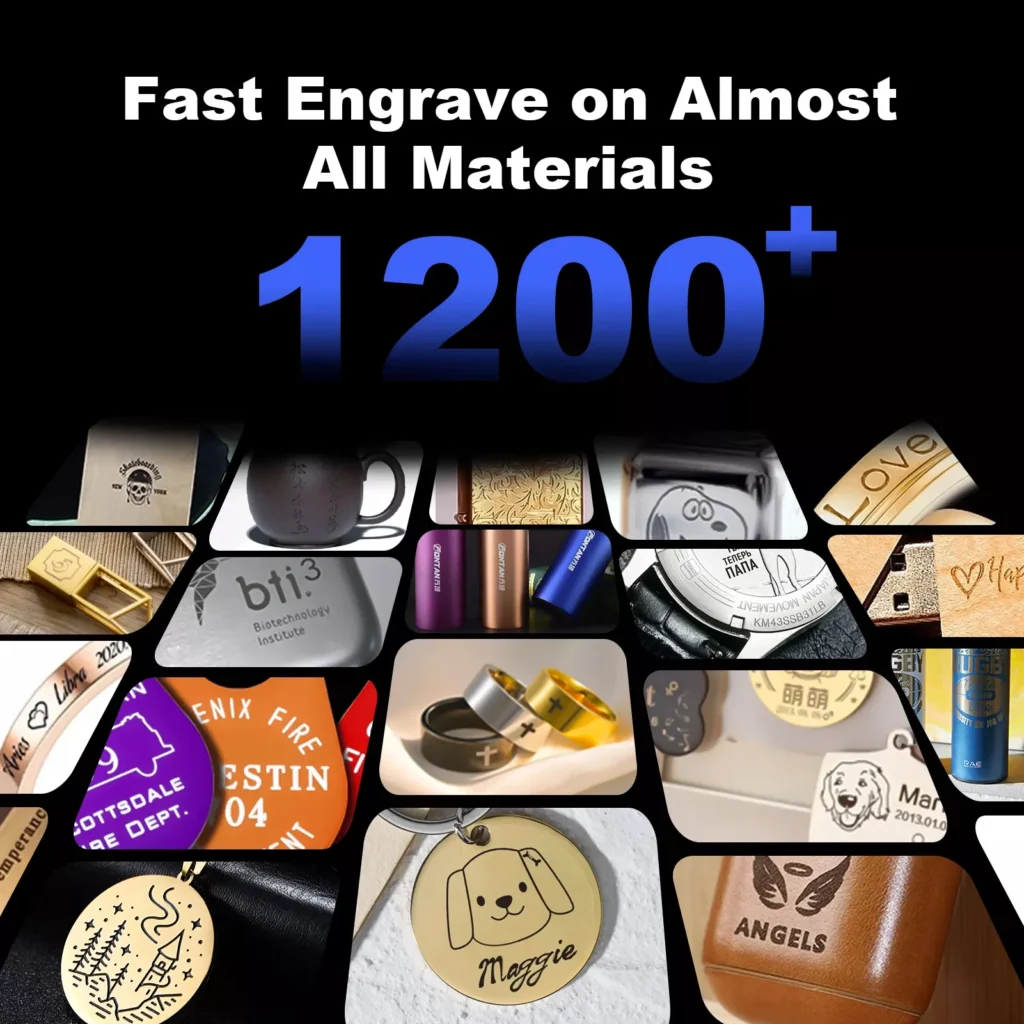
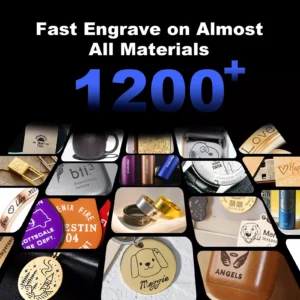
A 1064 nm fiber source is primarily selected for steel, stainless steel, aluminum, brass, copper, titanium, precious metals, carbide and many coated or anodized metal parts. Some engineering polymers and coatings can produce contrast after testing. Glass, clear acrylic, leather, paper, stone, ceramic bodies and unknown composites are not blanket fiber-laser applications and may require a UV or CO2 source. Review the SDS and run a representative sample before approval.
Applicable Industries
Typical users include electronics, automotive supply, precision tools, appliances, jewelry, eyewear, watches, hardware, identification plates and consumer-product manufacturers. The sample gallery illustrates possible appearances only; the exact source, coating, parameters and post-process determine whether each result can be reproduced.


Core System Components

JCZ / EZCAD2 Control Workflow
The workstation can be configured with a JCZ control card and EZCAD2 for text, serial data, barcodes, Data Matrix codes, vector artwork and raster images. Controller model, firmware, correction file, source protocol and supported imports are supplied with the approved machine configuration.
LightBurn Pro is an option only when its current compatibility list covers the supplied board and driver. Machine-specific configuration and lens-correction data must be retained, and operators are trained on focusing, fixtures, parameter limits, extraction and safe interlocked operation.

Configured 1064 nm Fiber Source
Raycus, MAX, IPG or JPT source options can be evaluated by model, rated power, pulse-frequency range and pulse-width behavior. Higher power does not automatically improve every mark; spot size, pulse characteristics, heat input, lens field and scan strategy are selected from the approved sample.

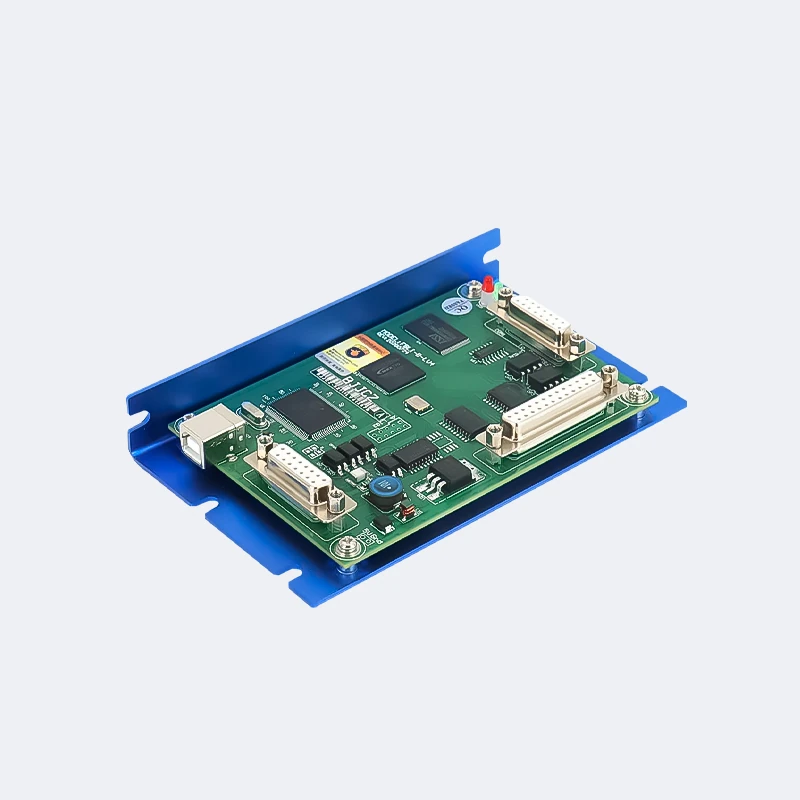
JCZ Galvo Control Card
The quoted JCZ card links the source, galvanometer and I/O to the marking software. The exact board revision, source protocol, firmware, driver and enclosure-interlock I/O must match the delivered electrical design; software control does not replace hardware safety circuits.

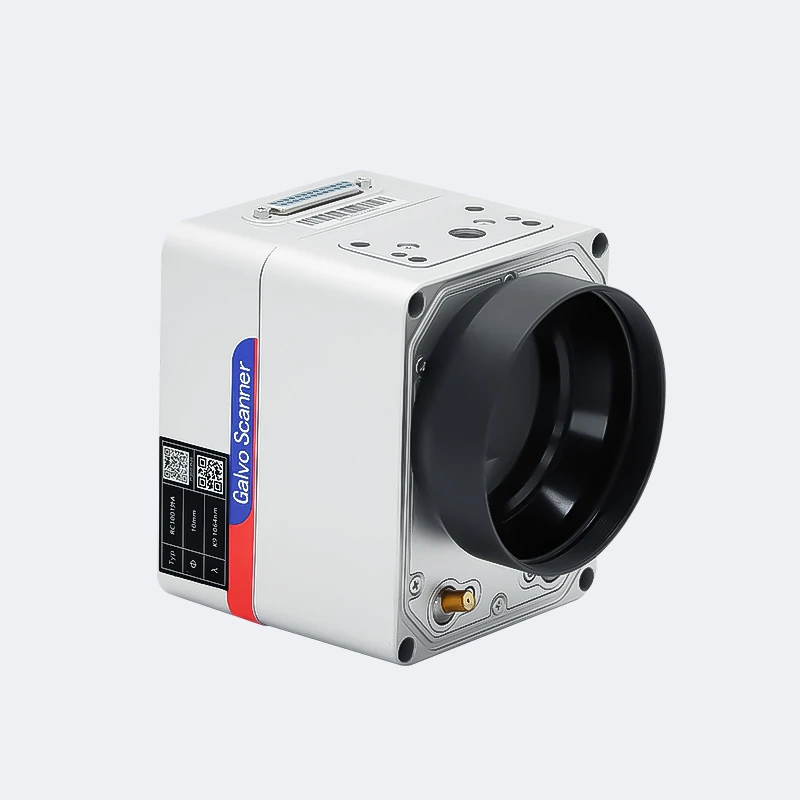
Galvanometer Scanner
The dual-axis galvanometer positions the scanning mirrors across the calibrated field. Quoted travel-speed figures do not equal production marking speed; the selected scan head, lens, correction file and artwork are verified together. Auto-focus and 3D scanning are separate engineered options, not standard features.

Jewelry Ring Rotary Fixture
A compact rotary fixture can support inside or outside marking on rings, bracelets and other small circular parts. Chuck range, concentricity, step resolution, focal clearance and enclosure-door clearance are confirmed for the customer part.

Flat-Sheet and Small-Part Fixture
A flat-part clamp can locate thin precious-metal sheet, tags and small workpieces. Jaw material, usable opening, part thickness, flatness, repeatability and protection against cosmetic damage are selected for the application.

Cylindrical Rotary Fixture
A chuck or roller rotary can index compatible cylindrical metal products for circumferential marking. Part diameter, length, weight, taper, surface finish, focal position and enclosure clearance are confirmed; transparent glass generally requires another laser process.
How to Get a Configuration-Ready Quotation
- Exact material and coating: alloy or polymer grade, finish, color, SDS and any passivation, plating or anodizing.
- Part geometry and size: maximum dimensions, marking location, available focal clearance and flat or cylindrical fixture needs.
- Required result: artwork, code grade, contrast, texture or controlled depth, smallest character and cosmetic limit.
- Production target: parts per shift, loading method, serialization source, inspection method and allowed cycle time.
- Workholding and automation: rotary type, nest count, changeover requirement, barcode integration or external I/O.
- Installation requirements: destination country, electrical service, extraction, safety classification, documentation and operator language.
The proposal should identify the exact source, controller, field lens, enclosure and safety controls, fixture, extraction, software, utilities, sample-acceptance criteria, documentation, warranty and delivery scope.
Enclosed Fiber Laser Marker FAQ
What materials can a fiber laser marking machine mark?
They are primarily used for steel, stainless steel, aluminum, brass, copper, titanium, precious metals, carbide and many coated metals. Some engineering polymers can mark well, while others melt, discolor poorly or release unsafe fumes. Confirm the exact grade and SDS through a sample test; leather, fabrics, glass and clear acrylic usually call for another laser process.
What laser power options are available?
Common quoted options are 30, 50, 60, 70 and 100 W. The exact source model matters as much as rated power: Q-switched and MOPA sources have different frequency and pulse-width behavior. Select power, lens and pulse range from the required contrast, depth, field and cycle time.
How deep can a fiber laser marking machine engrave into metal?
There is no universal depth value. Alloy, source architecture, rated power, lens, spot size, passes, hatch strategy, heat limit and cycle time all matter. Controlled-depth engraving must be measured on the customer sample and documented separately from surface marking.
What is the difference between fiber laser marking and CO2 laser marking?
A 1064 nm fiber laser couples efficiently with many metals and selected plastics, making it a common choice for durable part identification and metal engraving. A 10.6 µm CO2 laser is generally better for many organic materials, wood, paper, leather and acrylic. UV may be preferred for fine, low-heat marking on sensitive polymers and electronics.
How do I clean and maintain the lenses and mirrors?
Power down, isolate the machine and follow the supplied maintenance procedure. Keep the wavelength-rated window, work area and extraction path clean. Do not touch the field lens; use only approved lens tissue and optical-cleaning fluid when inspection shows contamination. Interlocks, filters and internal optics should be serviced by trained personnel.
What file formats and software are supported?
EZCAD2 commonly imports vector, raster and font formats and supports serial data, dates, barcodes and 2D codes. The exact import list depends on the supplied version. LightBurn Pro is optional only for a supported JCZ or other compatible galvo controller, driver and current license; verify the delivered board before purchase.
How long does the laser source last, and what is the warranty?
Service life is not a guaranteed fixed hour count. It depends on the exact source model, duty cycle, temperature, contamination, power quality and maintenance. The quotation must identify source and workstation warranty terms, exclusions, spare-parts support and the procedure for source or control-board service.
What are the advantages of fiber laser marking over traditional methods (e.g., inkjet or engraving)?
Fiber marking is non-contact, supports software-driven variable data and can create durable codes without ink consumables. It can reduce tool wear and routine ink-system maintenance, but it still requires safe extraction, correct fixtures, clean optics, validated parameters and inspection. Inkjet remains useful where fast, non-thermal marks or very large moving products are required.