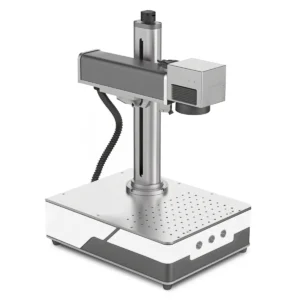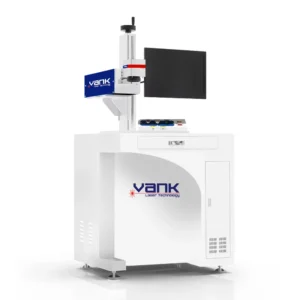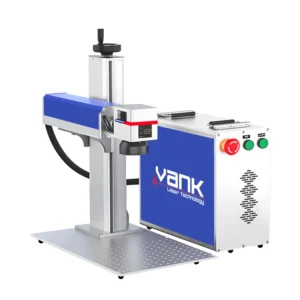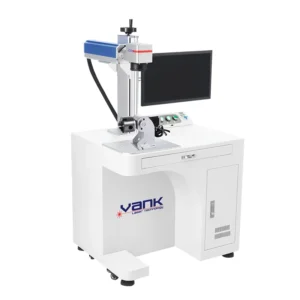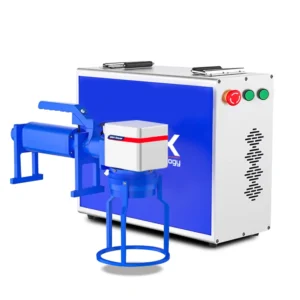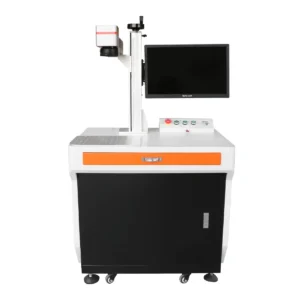


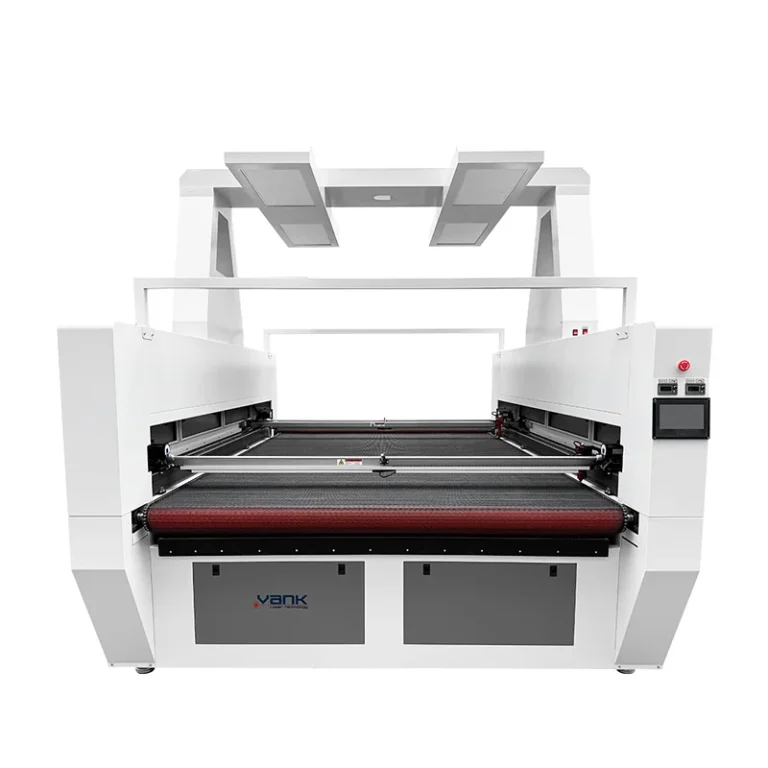
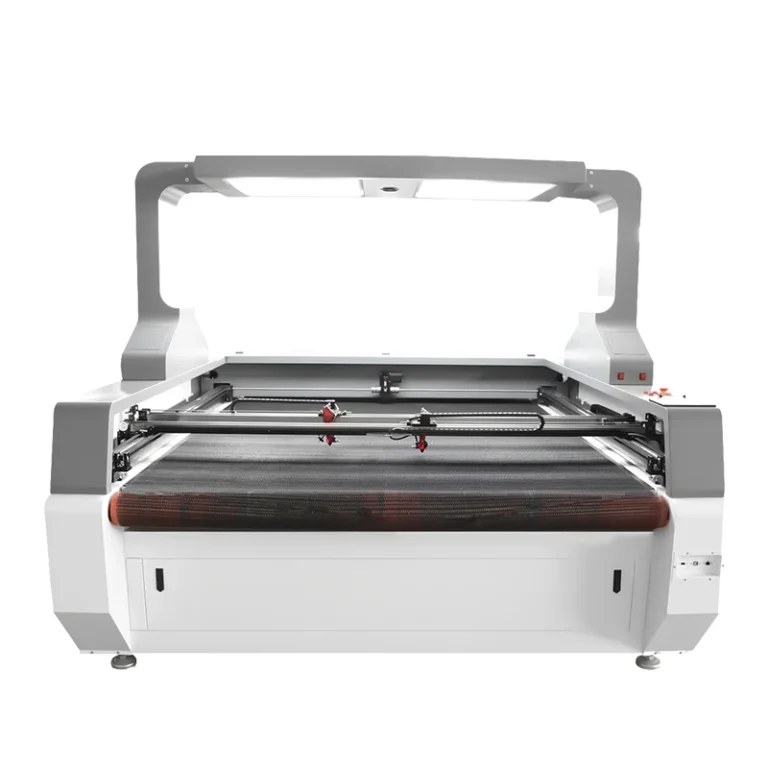
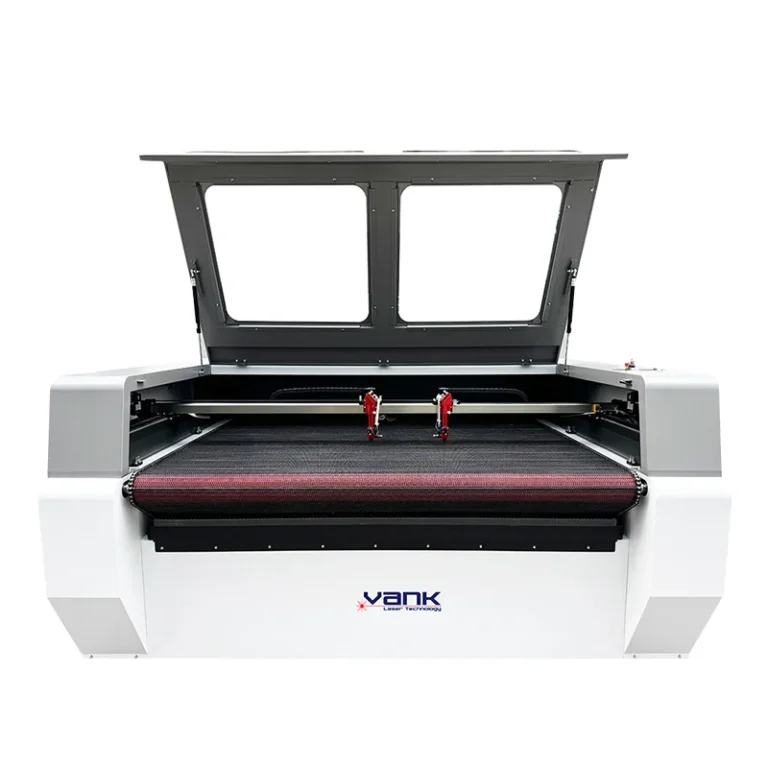
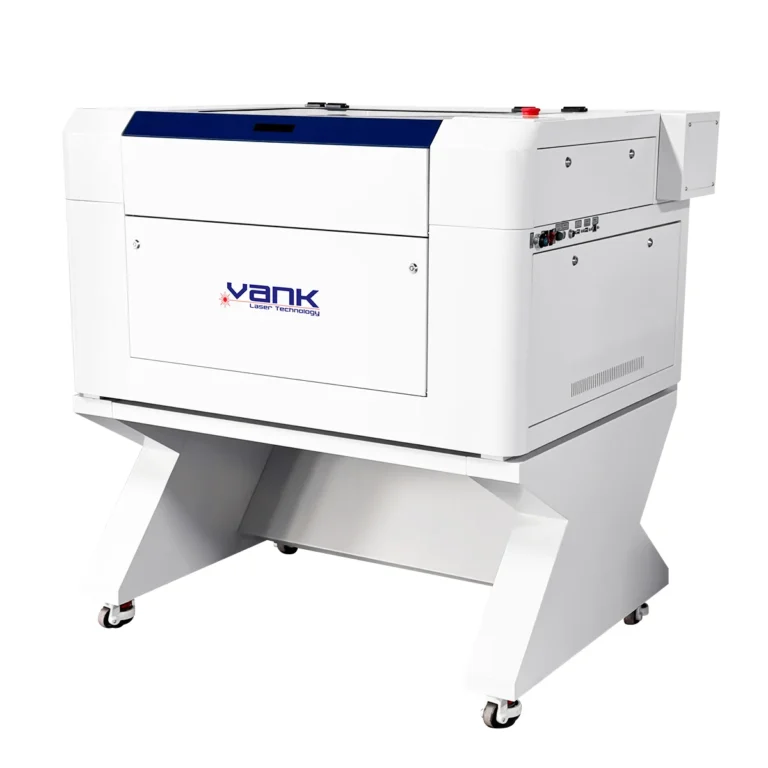
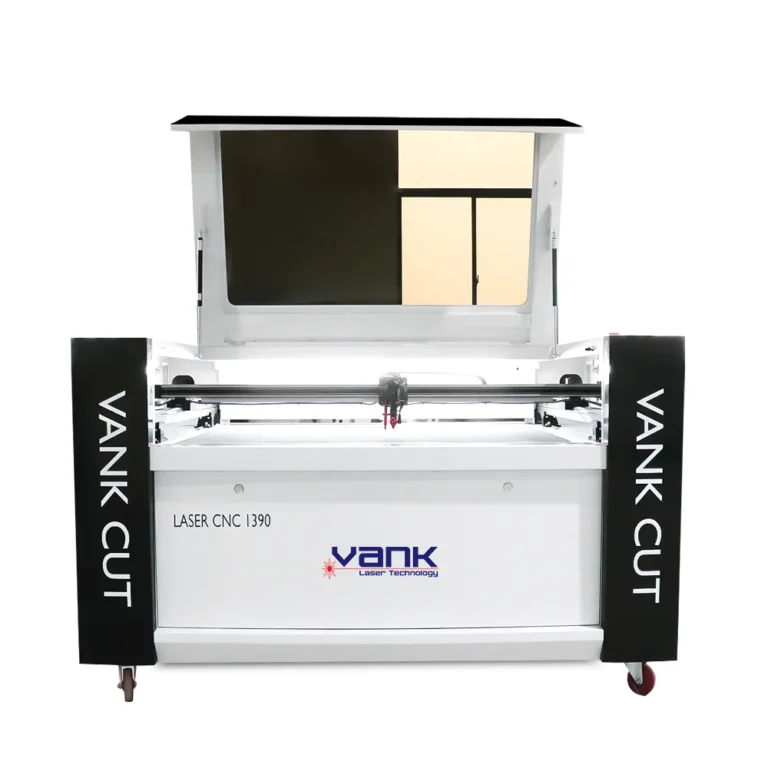
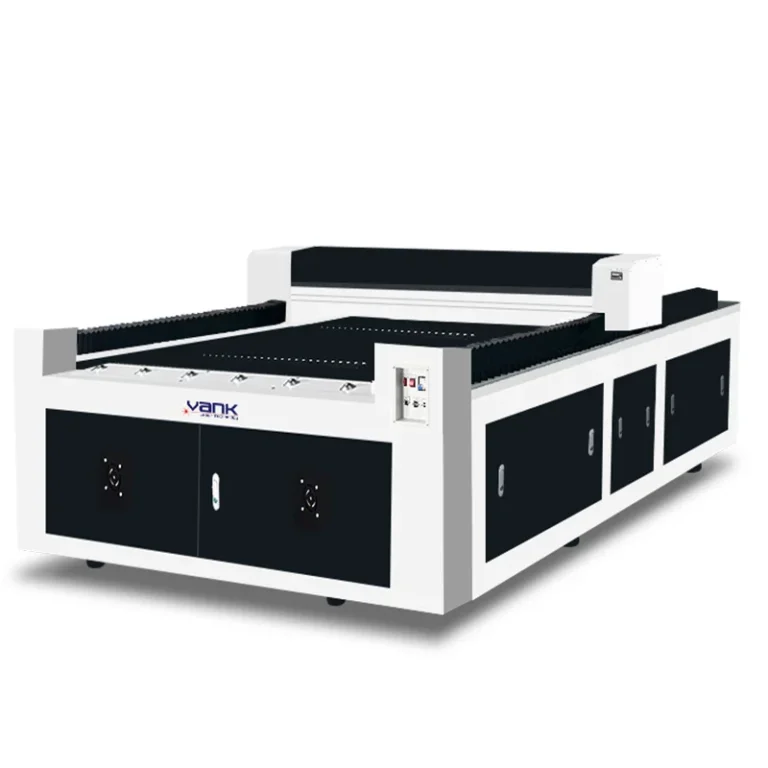
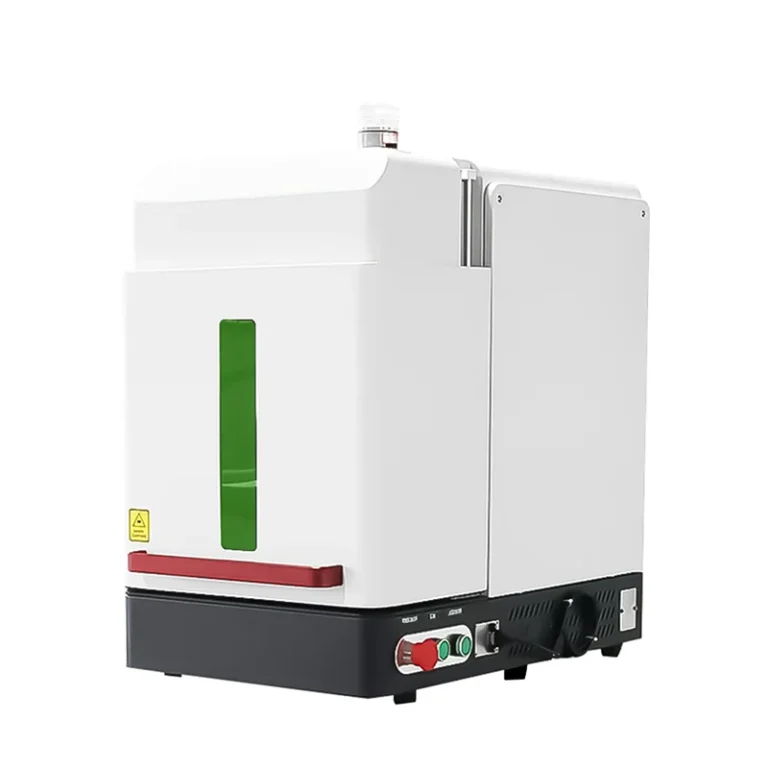
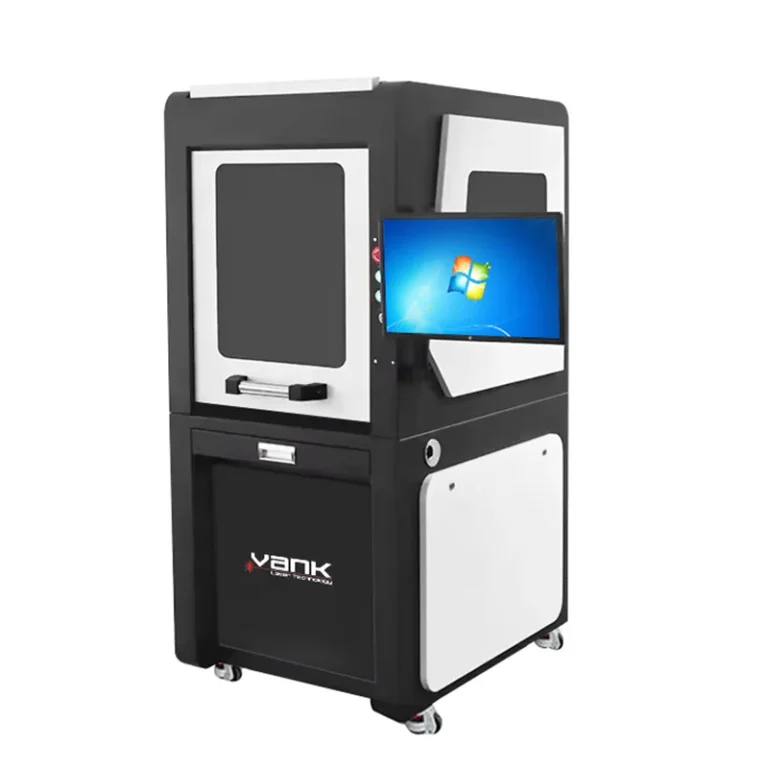
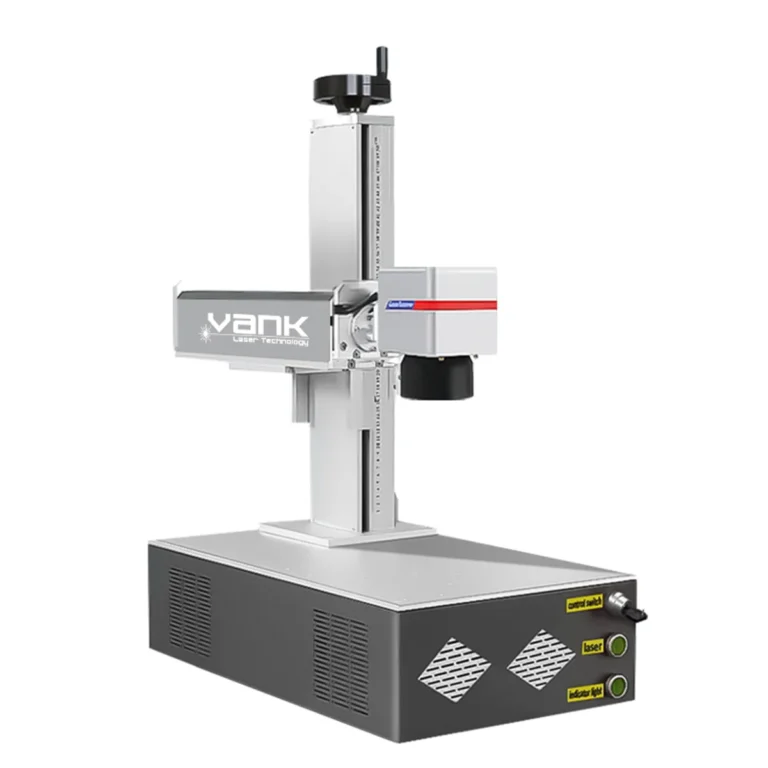
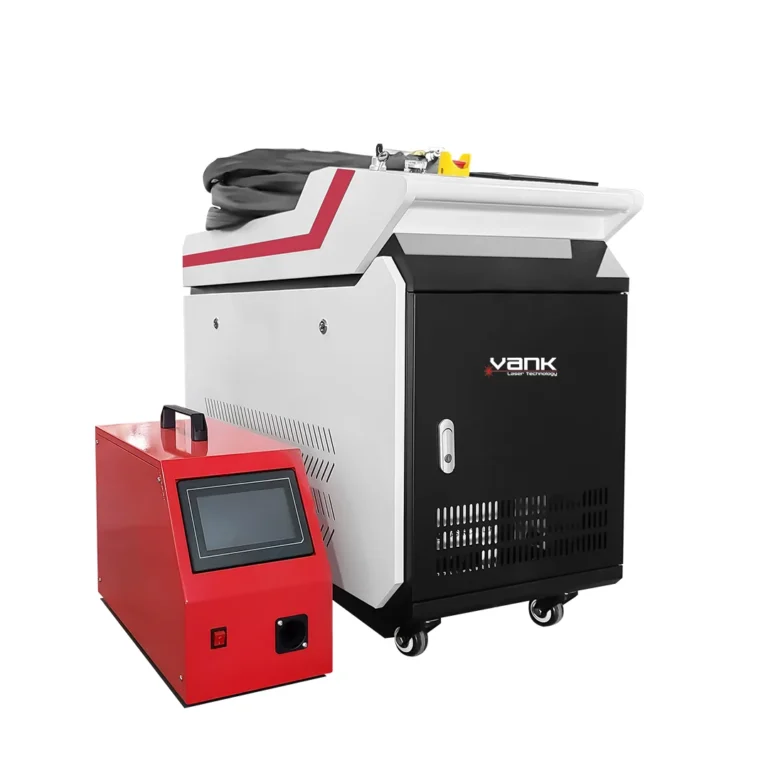
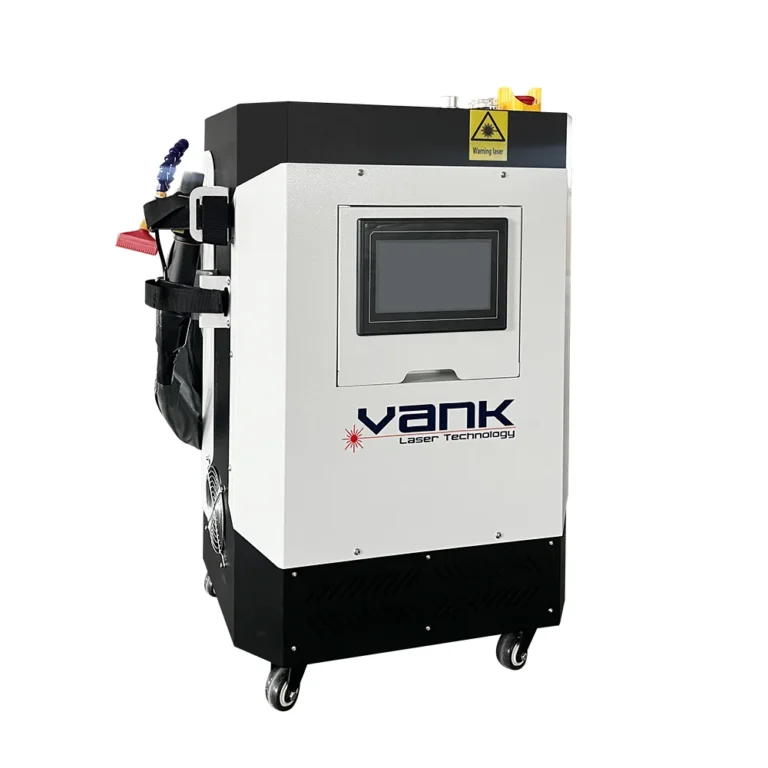
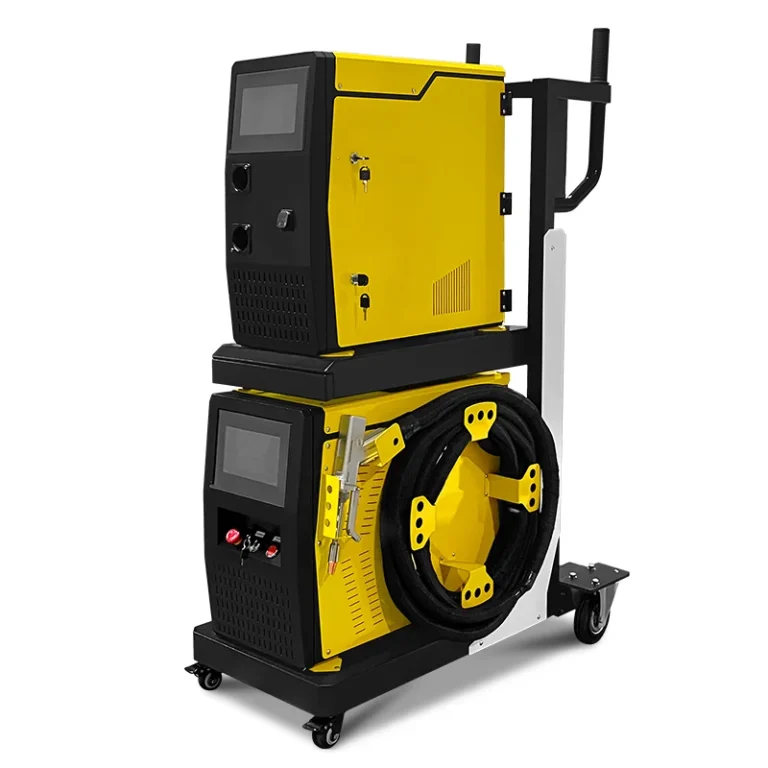
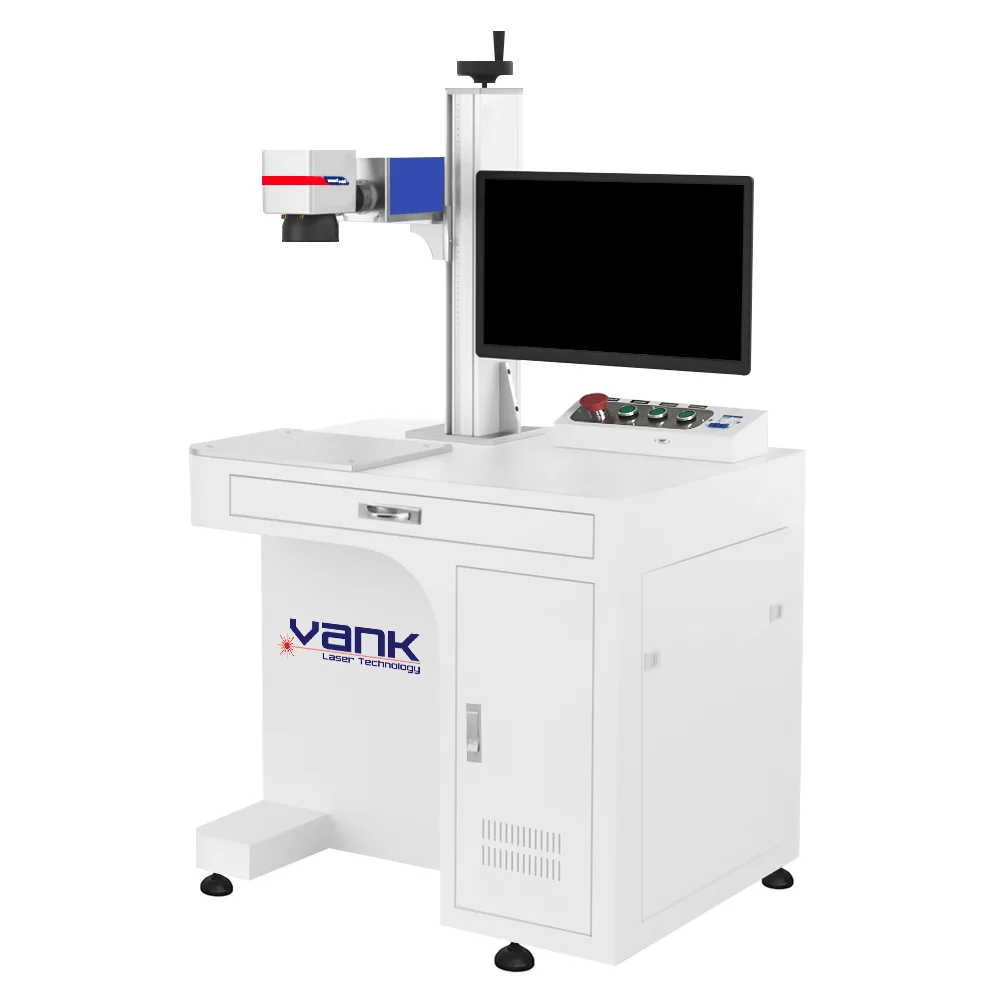
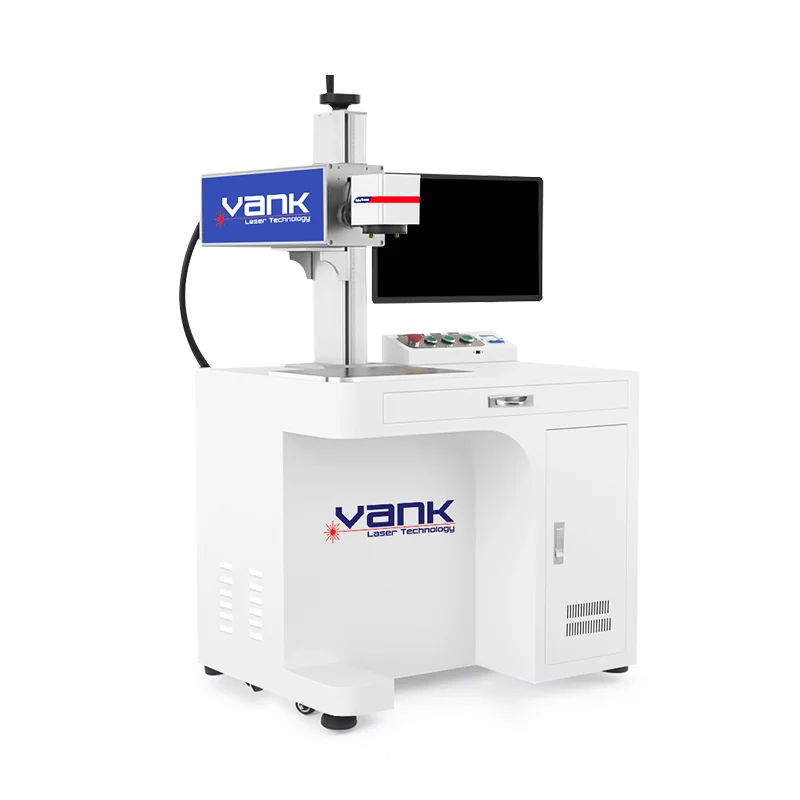
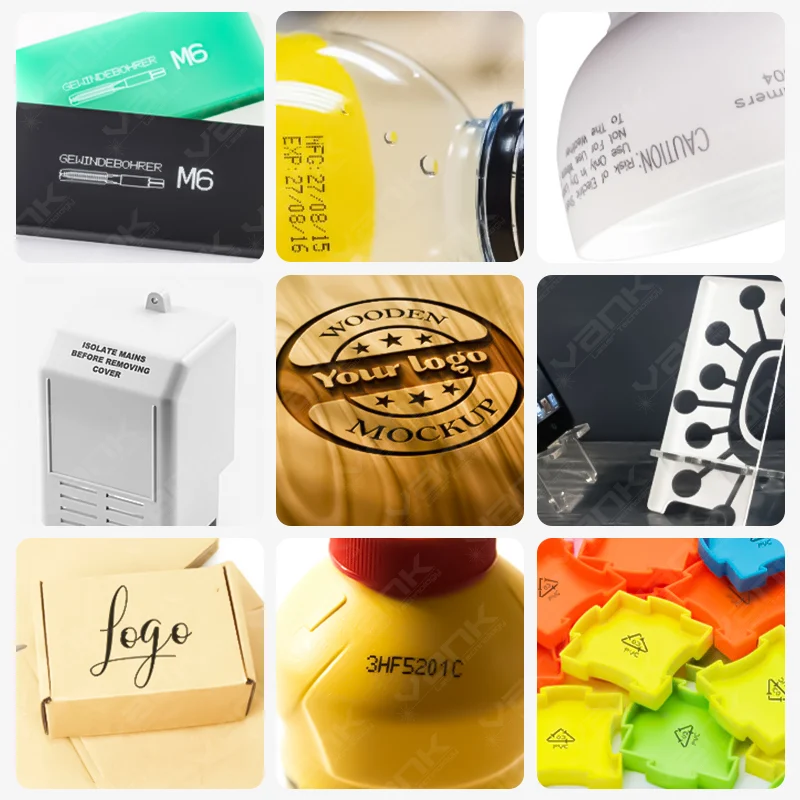
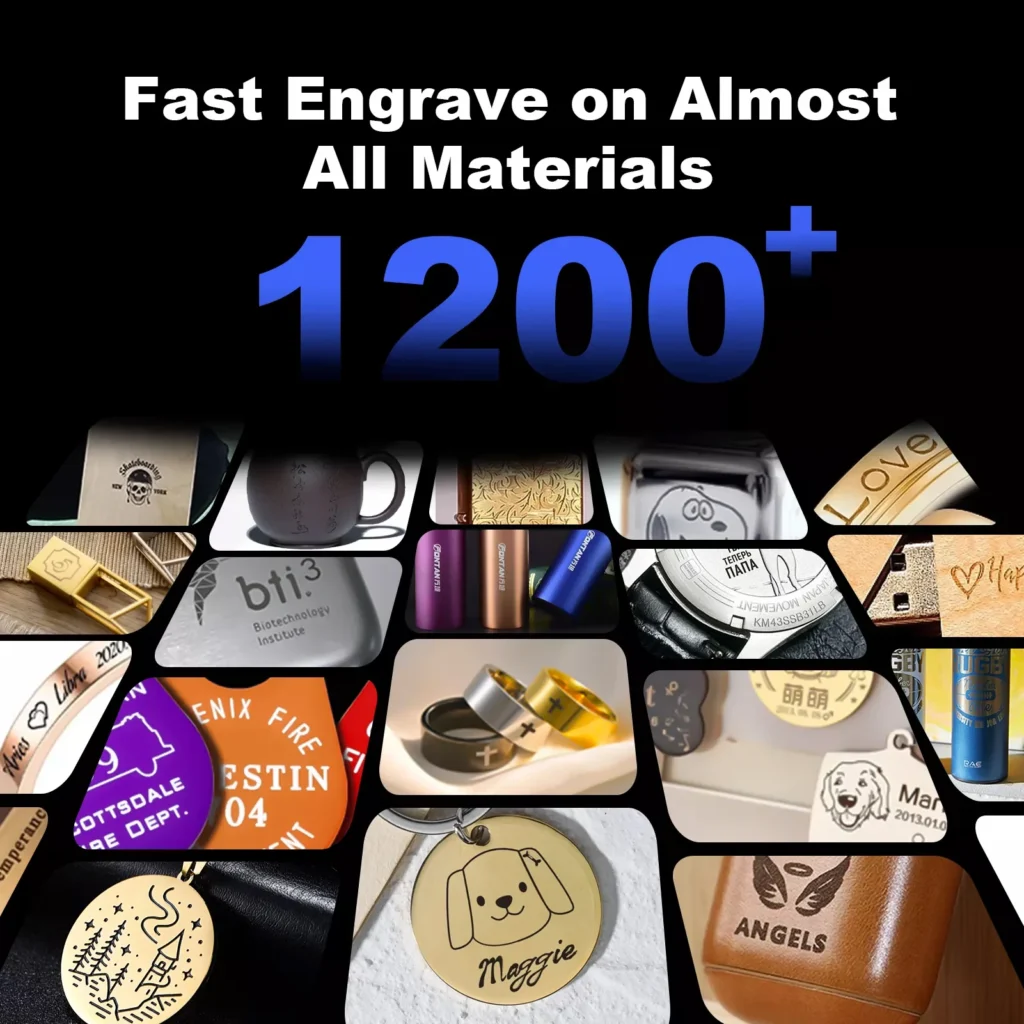
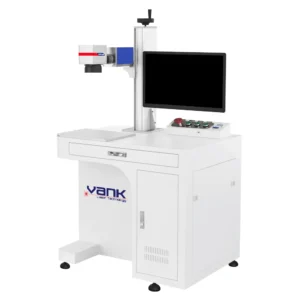
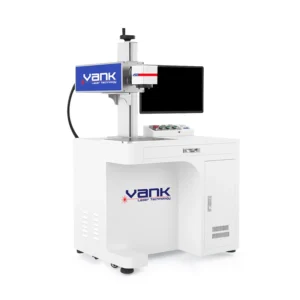
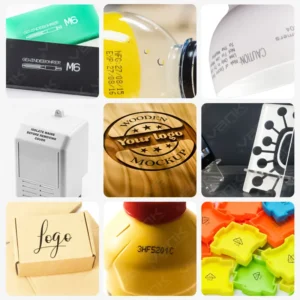
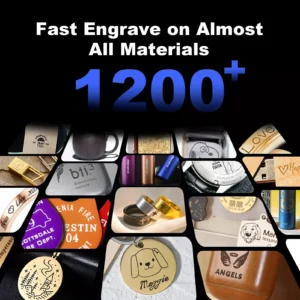
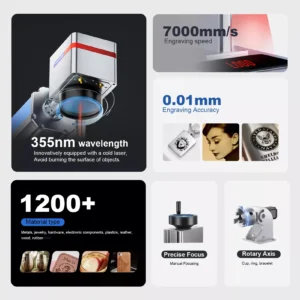
Vank galvo CO2 laser marking machines use a sealed RF-excited source and high-speed scanner for permanent coding, surface marking and shallow engraving on compatible non-metal materials. Typical work includes logos, serial data, QR codes, date codes, batch numbers and decorative graphics on wood, acrylic, paper, cardboard, approved leather, glass, ceramics and selected polymers.
Choose 30, 40 or 60 W according to material absorption, marking field, required contrast or depth and cycle time. This is an open-beam Class 4 system: the installed machine requires a controlled area or compliant enclosure, interlocks, beam containment, wavelength-rated PPE, fire controls and source-capture fume extraction.

Suitable Materials for CO2 Laser Marking
Confirm the exact formulation and safety data sheet before processing. Do not laser-process PVC, vinyl, PTFE, halogen-containing materials, chromium(VI)-containing leather or unknown composites because hazardous or corrosive emissions can be produced.
- Wood and wood products: solid wood, bamboo, veneer, MDF and plywood after checking resin, adhesive and coating content.
- Acrylic and selected plastics: PMMA, laser-compatible display materials and approved polymers; exclude PVC/vinyl and unknown flame-retardant or halogenated formulations.
- Leather and textiles: natural leather and verified PVC-free, halogen-free synthetic leather, denim, felt, labels and garment accessories; review dyes, coatings and chromium content.
- Paper and cardboard: cartons, boxes, cards, tags and printed packaging after checking inks, laminates and barrier coatings.
- Glass and ceramics: surface frosting or marking only after testing for fracture, chipping, coating behavior and required contrast.
- Rubber and foam: process only identified, laser-compatible compounds with suitable extraction; formulations vary widely and unknown materials must not be used.
- Painted or coated metal: a CO2 laser may remove or change the coating, while bare-metal marking normally requires a fiber laser. Identify coating chemistry and capture fumes at the source.

Typical CO2 Laser Marking Applications
Use fixtures, field lenses and tested recipes to match flat, shaped or rotary workpieces. Code quality, durability and throughput must be verified on the actual material and production finish.
- Logos and identification on wood, PMMA, approved leather goods and packaging
- QR codes, barcodes, date codes and batch data on qualified packaging materials
- Decorative surface engraving on gifts, tags, craft products and personalized items
- Tested surface effects on glass, ceramics and coated products
- Garment labels, denim, felt and verified laser-compatible leather patches
- Serial data and traceability marks on compatible non-metal industrial components
30-60 W CO2 Laser Marker Specifications
| Model | 30-60 W galvo CO2 laser marking machine |
|---|---|
| Nominal laser power | 30 W / 40 W / 60 W |
| Laser source | Sealed RF-excited CO2 source; brand and model confirmed |
| Standard wavelength | 10.6 µm; other CO2 wavelengths only by confirmed source |
| Marking field options | 70 × 70 to 300 × 300 mm; field-lens dependent |
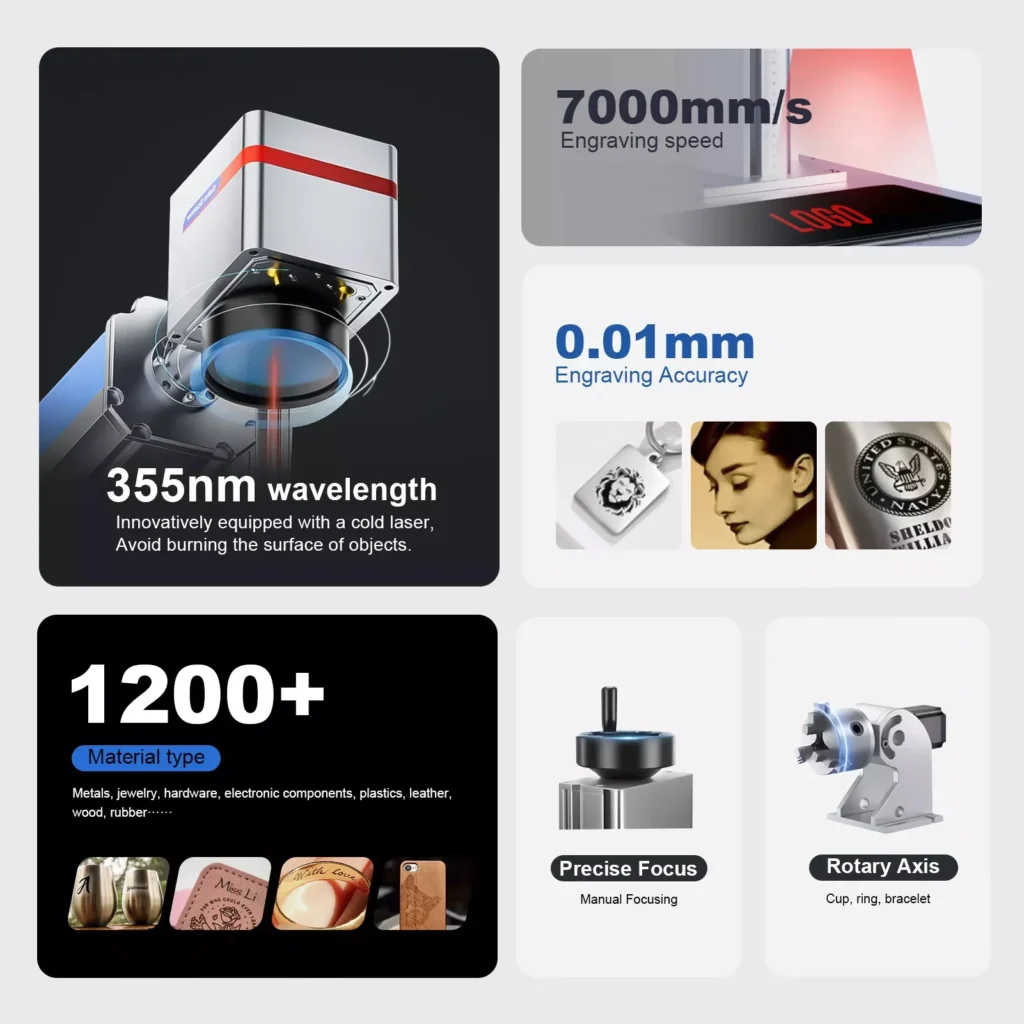
| Galvanometer speed setting | Up to 7000 mm/s; application speed depends on the job |
| Minimum feature reference | Confirm by sample with selected lens and material |
| Engraving depth | Material, power, lens, passes and acceptance-dependent |
| Repeatability | Controller, lens, focus, fixture and calibration-dependent |
| Controller / software | JCZ-compatible board with matching EZCAD software |
| File workflow | Text, codes, vectors and bitmaps supported by selected software |
| Power supply | 110/220 V AC, 50/60 Hz; regional configuration |
| Cooling / input power | Air or water cooling and consumption depend on source model |
| Optional configuration | Rotary axis, lenses, fixtures, enclosure and fume extraction |
| Laser classification | Open-beam Class 4 system |
Selecting 30, 40 or 60 W CO2 Laser Power
Power selection follows material, wavelength, field lens, required mark, duty cycle and cycle time. A larger marking field lowers power density, and higher wattage does not automatically improve fine detail. Request a sample using the proposed source and lens.
- 30 W: suited to fine coding and light surface marking on compatible paper, wood, approved leather, labels and small packaging.
- 40 W: adds process margin for faster batch marking or more demanding PMMA, wood and packaging applications.
- 60 W: selected for higher throughput, larger fields or deeper removal on compatible materials after process testing.
CO2 vs Fiber Laser Marking
A standard 10.6 µm CO2 marker is generally chosen for wood, PMMA, paper, leather and many organic or coated nonmetals. A 1064 nm fiber marker is generally chosen for bare metals and selected engineered plastics.
Coated metals can sometimes be marked by removing or changing the coating with CO2, but bare stainless steel, aluminum, brass and copper normally require fiber. Sample testing determines contrast, heat effect, code grade and durability.


Core Components of the CO2 Galvo System

JCZ/EZCAD Control and File Workflow
The confirmed JCZ-compatible controller is supplied with matching EZCAD software, drivers and machine parameters. Prepare text, serial data, barcodes, QR codes, vectors or bitmaps in supported formats, then validate scale, fill, rotation and code readability before production.
Parameter guidance should be based on the buyer’s actual material, coating, content and output target. Save only recipes that have passed contrast, dimensional, code-grade and safety checks.

Red-Light Bounding-Box Preview
A visible red-light box indicates the approximate job boundary before emission. It assists positioning but does not prove optical focus, safe beam containment or final mark placement.

Red-Light Contour Preview
Contour preview traces the outer job shape to help confirm orientation and fit. Fixtures and a production reference point are still required for repeatable placement.

Sealed RF CO2 Laser Source
The standard 10.6 µm RF-excited source is selected for high-speed non-metal marking. Source brand, exact output, wavelength, cooling, modulation range and warranty are stated in the signed configuration.

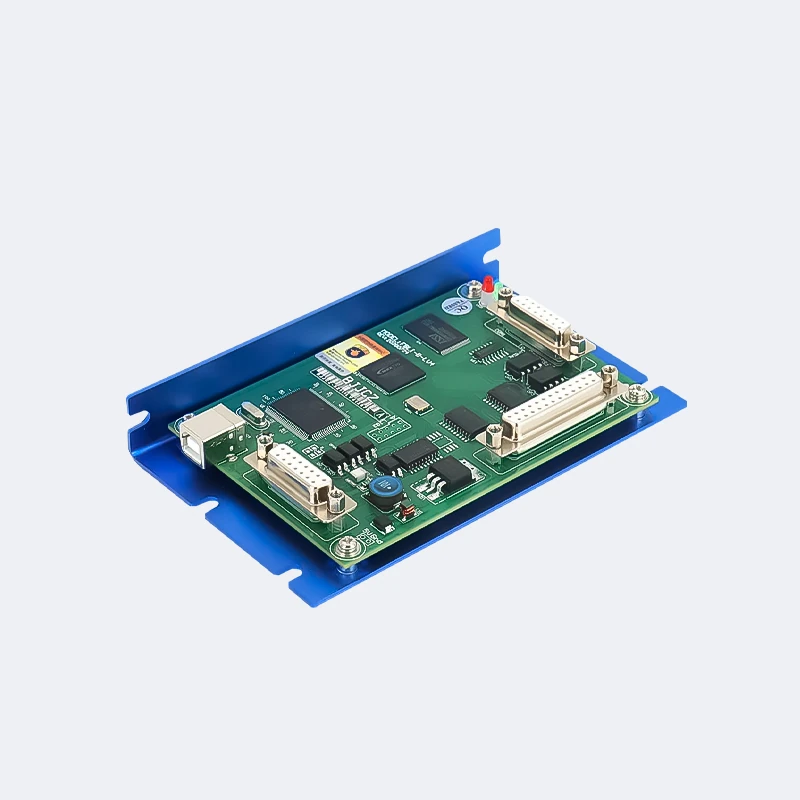
JCZ Galvo Control Card
The controller synchronizes laser modulation, galvanometer motion, red-light preview and optional rotary axes. Confirm the board model, software, license and I/O needed for line integration.

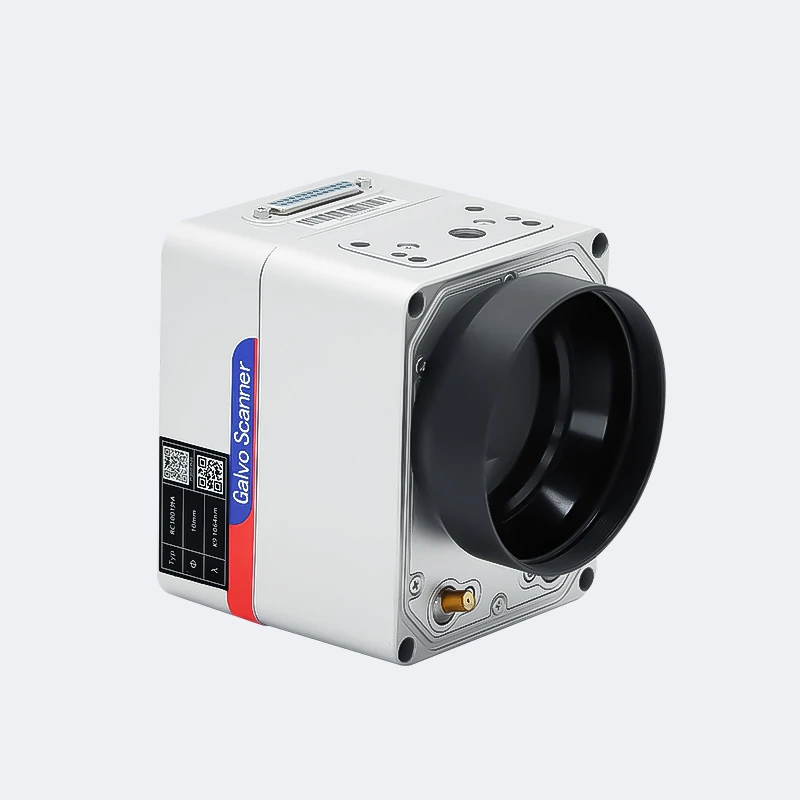
High-Speed Galvanometer Scanner
Dual-axis mirrors direct the beam through the field lens. Usable speed depends on content density, material response, lens, code-grade target and source modulation; the controller’s maximum setting is not a production guarantee.
Fixtures and Rotary Marking Options
Select a fixture by part diameter, mass, surface geometry, required focal tolerance and loading method. Rotary calibration and axis support must match the controller and software.

Small-Part Rotary Fixture
A compact chuck or roller fixture supports compatible small round parts. Confirm the clamping range, runout, focal position and risk of reflected or stray beams.

Flat-Workpiece Fixture
A flat fixture locates thin sheets, cards, tags and repeat parts. Use heat-resistant, laser-compatible fixture materials and keep the extraction path clear.

Bottle and Cylinder Rotary Axis
A rotary axis can wrap text or graphics around compatible cups, bottles and cylindrical packaging. Test focus variation, seam position and code distortion before batch production.
What to Confirm Before Ordering
Provide the exact material trade name, safety data sheet, coating or laminate, product dimensions, marking field, required contrast or depth, code grade, cycle time and loading method. Also identify whether the system is standalone or line-integrated.
The quotation should name the source model and wavelength, laser power, field lens, controller, software, fixtures, enclosure, extraction package, electrical standard, conformity documents, warranty and acceptance-sample criteria.
CO2 Laser Marking Machine FAQ
What materials can a CO2 laser marking machine mark?
Common compatible materials include wood, PMMA, paper, cardboard, approved leather, fabric, rubber, glass, ceramics and selected polymers. Exclude PVC, vinyl, PTFE, halogenated materials, chromium(VI)-containing leather and unknown formulations.
Is CO2 laser marking suitable for metal?
A standard CO2 marker is not the first choice for bare metal. It may remove paint, anodizing or another coating, while direct marking on stainless steel, aluminum, brass and copper is normally better handled by a fiber laser.
What is the difference between CO2 and fiber laser marking machines?
CO2 at about 10.6 µm is normally chosen for organic and non-metal materials; fiber at about 1064 nm is normally chosen for bare metals and selected plastics. Required contrast, heat effect, depth and cycle time determine the final choice.
Which laser power should I choose, 30W, 40W or 60W?
30 W favors fine coding and light marking; 40 W adds speed or process margin; 60 W supports higher throughput, larger fields or deeper removal. The final choice requires a sample with the proposed source and lens.
Can the machine mark logos, QR codes and barcodes?
Yes, the control workflow can create logos, text, serial numbers, QR codes, barcodes and date or batch data. Verify cell size, quiet zone, contrast and grading on the final product.
Is CO2 laser marking permanent?
Laser marking physically changes or removes the surface, but durability is material- and environment-dependent. Abrasion, UV exposure, chemicals, washing and flexing should be included in acceptance testing.
Can this machine be used for packaging batch coding?
Yes, on identified and compatible paper, cardboard, label and polymer packaging. Review inks, laminates, barrier films and additives, and validate fumes, readability and line speed.
What information should I provide before requesting a quotation?
Send the exact material and coating, SDS, photos, part size, mark content and field, code-grade or durability target, cycle time, volume, voltage, destination, fixture needs and required enclosure or extraction.