


High-Speed RF CO2 Engraving for Non-Metals
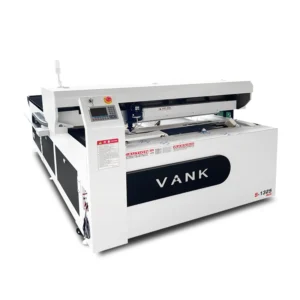
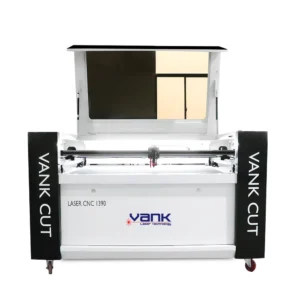
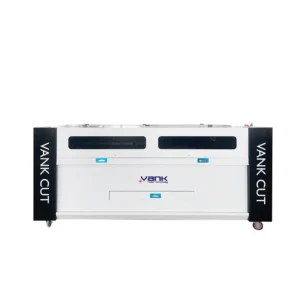
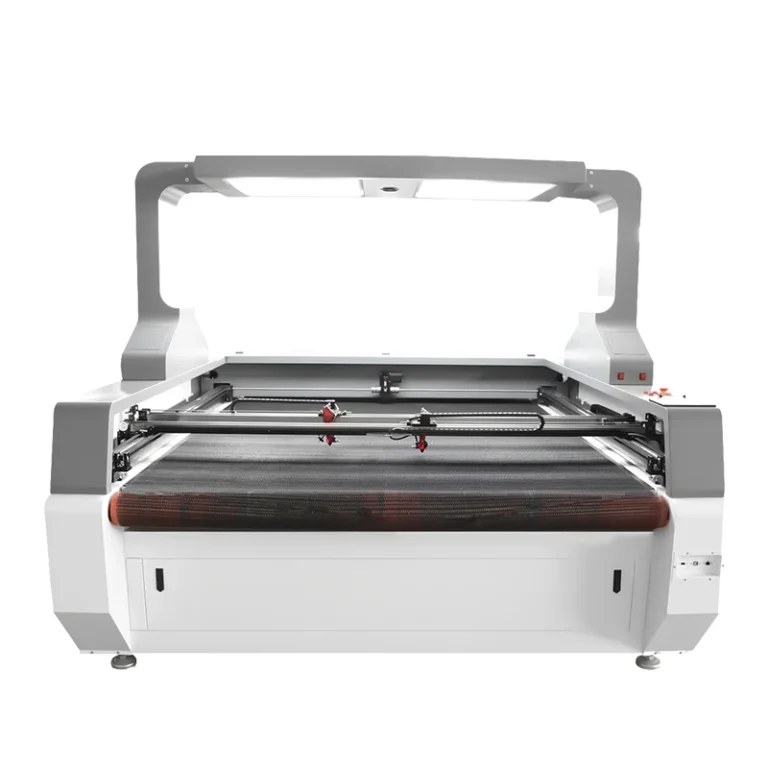
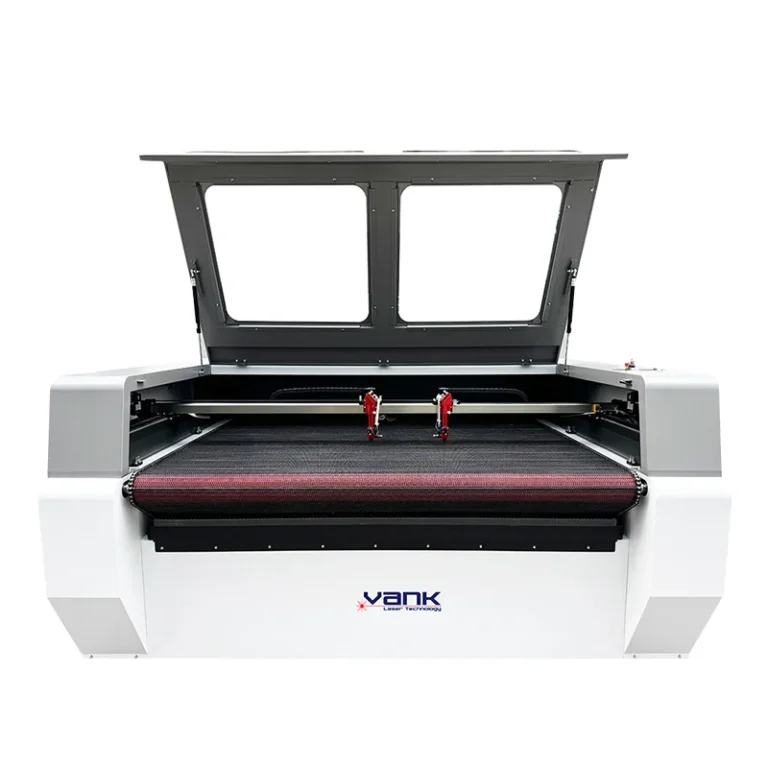
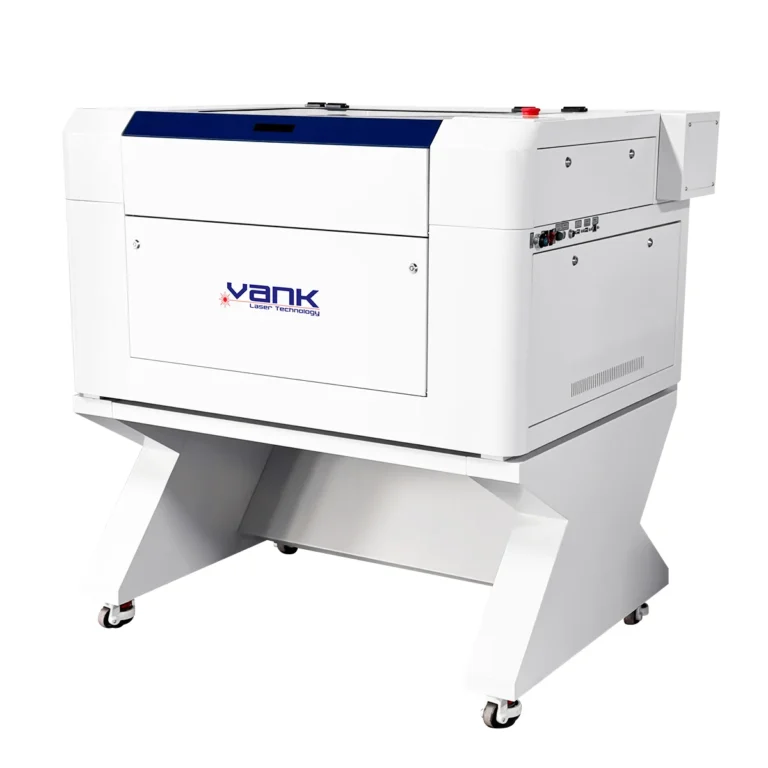
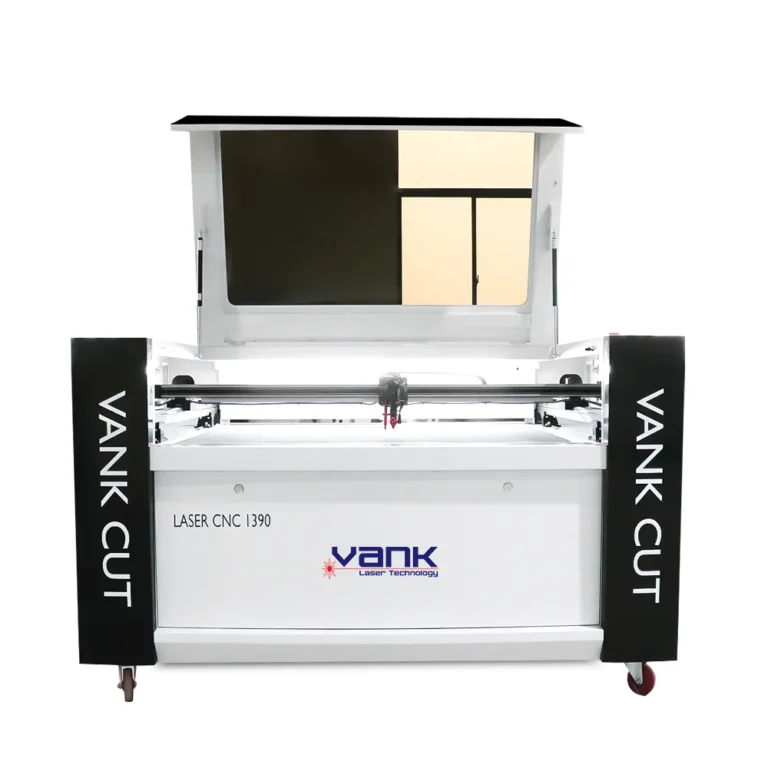
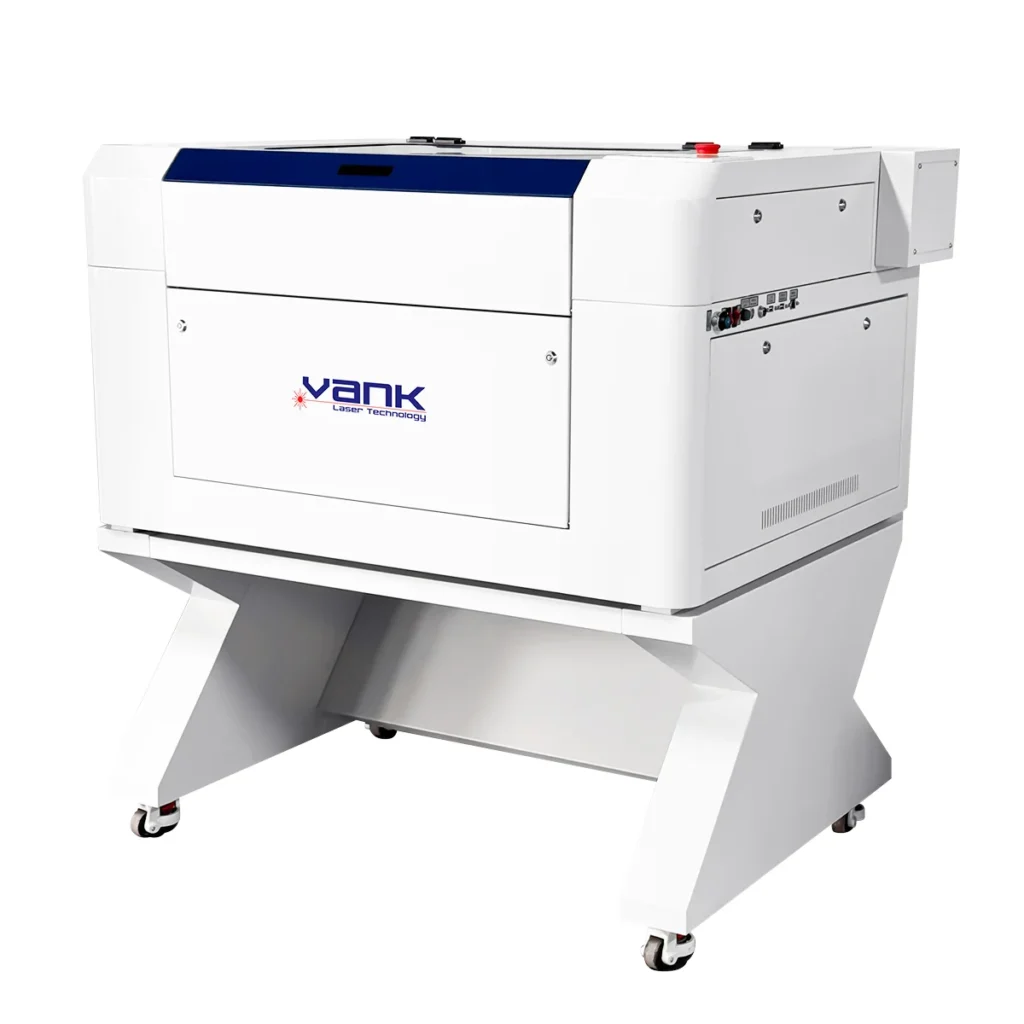
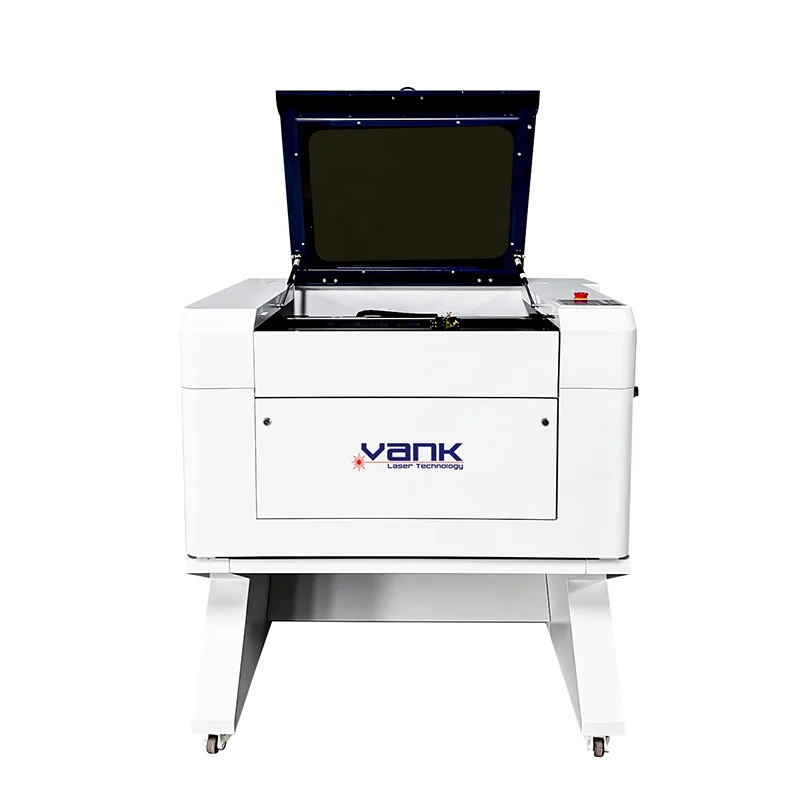
The VankCut high-speed series combines a 30, 40 or 60 W RF-excited CO2 source with 600 × 400, 700 × 500 or 900 × 600 mm work areas. It is designed for fast raster engraving, vector marking and qualified light cutting of acrylic, wood, paper, laser-safe textiles, approved laminates and other documented non-metal materials.
- Reference engraving travel speed up to 1000 mm/s on the confirmed configuration; production speed requires sample approval
- 30, 40 or 60 W RF-excited sealed-metal CO2 source options
- 600 × 400, 700 × 500 or 900 × 600 mm nominal work areas
- Honeycomb or knife-blade worktable selected for the material
- Ruida RDC6445-class DSP controller or confirmed equivalent
- Optional motorized Z table, focus probe and red-dot pointer
- Emergency stop, lid/interlock circuit, source cooling, extraction and fire controls confirmed in the quotation
- RDWorks-compatible workflow; LightBurn Pro support depends on the confirmed controller and firmware
- Supplied software runs on the quoted Windows configuration; current LightBurn Pro supports Windows, macOS and Linux

30-60 W RF CO2 Options
Choose a 30, 40 or 60 W RF source according to engraving detail, substrate, duty cycle and light-cutting requirement. Brand, wavelength, rated output, modulation, cooling and warranty are confirmed for the ordered source.
Three Work-Area Options
Select 600 × 400, 700 × 500 or 900 × 600 mm nominal travel for the intended sheet size and nesting pattern. Confirm usable travel, access opening, Z clearance and fixture envelope on the approved drawing.
High-Speed Belt Gantry
A lightweight gantry, belt drive and linear guides support fast raster movement. Motor type, guide specification, acceleration, usable speed and the quality acceptance method are confirmed for each bed size.
Source-Specific Cooling
RF CO2 sources may use forced-air or active-water cooling according to the exact model. The quoted cooling package must satisfy the source manufacturer's airflow, coolant, temperature and alarm requirements.
Sample-Qualified High-Speed Output
RF modulation and fast motion can support detailed raster work, but output quality depends on artwork, spot size, acceleration, material and extraction. Approve resolution, banding, edge quality and cycle time with a production sample.
Integrated Utility Layout
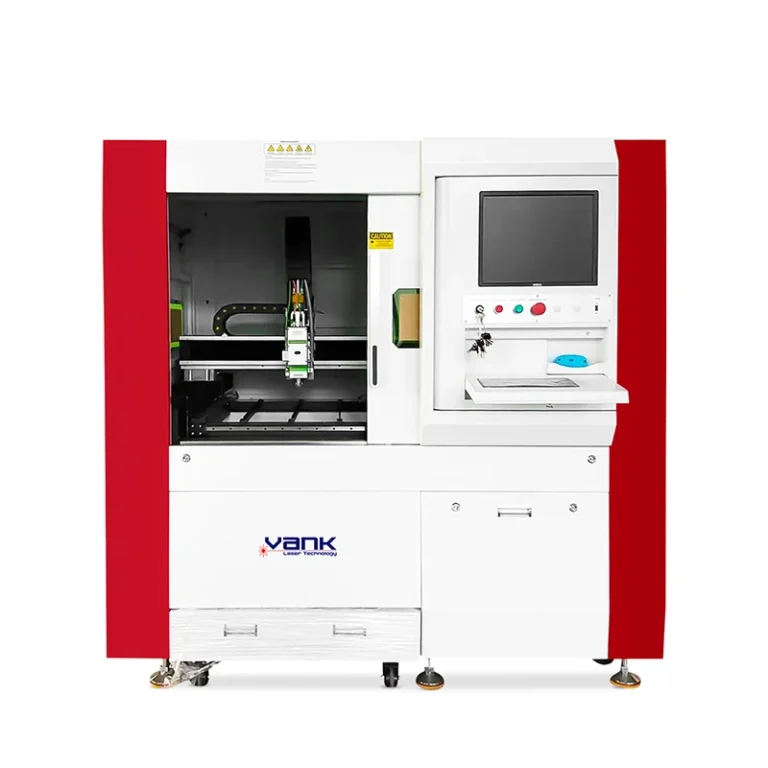
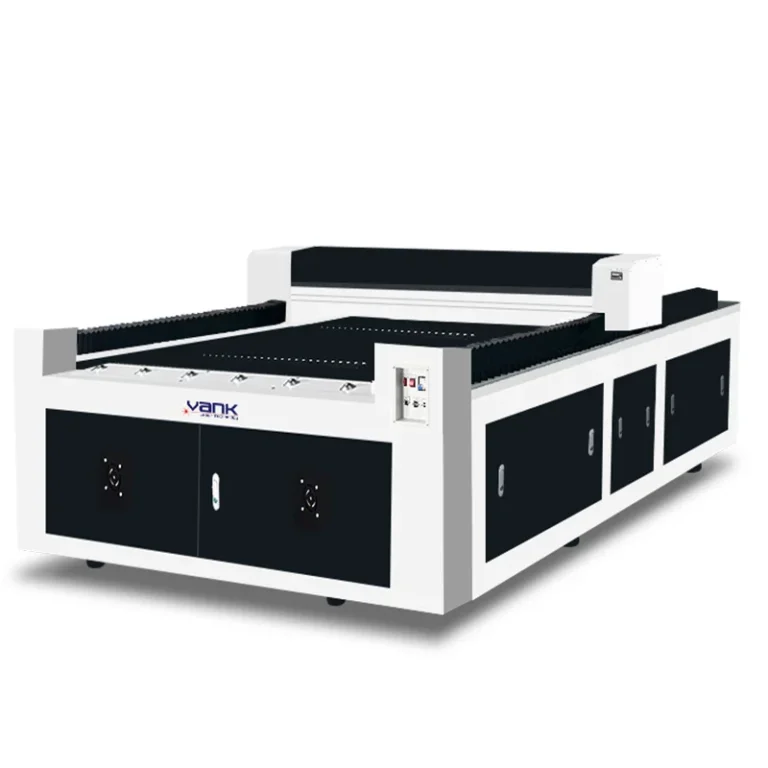
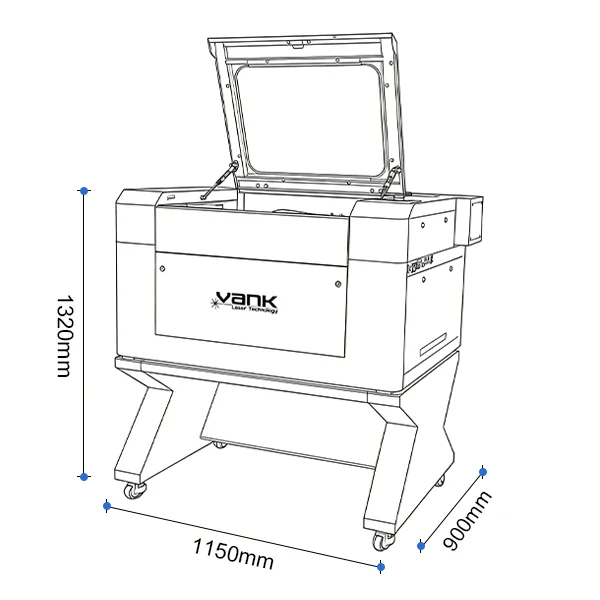
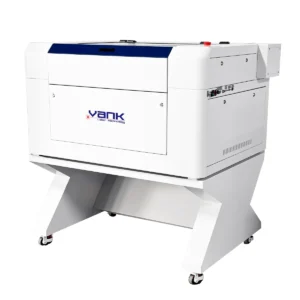
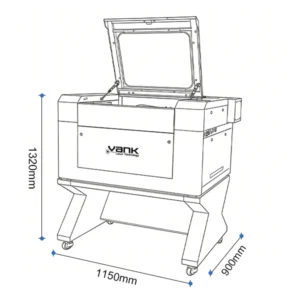
The enclosed cabinet groups the controller, air assist and source utilities for a compact installation. Confirm footprint, weight, doorway clearance, external exhaust or filtration, electrical supply and final service access before shipment.
High-Speed Series Specifications
| Specification | High-Speed Series Reference |
|---|---|
| Series | VankCut-6040 / 7050 / 9060 high-speed RF CO2 family |
| Nominal work areas | 600 × 400 / 700 × 500 / 900 × 600 mm |
| Laser source | RF-excited sealed-metal CO2; brand, model and wavelength confirmed per order |
| Nominal power options | 30 / 40 / 60 W; availability and bed-size pairing confirmed in the quotation |
| Source modulation | RF control; pulse and modulation behavior depend on the confirmed source |
| Cooling | Forced air or active water cooling as required by the selected RF source |
| Reference engraving travel speed | Up to 1000 mm/s on selected configurations; not a guaranteed production rate |
| Cutting speed | Qualified by material, thickness, source, optics and edge requirement |
| Controller | Ruida RDC6445-class DSP or confirmed equivalent |
| Supplied workflow | RDWorks-compatible Windows software |
| Optional workflow | LightBurn Pro only with a confirmed supported controller and firmware |
| XY motion | Belt-driven lightweight gantry with linear guides; motor and acceleration confirmed per size |
| Positioning and repeatability | Axis specification and acceptance method confirmed in the approved order; not a finished-part tolerance |
| Worktable | Honeycomb or knife-blade support selected by application |
| Z and focus options | Motorized Z table, focus probe and red-dot pointer as quoted |
| Air assist | Application-matched air supply; compressor and filtration specification confirmed |
| Extraction | Integrated fan where quoted; compliant external ducting or filtration sized to the material and local rules |
| File transfer | USB/U-disk; Ethernet availability depends on the confirmed controller |
| Electrical and environment | Site voltage/frequency, grounding, dry non-condensing limits and source cooling conditions confirmed |
| Safety | Class 4 source inside cabinet; lid/interlock circuit, emergency stop, viewing window, extraction and fire controls confirmed for the destination |
Material and Process Qualification Guide
| Material or process | Qualification guidance |
| Acrylic and laser-safe laminates | High-speed engraving and qualified cutting after composition, thickness, finish and flame testing. |
| Wood and plywood | Raster engrave or light-cut documented stock; density, moisture, adhesive and resin content affect smoke, banding and charring. |
| Paper and cardboard | Fast marking or low-power cutting with continuous fire supervision and effective extraction. |
| Laser-safe textiles | Cut or mark selected natural or synthetic fabrics only after fiber, coating and flame-retardant review. |
| Documented natural leather | Engrave or cut chromium(VI)-free stock after odor, smoke and edge testing. |
| Laser-safe stamp rubber | Use only material specifically documented for laser processing with suitable extraction. |
| Thin films and approved plastics | Confirm polymer identity, wavelength response, heat distortion, fumes and web or fixture support before processing. |
| Glass, stone and coated ceramics | Surface engraving or coating removal only; confirm contrast, fracture risk and fixture support. |
| Coated or anodized metal | Possible coating removal after testing; bare-metal cutting and direct engraving are not supported. |
| Prohibited materials | PVC, vinyl, PVB, PTFE, halogenated materials, epoxy, phenolic resin, carbon fiber, chromium(VI)-containing leather and unidentified plastics or composites. |
| Speed and quality acceptance | Approve customer files and samples using the ordered source, bed size, optics, acceleration, air assist, extraction and production quality target. |
*Reference travel speed is not a guaranteed production rate. Final detail, cycle time, thickness, finish and throughput require testing with the ordered source, optics, motion settings, air assist and extraction.
Qualified Materials
Typical candidates include cast or extruded acrylic, wood, plywood, paper, cardboard, laser-safe laminates, stamp rubber, selected textiles and documented natural leather. Glass, stone and coated ceramics may accept surface engraving. Never process PVC, vinyl, PVB, PTFE, halogenated materials, epoxy, phenolic resin, carbon fiber, chromium(VI)-containing leather or unidentified plastics and composites.
Typical Industries
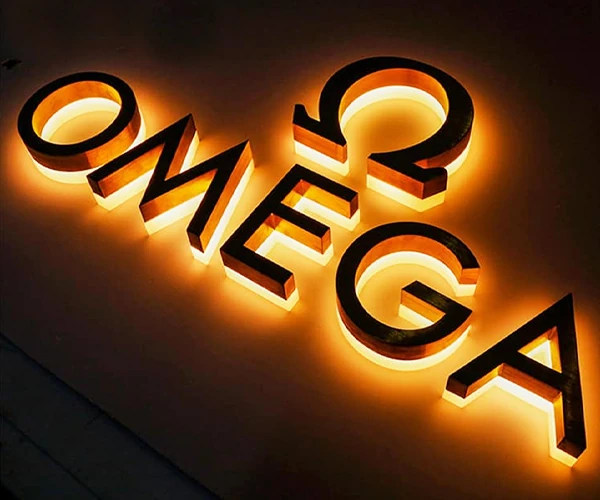
Common uses include personalized gifts, signs and labels, packaging prototypes, paper goods, small-batch wood and acrylic products, approved textile patterns, documented leather goods and contract engraving. Review each substrate from its SDS and qualify fumes, flame behavior, detail and cycle time.

Acrylic Engraving

Paper Cutting

Wood Engraving

Acrylic Cutting

Laser-Safe Stamp Rubber Engraving

Wood Cutting

HONEYCOMB OR KNIFE-BLADE TABLE
Select the support surface for the material, part size and airflow requirement

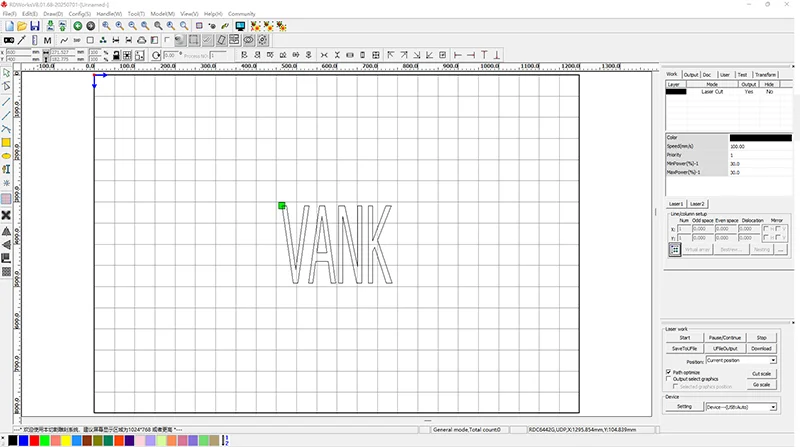
RDWorks-Controlled File Workflow
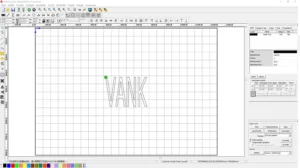
The supplied Windows workflow imports common vector and bitmap files for layout, layer assignment and process settings before transfer to the DSP controller. Clean source artwork and verify dimensions, line weight, raster resolution, scan direction and cut order before production.

Ruida RDC6445-Class DSP Controller
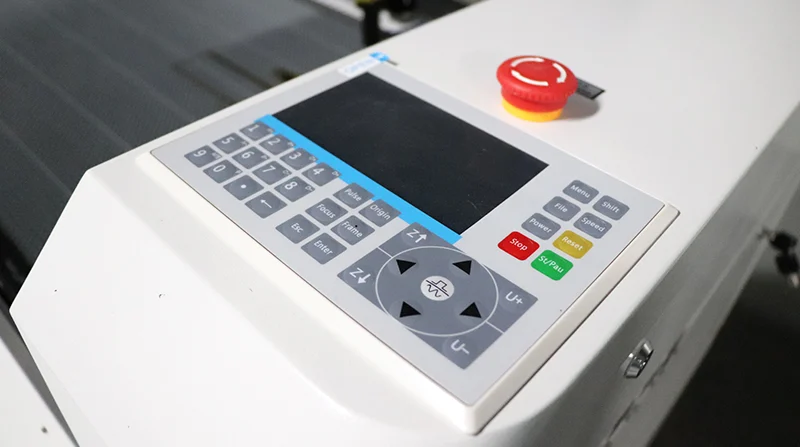
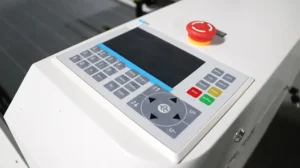
The Ruida RDC6445-class panel supports local job selection, layer parameters, framing and status checks. LightBurn Pro is supported only when the delivered controller model and firmware appear in LightBurn's current compatibility guidance.

High-Speed Head and Linear Guides
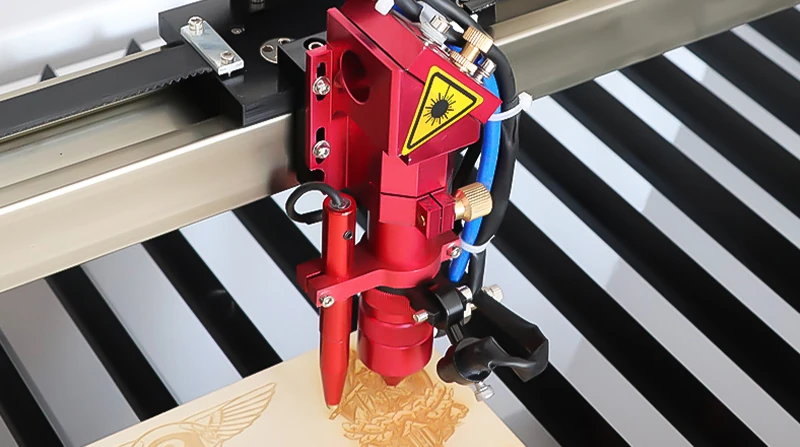
The compact head and guided belt gantry are configured for fast raster travel. Up to 1000 mm/s is a configuration-dependent reference, not a universal production guarantee; acceleration, detail, banding and cycle time are approved on the customer sample.

Integrated Source and Utility Bay
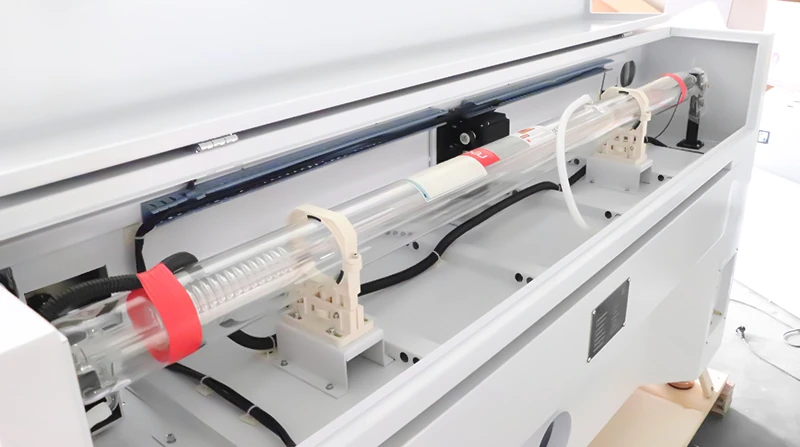
The rear utility bay can integrate source cooling, air assist and an exhaust fan as specified. It still requires a compliant electrical connection, grounding, external exhaust duct or filtration, fire controls and commissioning for the destination site.
FAQ
What materials can a CO2 laser engraving/cutting machine process?
- Review the material SDS and approve a representative sample before production.
It can process qualified acrylic, wood, plywood, paper, cardboard, laser-safe laminates, stamp rubber, selected textiles and documented natural leather. Suitability depends on composition, additives, fumes and flame behavior. PVC, vinyl, PVB, PTFE, halogenated materials, epoxy, phenolic resin, carbon fiber and unidentified polymers or composites are prohibited.
Can a CO2 laser cut or engrave metal?
This RF CO2 series is intended for non-metals and does not cut bare metal. It may remove paint or mark certain coated or anodized surfaces after testing, but that is a coating process rather than bare-metal engraving. Use a purpose-built fiber platform for direct metal work.
Why is the laser tube not emitting light or losing power?
Stop the job and follow the source and machine service procedure. Check controller alarms, emergency stop, lid/interlock state, RF-source status, cooling airflow or coolant flow, and approved diagnostic signals.
Do not bypass interlocks or open the RF power supply. A trained technician should isolate source, power-supply, cooling, control or optical faults using the delivered manual.
What maintenance does the chiller and water cooling system require?
Follow the delivered RF source and cooler manual because some source models use forced-air cooling while others require an active coolant loop. Keep fans, filters and heat exchangers clean, maintain unobstructed airflow, and inspect hoses if water cooling is fitted.
Monitor temperature and flow alarms, prevent freezing and condensation, and isolate power before service. Use only approved coolant and maintenance intervals; do not apply a universal temperature or change schedule to every source.
What is the difference between CO2 and fiber lasers?
An RF-excited CO2 source is commonly selected for fast engraving and light cutting of approved organics, acrylic and thin materials. A 1 µm-class fiber laser is generally selected for metals and some engineering plastics. Choose by material absorption, detail, geometry, depth and production rate.
What working area sizes are common?
This high-speed family offers nominal 600 × 400, 700 × 500 and 900 × 600 mm work areas. Each size has a different footprint, gantry, acceleration and fixture envelope, so confirm the usable area and sample performance for the selected configuration.