


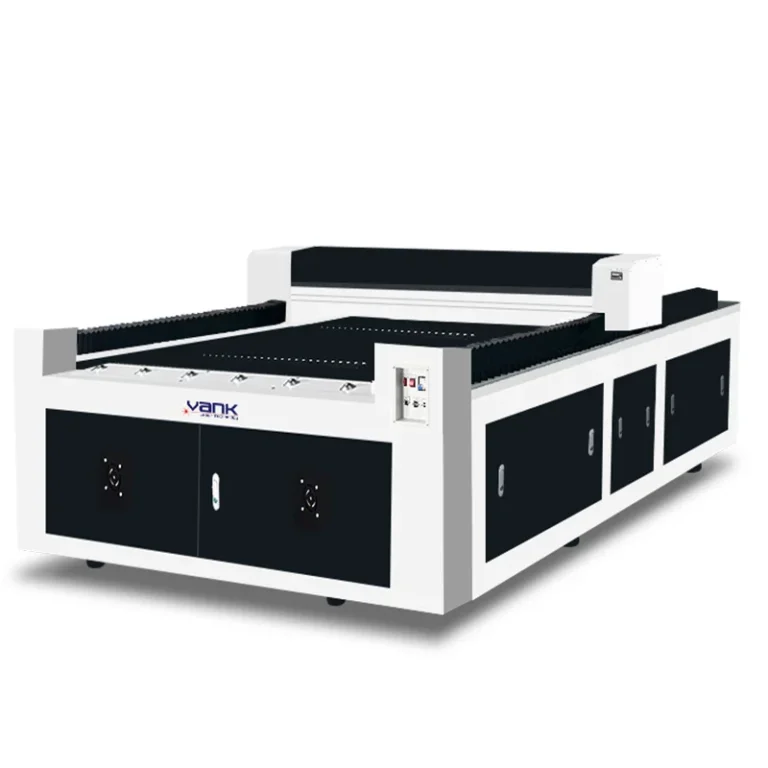


HomeProductsLaser Machines for Sign MakingDual-Head Hybrid CO2 Metal & Non-Metal Laser Cutter
Dual-Head Hybrid CO2 Metal & Non-Metal Laser Cutter

Dual-Head Hybrid CO2 Metal & Non-Metal Laser Cutter

Laser Machines for Sign Making

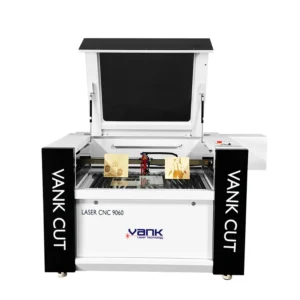
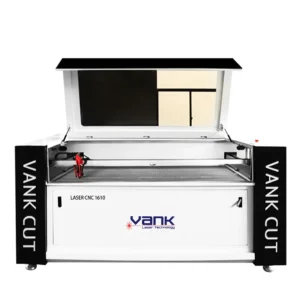
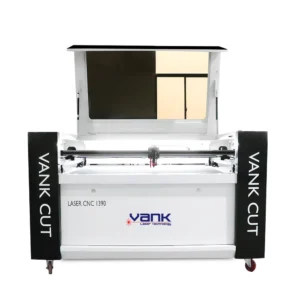
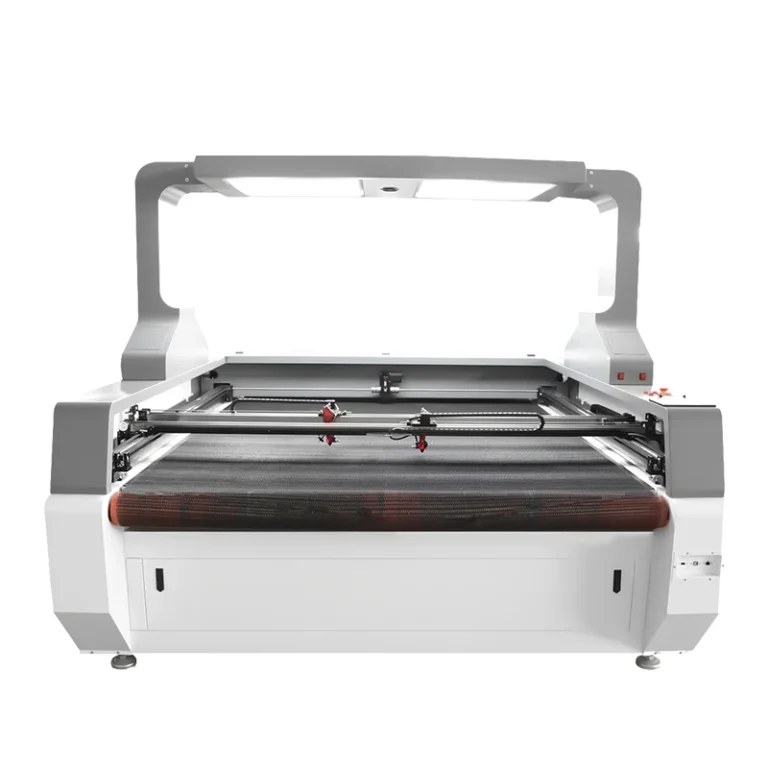
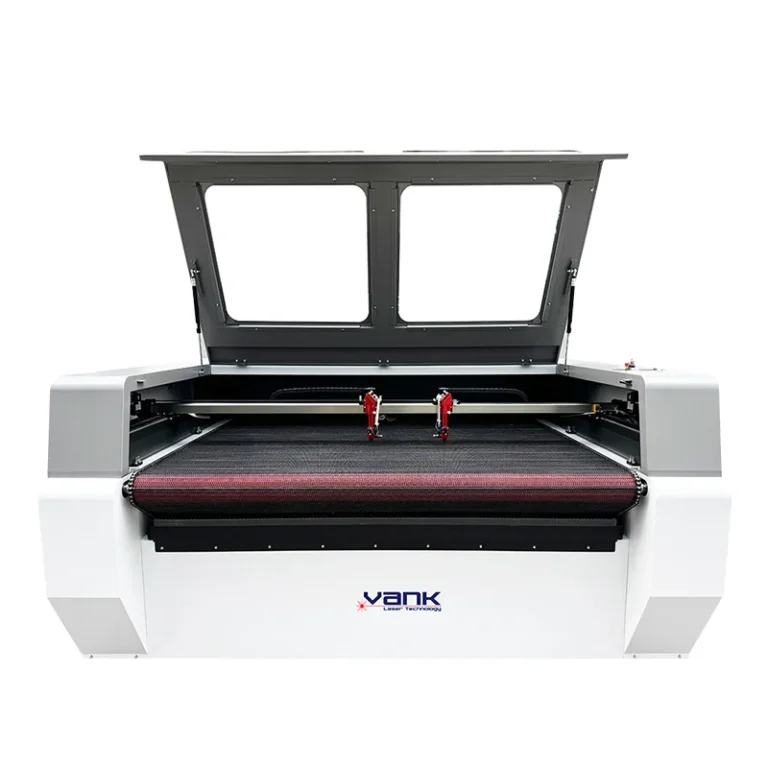
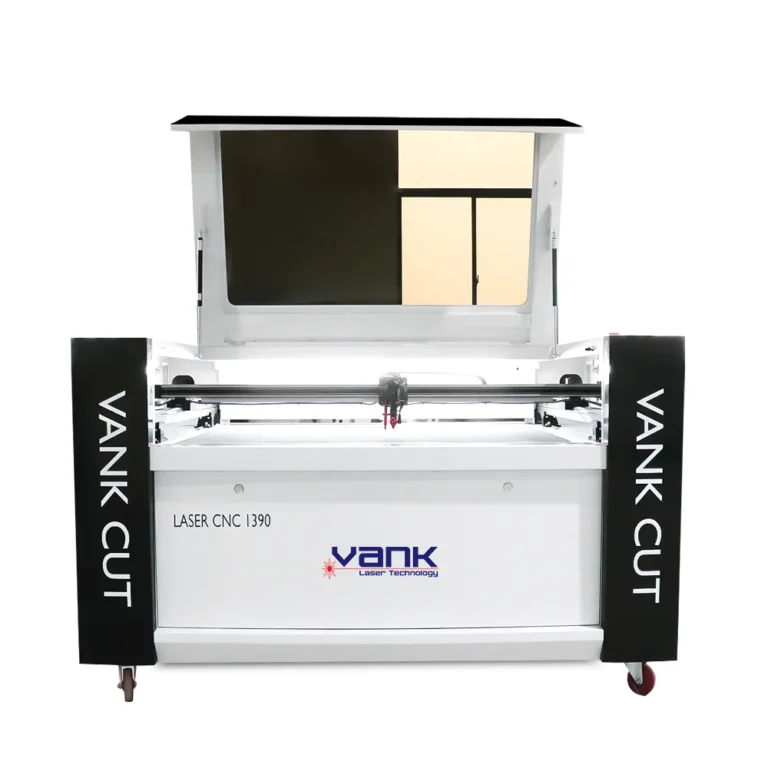
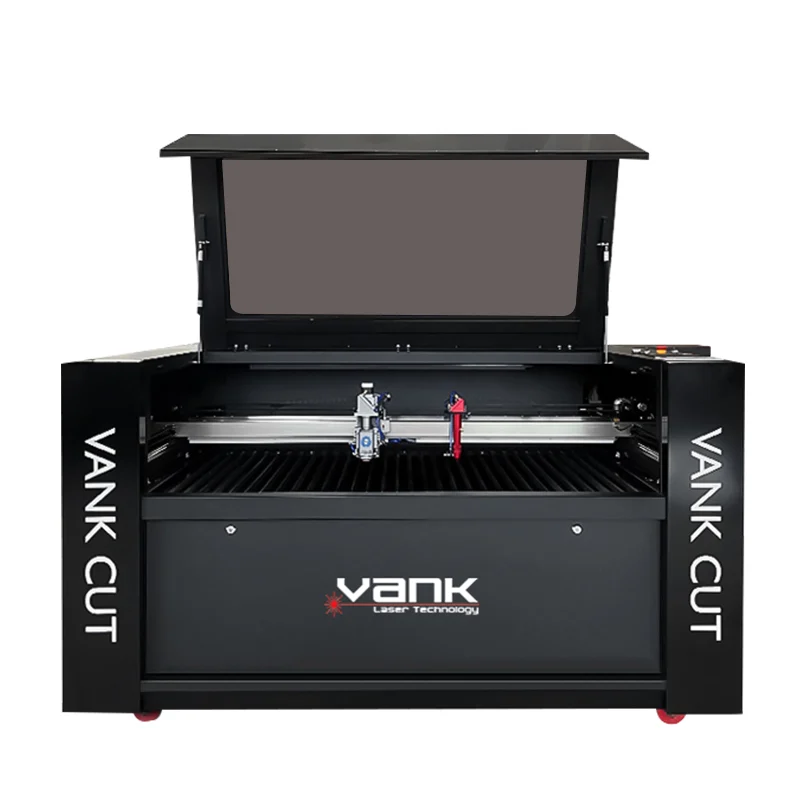
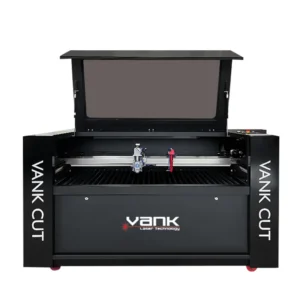
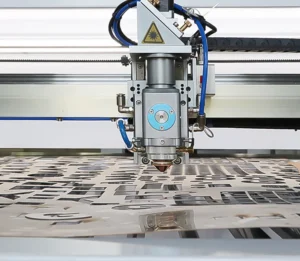
The dual-head hybrid CO2 laser cutter combines a standard CO2 head for approved non-metals with a height-following head for light-gauge stainless and carbon steel. Choose 150-500 W power and 1300 x 900, 1600 x 1000 or 1300 x 2500 mm working areas. Metal cutting requires the complete nozzle, focus-control, assist-gas, cooling and extraction configuration. Share the alloy, non-metal material, thickness and target output for a factory sample test and quotation.

Share:

Enter password to download our product information Contact sales@vanklaser.com

Product Description

Hybrid CO2 Cutting for Metal and Non-Metal Materials

The dual-head hybrid CO2 laser cutter combines a conventional CO2 engraving/cutting head for approved non-metals with a height-following metal head for light-gauge sheet. With the correct 150-500 W tube, nozzle, focus control and assist-gas configuration, it can process acrylic, wood, MDF, plywood, paper, natural leather and textiles, plus application-tested stainless and carbon steel. Metal capability is configuration-specific and must be confirmed with the actual alloy and thickness.

  • 150-500 W CO2 laser-power options matched to the required materials
  • Working areas: 1300 x 900, 1600 x 1000 or 1300 x 2500 mm
  • Dual-head workflow for approved non-metals and light-gauge sheet metal
  • Dedicated height-following metal head with oxygen or other specified assist gas
  • Knife-blade worktable for rigid sheets and safe fume extraction below the bed
  • HIWIN linear guides with rack-and-pinion motion and stepper drives
  • Ruida RDC6332M mixed-cutting controller; software workflow depends on the final configuration
  • Confirm operating-system, driver and software compatibility in the quotation

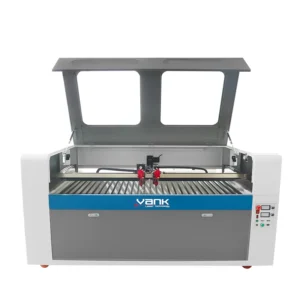
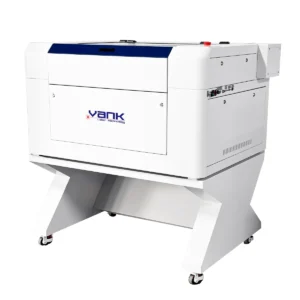
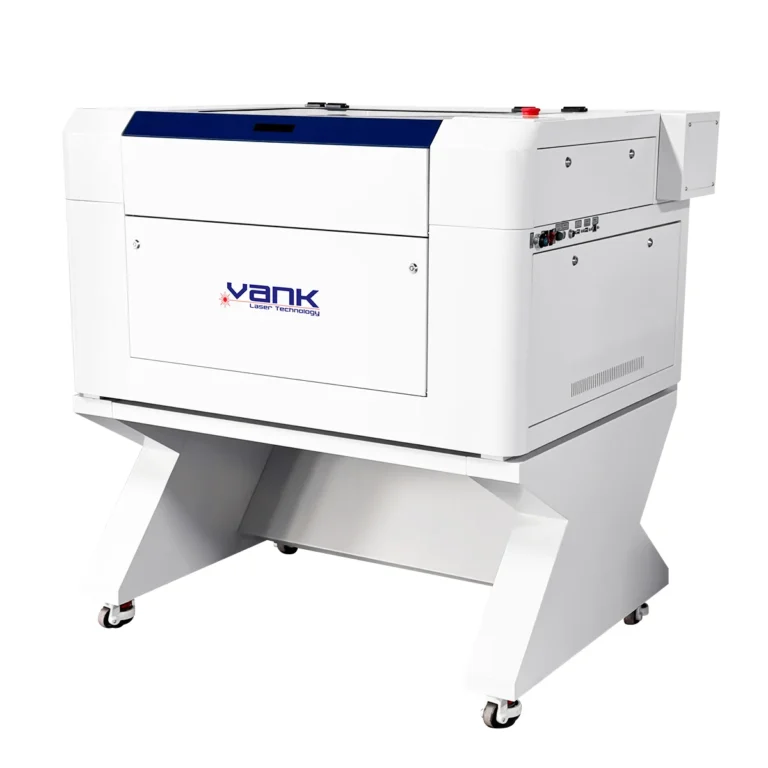
Dual-head hybrid CO2 laser cutter for metal and non-metal processing

150-500 W CO2 Power Options

Select the tube power around the alloy, non-metal material, thickness, edge requirement and target output. The metal-cutting option also requires the correct following head, nozzle, gas supply, regulator and extraction system; power alone does not determine capability.

Three Working-Area Options

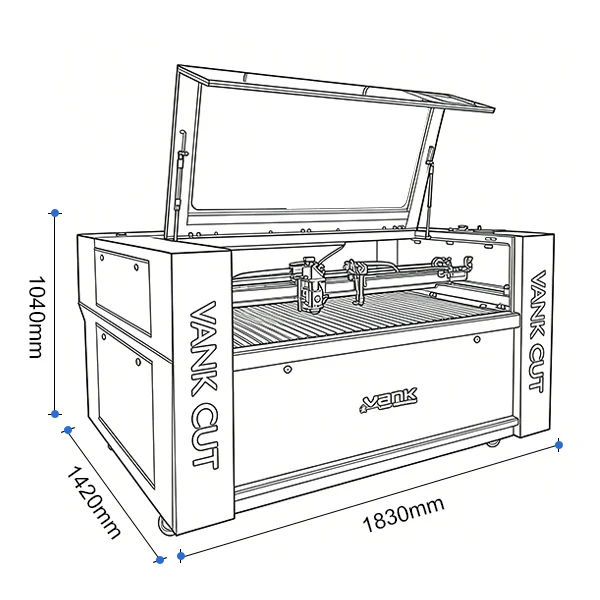
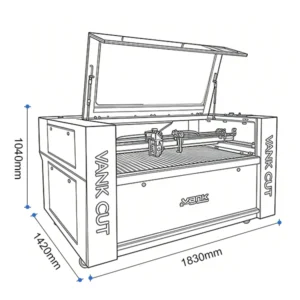
Choose 1300 x 900, 1600 x 1000 or 1300 x 2500 mm travel according to sheet size and floor space. Confirm usable travel, loading clearance, machine footprint and shipping dimensions for the exact configuration.

Reinforced Machine Frame

A welded frame, linear guides and rack-and-pinion transmission support stable motion across the selected bed size. Positioning accuracy and repeatability must be verified during factory acceptance for the final machine, load and process speed.

Matched Water-Cooling System

An industrial chiller controls CO2 laser-tube temperature during operation. Chiller capacity, coolant specification, flow alarms and maintenance intervals must match the selected tube power and local ambient conditions.

Knife-Blade Worktable

The open knife-blade bed supports rigid non-metal sheets and light-gauge metal while reducing contact marks and allowing fumes to be extracted below the cut. Bed construction and load rating are confirmed for the selected model.

Application-Tested Cutting Capacity

Reference data on this page covers thin stainless and carbon steel only when the machine is equipped with the mixed-cutting head, height control and specified assist gas. Up to 3 mm stainless steel and 4 mm carbon steel are high-power reference cases, not universal limits. Non-metal thickness, speed and finish likewise vary with formulation, focus, air assist and pass count; request a factory sample test.

Machine Specifications

ModelVankCut-1390 / VankCut-1610 / VankCut-1325 Hybrid
Laser Power150 / 180 / 200 / 300 / 500 W
Working Area1300 x 900 / 1600 x 1000 / 1300 x 2500 mm
Cooling TypeWater-cooled; chiller matched to tube power
Maximum Engraving SpeedUp to 600 mm/s
Maximum Cutting SpeedUp to 200 mm/s; process-dependent
Reference Metal Thickness0.1-2.5 mm typical; higher-power cases require testing
Minimum Character SizeChinese characters: 2 x 2 mm; Latin letters: 1 x 1 mm
Maximum Raster ResolutionUp to 4000 dpi
Positioning Accuracy≤0.01 mm; verify at acceptance
Control PanelRD6332M
Controller WorkflowRuida mixed-cutting DSP; software configuration-dependent
Common File FormatsPLT, BMP, DXF, AI and others; software-dependent
Layered ProcessingYes
Working Environment0-45 °C; 5-95% RH, non-condensing

Reference Cutting Thickness by CO2 Power

Material150 W180 W200 W300 W500 W
Acrylic20 mm22 mm25 mm30 mm40 mm
Plywood (air assist)15 mm18 mm20 mm25 mm30 mm
Other Approved Non-MetalTestTestTestTestTest
MDF (air assist)5 mm8 mm10 mm//
Stainless Steel (oxygen-assisted)1.2 mm1.5 mm1.5-2 mm2-2.5 mm2-2.5 mm

*Reference values are not guaranteed limits. Results depend on tube power and condition, optics, focus, nozzle, height following, assist-gas type and purity, pressure, alloy or material formulation, speed and pass count. Confirm every production material by factory test. Never laser-process PVC, vinyl, PTFE, halogen-containing materials or epoxy/phenolic-resin products.

Indicative Process Data - Factory Test Required

Material / ThicknessSpeedOxygen Reference (MPa)Air Assist Reference (MPa)
Stainless steel / 1mm4.5-5 m/min0.5-
Stainless steel / 1.5mm2.5-3 m/min0.5-
Stainless steel / 3mm0.9-1 m/min0.5-0.6-
Carbon steel / 1mm4.5-5 m/min0.5-
Carbon steel / 1.5mm2.5-3 m/min0.5-
Carbon steel / 2mm1.5-1.7 m/min0.5-
Carbon steel / 3mm0.9-1 m/min0.5-0.6-
Carbon steel / 4mm0.4-0.5 m/min0.5-0.6-
Acrylic / 15mm0.4-0.5 m/min-Air pump
Acrylic / 25mm0.1-0.2 m/min-Air pump
Acrylic / 30mm0.06-0.1 m/min-Air pump
Galvanized sheet / 1mm4-4.5 m/min0.4-
Galvanized sheet / 1.5mm2.5-3 m/min--
Die board / 18mm0.4-0.5 m/min-0.4-0.5
Approved thermoplastic / 1 mm10-10.5 m/min-0.4-0.5
Approved thermoplastic / 1.5 mm6.5-7 m/min-0.4-0.5
Other approved non-metal / 2 mmTest required-0.4-0.5
Other approved non-metal / 3 mmTest required-0.4-0.5

Compatible Materials and Process Limits

The non-metal head can cut and engrave acrylic, wood, MDF, plywood, paper, natural leather, many textiles and other identified laser-safe materials. The dedicated metal head can cut application-tested light-gauge stainless and carbon steel with the specified assist gas. Reflective alloys, galvanized coatings, plastics, rubber and synthetic leather require composition review, fume assessment and sample testing. The tables are historical reference data only; the signed quotation and acceptance sample define the supplied capability.

Industries and Production Uses

Typical uses include mixed-material signage, light-gauge control panels, display fabrication, architectural models, furniture components, packaging dies, crafts, leather goods and textile patterns where one workshop needs both non-metal processing and limited thin-sheet metal cutting.

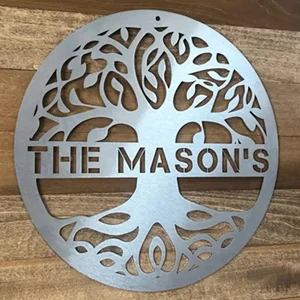
Thin stainless steel cutting sample from a hybrid CO2 laser
Carbon steel cutting sample from a hybrid CO2 laser
Acrylic cutting sample for signage fabrication
Wood and MDF cutting sample from the CO2 head
Light-gauge metal application sample
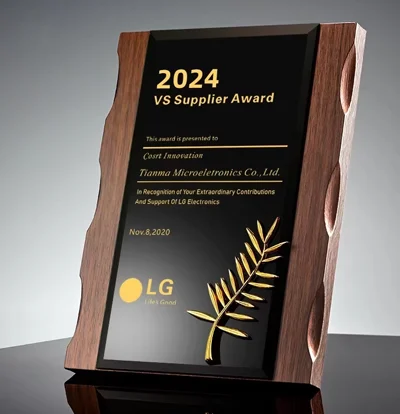
Acrylic letter and display cutting sample

Plywood and non-metal cutting sample
Mixed metal and non-metal production samples

Dual-Head Hybrid CO2 Metal & Non-Metal Laser Cutter

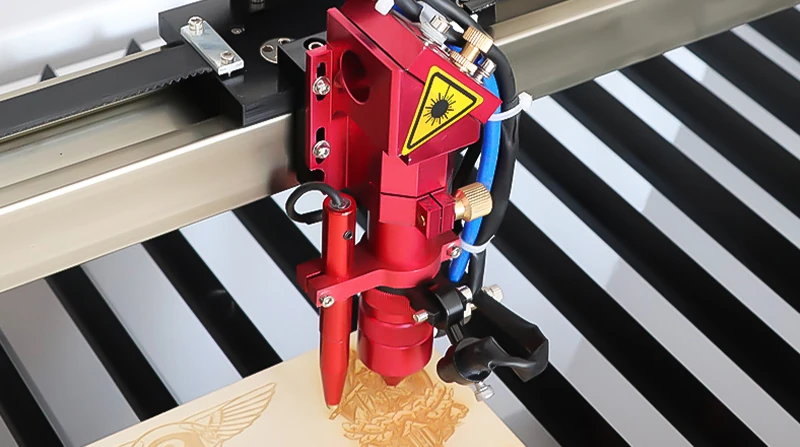
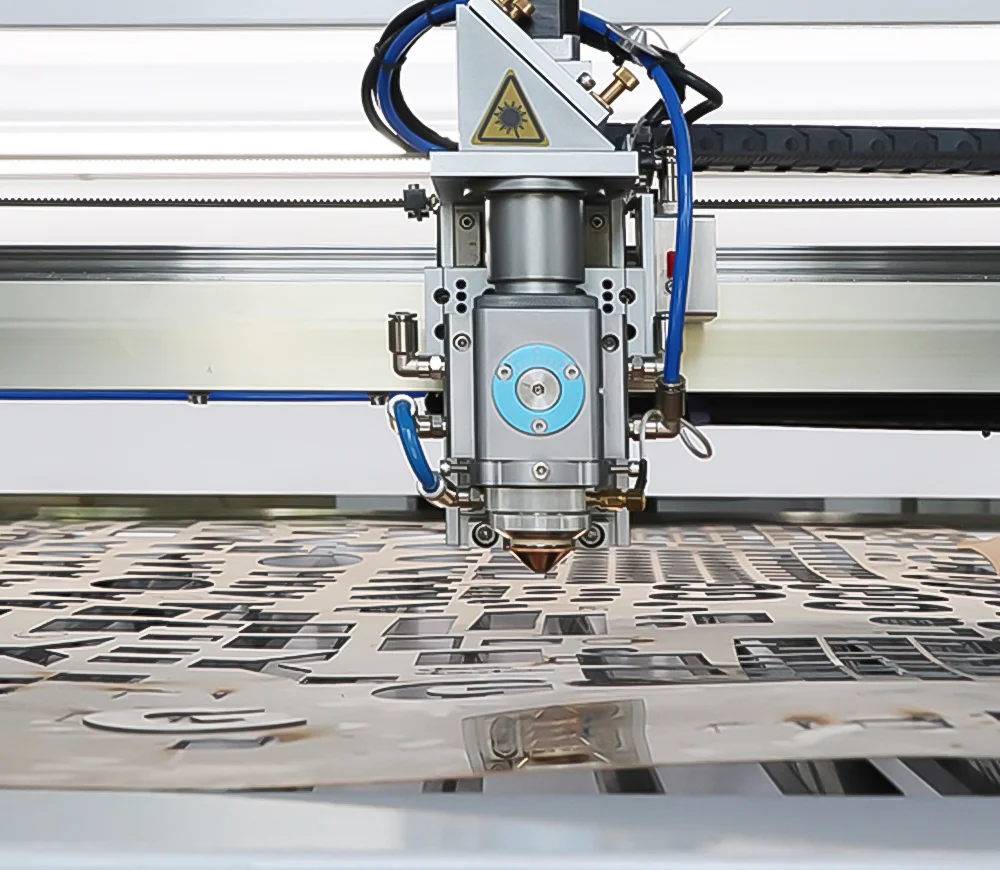
Height-following metal cutting head and nozzle

Height-Following Metal Cutting Head

The dedicated head tracks sheet height to maintain nozzle stand-off during light-gauge stainless and carbon steel cutting. It must be used with the specified lens, nozzle and regulated assist-gas system; gas and focus settings are established by application test.

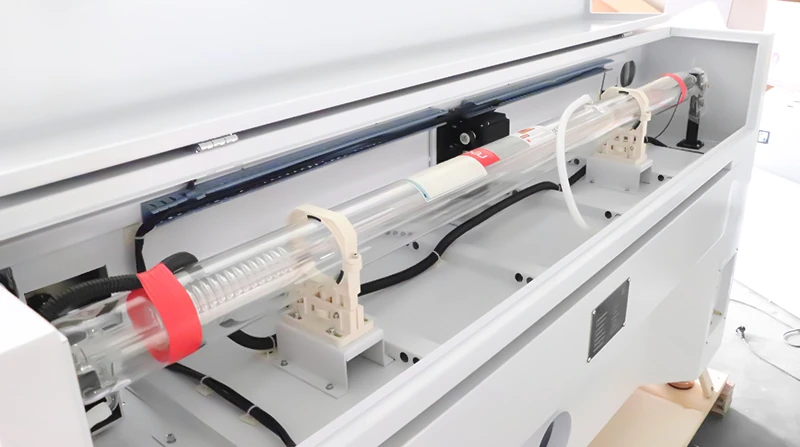
High-Power Glass CO2 Laser Tube

Available 150-500 W tube configurations support non-metal cutting and, with the complete mixed-cutting package, selected thin-metal applications. Tube brand, power supply and chiller are matched as a system; expected output and service life depend on operating current, cooling and maintenance.

High-power glass CO2 laser tube assembly
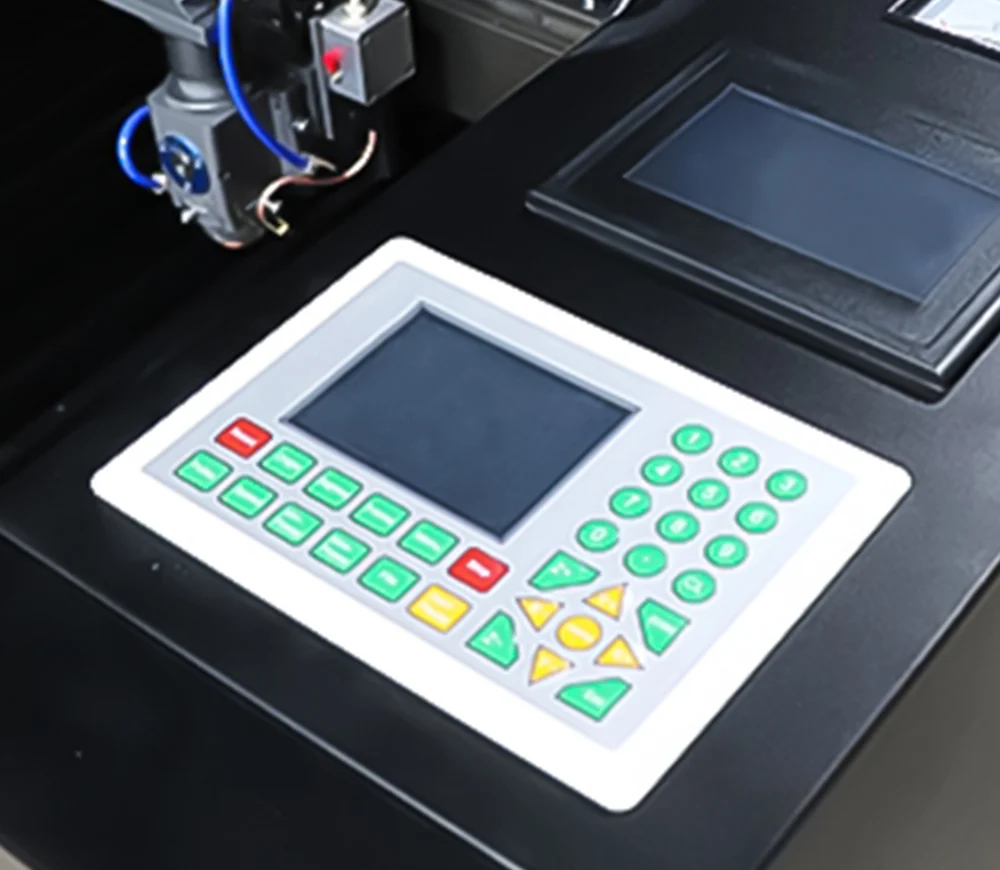
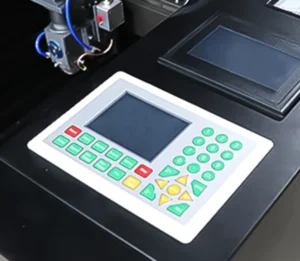
Ruida RDC6332M mixed-cutting controller panel

Ruida RDC6332M Mixed-Cutting Control

The RDC6332M coordinates conventional CO2 processing and the metal head height-following workflow. Controller firmware and software must be configured for the supplied machine; confirm file formats, operating-system support and any LightBurn compatibility before ordering.

Open Knife-Blade Bed

The knife-blade table supports rigid sheets and leaves open space for extraction and assist-gas flow below the cut. Slats are consumable items and should be inspected, cleaned and replaced as residue and cutting damage accumulate.

Open knife-blade worktable for rigid sheet cutting

Hybrid CO2 Laser Cutter FAQ

Which materials can this hybrid CO2 laser cutter process?

The standard CO2 head processes approved non-metals such as acrylic, wood, MDF, plywood, paper, natural leather and many textiles. The dedicated metal head can process application-tested thin stainless and carbon steel. Exact composition must be known; PVC, vinyl, PTFE, halogenated materials and epoxy/phenolic-resin products are prohibited.

How can a CO2 laser cut thin metal?

Metal cutting requires more than a higher-power tube. This hybrid configuration uses a height-following metal head, suitable optics and nozzle, regulated oxygen or another specified assist gas, and process settings developed for the alloy and thickness. A conventional low-power CO2 engraving head is not a metal-cutting system.

What should I check if laser output is weak or absent?

Stop the job and review controller alarms, water flow and temperature, tube condition, mirror and lens cleanliness, alignment and selected power settings. Do not bypass the lid, water-flow, gas or other safety interlocks.

If the cause is not clear, isolate the machine and contact qualified service personnel. High-voltage power supplies, CO2 tubes, oxygen systems and pressurized gas components must not be tested or opened by untrained operators.

How should the chiller and gas system be maintained?

Use the coolant, temperature range and replacement interval specified for the selected tube and chiller. Inspect hoses and flow alarms, clean filters and condenser surfaces, and keep the chiller ventilated within its rated ambient range.

For metal cutting, inspect the regulator, hoses, valves, nozzle and connections under an approved gas-safety procedure. Keep oxygen equipment free from oil and contamination, secure cylinders correctly, and investigate any leak or alarm before operation.

When should I choose a fiber laser instead?

Choose this hybrid CO2 platform when approved non-metals are the main workload and occasional light-gauge steel cutting is required. For regular metal production, reflective alloys, thicker sheet or higher throughput, a fiber laser is normally the better process and should be selected by alloy and thickness.

Which working areas are available?

This series lists 1300 x 900, 1600 x 1000 and 1300 x 2500 mm working areas. Confirm the model, usable travel, bed load, access, exhaust, gas-system space and total footprint in the quotation.

Related Products

HOW TO?
  • What laser equipment does Vank Laser supply?

    Vank Laser supplies fiber laser cutting machines, fiber laser marking machines, CO2 laser cutting and engraving systems, laser welding machines and laser cleaning equipment for industrial production and custom automation projects.

  • How do I choose the right laser machine for my application?

    The right configuration depends on your material, thickness, workpiece size, required speed, accuracy target and production workflow. Share drawings, materials or sample parts with our team so we can recommend a suitable machine, laser power and accessories.

  • Can Vank Laser customize laser equipment?

    Yes. We can evaluate custom work areas, laser power, fixtures, rotary devices, loading systems, vision options and automation interfaces according to your process requirements and confirmed quotation.

  • Which industries use Vank Laser equipment?

    Our machines are used in sheet metal fabrication, signage, packaging, textiles, leather goods, electronics, automotive parts, medical device components, craft production, furniture, molds and general industrial marking, cutting, welding and cleaning.

  • What safety and compliance documents are available?

    Available compliance documents depend on the machine model, destination market and final configuration. We can provide the relevant certificates, manuals and safety documentation for the confirmed order. Operators should follow local safety rules and use proper guarding, ventilation and PPE.

  • What after-sales support do you provide?

    Vank Laser provides installation guidance, operator training, troubleshooting support, spare-parts assistance and warranty service according to the confirmed machine configuration and sales agreement. Remote technical support is available for daily operation questions.

  • How is the price of a laser machine quoted?

    Pricing depends on the model, laser power, working area, controller, source brand, cooling system, accessories, shipping terms and service requirements. Send your application details and we will prepare a configuration-based quotation.

  • How can I contact Vank Laser for more information?

    You can contact Vank Laser through the website form, email, WhatsApp or phone. Please include your material, workpiece size, target process and required output so our team can respond with practical recommendations.

Contact us
If you have any questions or would like to request a quote, Please send us a message.
WhatsApp Now