


HomeProductsLaser Welding and Cleaning MachinesTwin-Wire Handheld Fiber Laser Welding Machine
Twin-Wire Handheld Fiber Laser Welding Machine

Twin-Wire Handheld Fiber Laser Welding Machine

Laser Welding and Cleaning Machines

The twin-wire handheld fiber laser welding machine synchronizes two filler-wire channels with a scanning weld head for wider joints, larger fillets and controlled filler deposition. Choose 1500, 2000 or 3000 W according to alloy, thickness, joint geometry and penetration. Wire alloy and diameter, rollers, liners, tips, shielding gas, chiller, head and power supply are matched as one system. Class 4 beam controls and a factory weld test on the customer's joint are required.

Share:

Enter password to download our product information Contact sales@vanklaser.com

Product Description

Twin-Wire Handheld Fiber Laser Welding

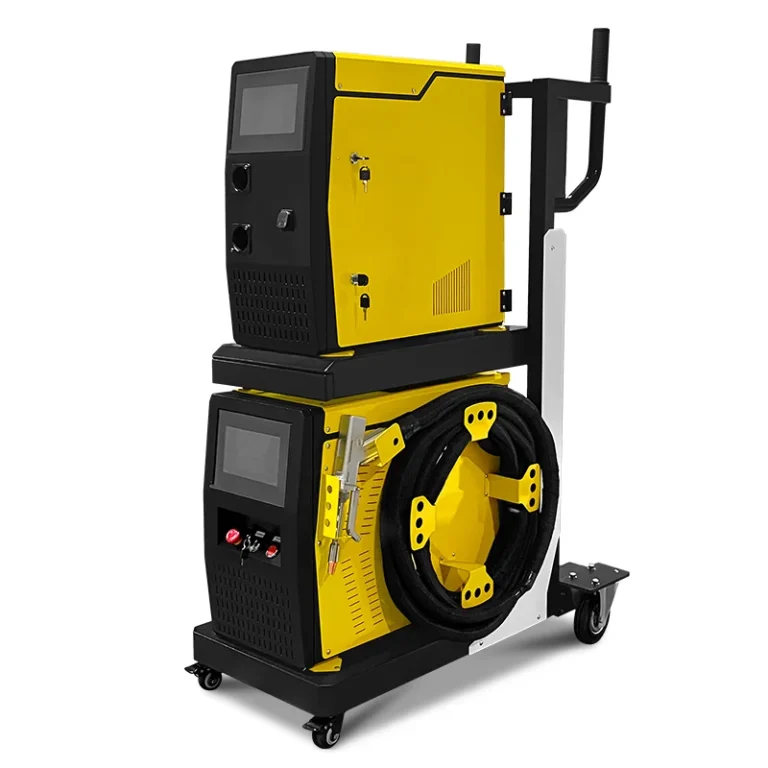
This handheld fiber laser welding system synchronizes two filler-wire channels with a scanning weld head to bridge wider joints, build larger fillets and improve filler distribution on suitable assemblies. Available 1500, 2000 and 3000 W configurations are selected by alloy, thickness, joint geometry and required penetration. Welding is the primary process; weld-seam cleaning, surface cleaning or light cutting modes are included only when the quoted head, optics, controller and safeguards support them.

  • Controlled Weld Quality - stable fit-up, shielding gas and tested parameters reduce spatter and rework
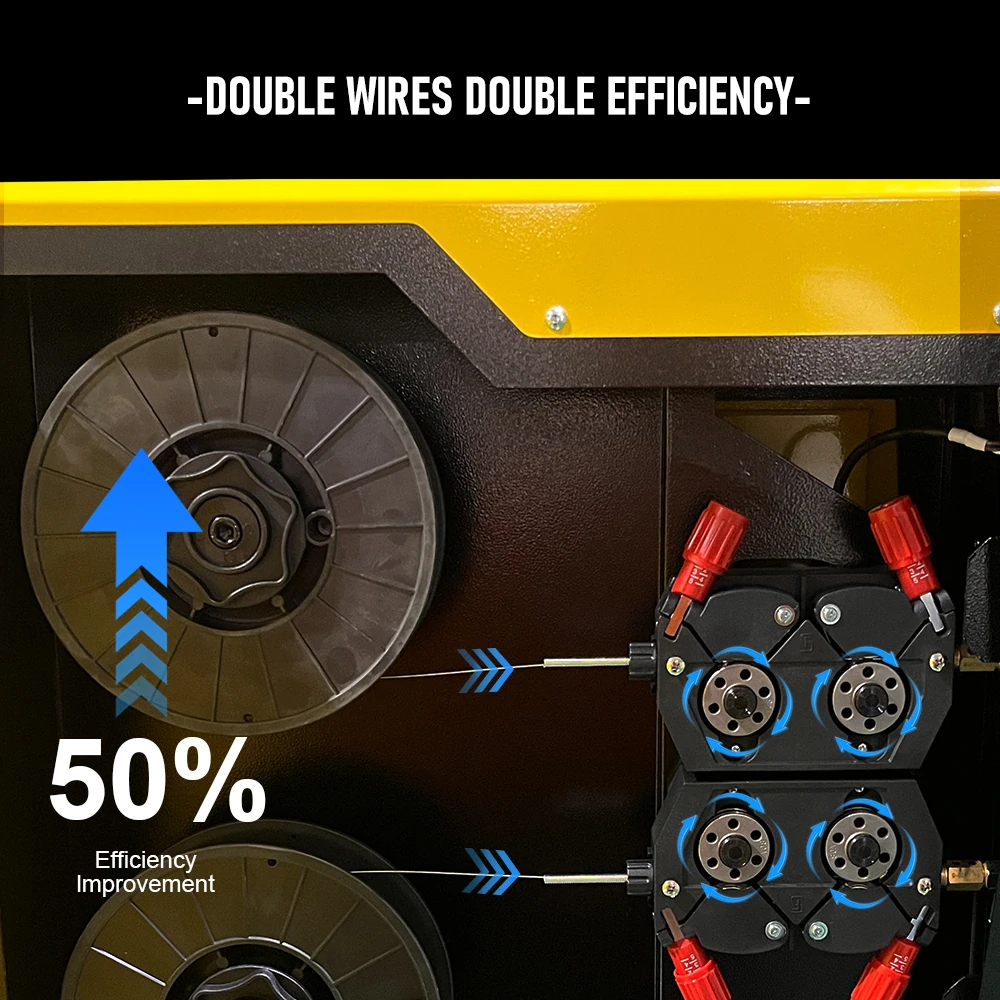
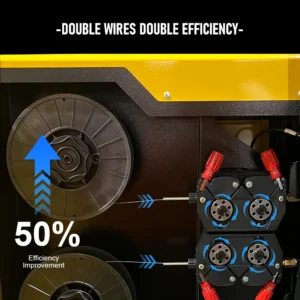
  • Dual-Wire Gap Filling - two synchronized wires can fill larger joints than autogenous welding
  • Application-Matched Consumables - wire alloy, diameter, rollers, liners, tips, nozzle and gas are selected together
  • Production Configuration - source, chiller, head, feeder and safety controls are verified as one system

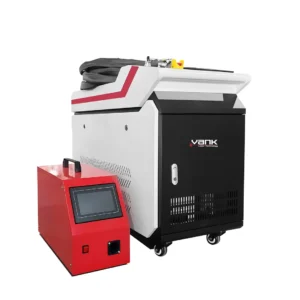
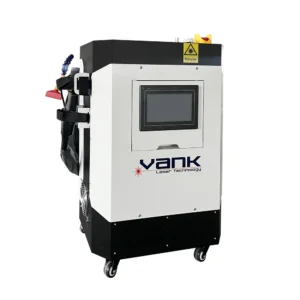
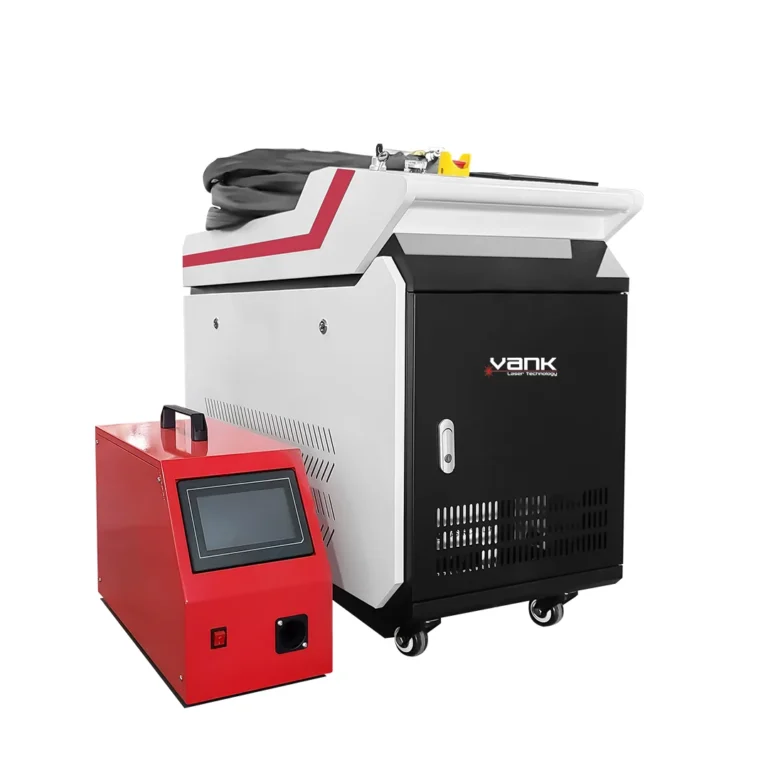
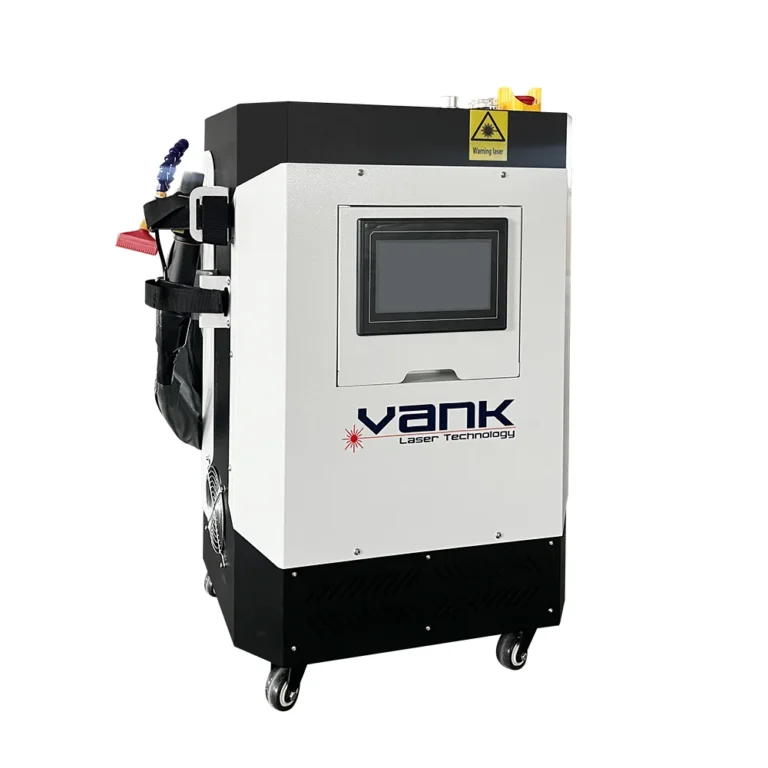
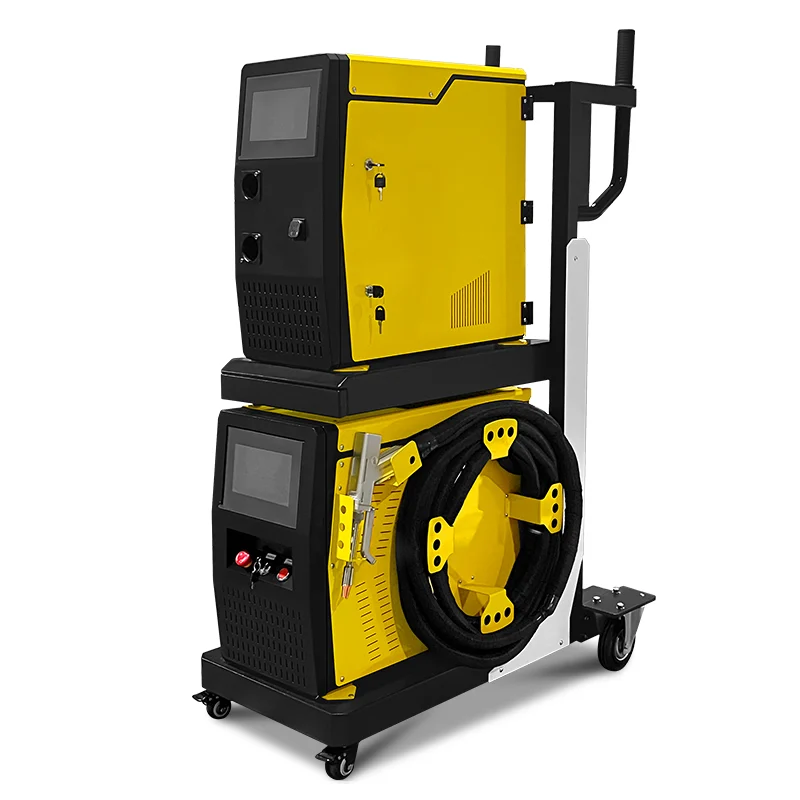
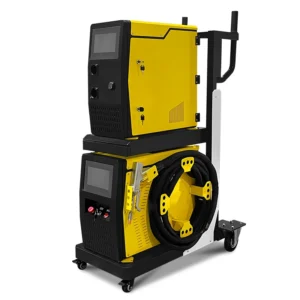
Twin-wire handheld fiber laser welding system and feeder

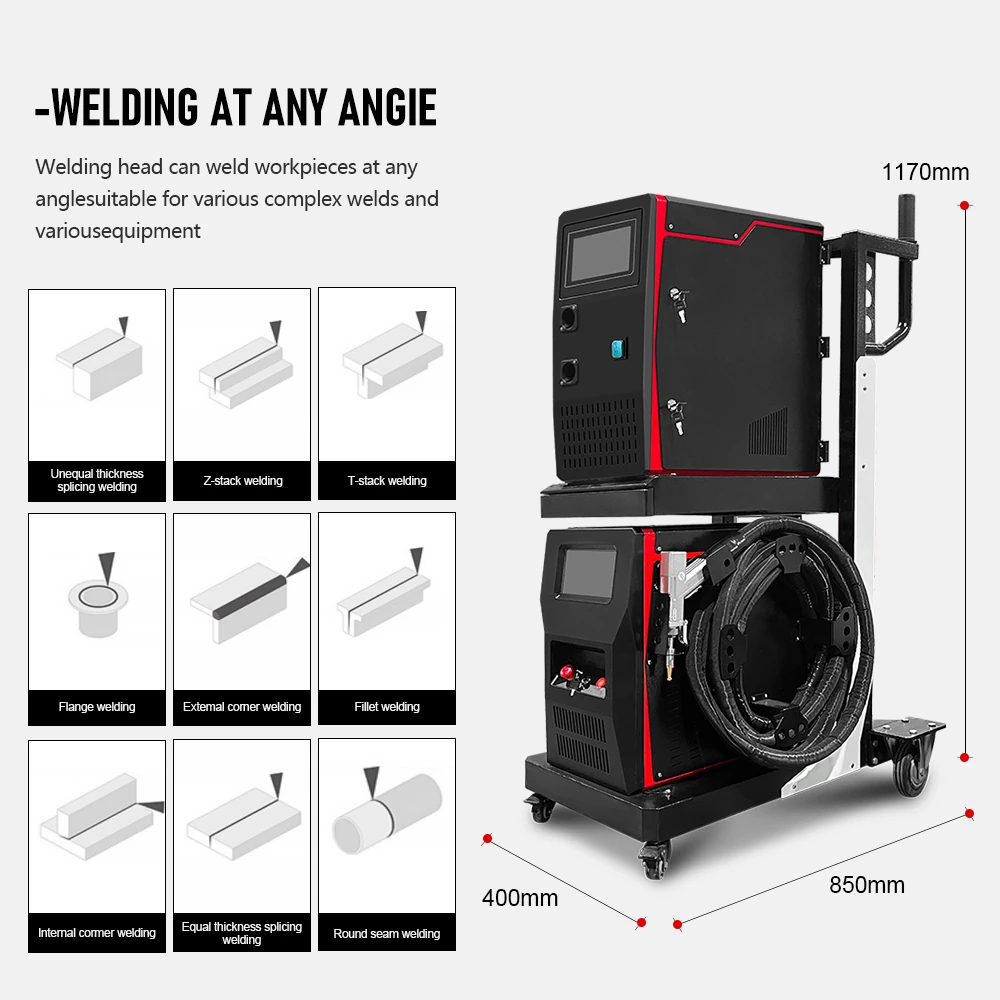
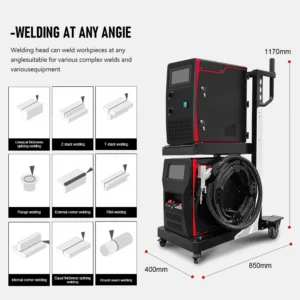
Dissimilar-thickness butt-joint welding diagram

Dissimilar-Thickness Butt Joint

Offset lap-joint welding diagram

Offset Lap Joint

T-joint laser welding diagram

T-Joint

Flange-joint laser welding diagram

Flange Joint

Outside-corner laser welding diagram

Outside Corner Joint

Fillet-joint laser welding diagram

Fillet Joint

Inside-corner laser welding diagram

Inside Corner Joint

Equal-thickness butt-joint welding diagram

Equal-Thickness Butt Joint

Circumferential seam welding diagram

Circumferential Seam

Twin-Wire Laser Welder Specifications

System TypeTwin-wire handheld fiber laser welding system
Laser Power1500 / 2000 / 3000 W
Laser SourceContinuous-wave fiber laser; brand and beam delivery confirmed in quotation
WavelengthApproximately 1070-1080 nm; source-dependent
Primary ProcessHandheld scanning laser welding with synchronized filler wire
Optional ModesWeld-seam cleaning, surface cleaning or light cutting when included
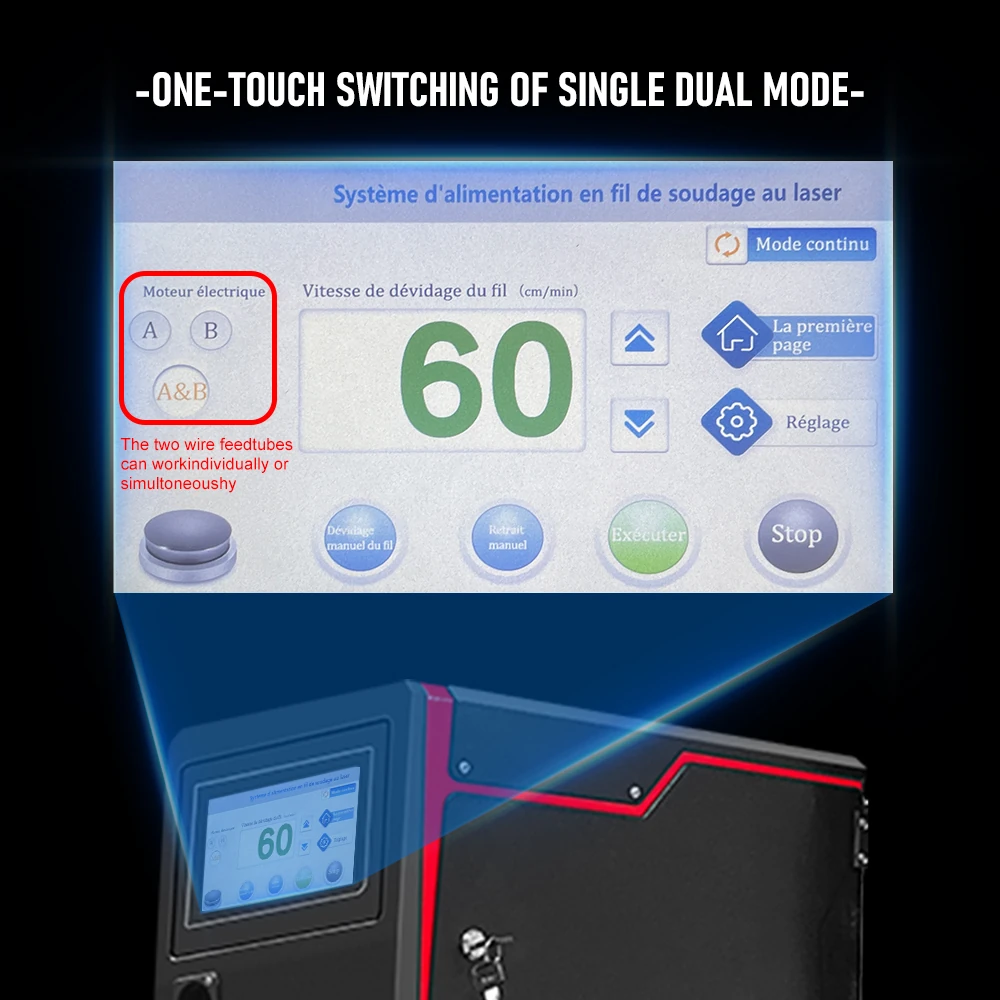
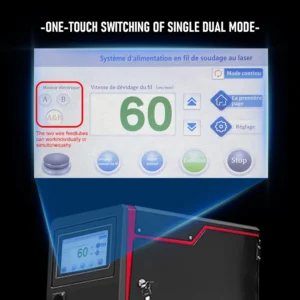
Wire FeedDual-channel synchronized feeder
Compatible Wire Diameters0.8 / 1.0 / 1.2 / 1.6 mm; rollers, liners and tips matched
Reference Joint GapSelf-fusion typically ≤0.5 mm; dual wire up to about 2 mm after testing
Scan / Wobble WidthHead- and nozzle-dependent; confirmed by weld procedure test
Cooling SystemIndustrial water cooling; dual-temperature configuration as required
Shielding GasArgon or nitrogen typically; gas, purity and flow are application-specific
Typical MaterialsCarbon steel, stainless steel, galvanized steel and aluminum; others by test
Fiber Delivery CableLength confirmed in quotation; protect from bending and damage
Control SystemTouchscreen welding controller with saved process recipes
Safety ClassificationClass 4 open-beam process; controlled area and beam safeguards required
Rated SupplySite-specific voltage, phase, frequency and protective-earth requirements
1500 / 2000 W SupplyCommonly 220 V single-phase; verify local configuration and connected load
3000 W SupplyCommonly 380 V three-phase; verify local configuration and connected load
AcceptanceFactory weld test on customer alloy, joint, wire and quality criteria
Twin-wire handheld laser welding process

Primary Twin-Wire Laser Welding Mode

The scanning head and synchronized dual-wire feeder are configured for the joint, filler alloy and deposition requirement. Wire feed, laser power, scan width, travel speed, focus and gas flow must be developed by weld procedure testing; trained operators are still required.

Optional Weld-Seam Cleaning Mode

When the quoted head and controller include weld-seam cleaning, the scan width and power can be set for oxide or discoloration removal around the weld. Cleaning performance depends on coating, oxide, substrate and extraction; it is not a substitute for required surface preparation or passivation.

Optional weld-seam cleaning mode
Optional light cutting mode on configured welding head

Optional Light Cutting Mode

Some configured handheld heads provide a limited cutting mode for setup or light fabrication. It is not a replacement for a guarded production cutting machine; maximum thickness, cut quality, nozzle, gas and safety procedure must be confirmed by sample test.

Twin-Wire Welding for Wider Joints and Larger Fillets

Twin-wire feeding is useful when a joint needs more filler volume than self-fusion welding can provide. Reference industry data indicates self-fusion fit-up should typically stay within 0.5 mm, while a dual-wire setup may bridge joints up to about 2 mm when the power, wire, scan pattern and joint design are validated. These are process-development references, not guaranteed limits.

Twin-Wire Handheld Fiber Laser Welding Machine

Sign and Display Fabrication

Twin-Wire Handheld Fiber Laser Welding Machine

Butt, Lap, Fillet and Corner Joints

Twin-Wire Handheld Fiber Laser Welding Machine

Steel, Stainless Steel and Aluminum Alloys

Twin-Wire Handheld Fiber Laser Welding Machine

Sheet-Metal Hardware and Enclosures

Twin-Wire Handheld Fiber Laser Welding Machine

Elevator and Cabinet Manufacturing

Twin-Wire Handheld Fiber Laser Welding Machine

Architectural Metalwork

Handheld Laser Welding Compared with TIG and MIG

Comparison ItemHandheld Laser WeldingTIG / MIG Welding
ProcessContinuous or stitch welding with scanning laser headArc welding with torch and electrode or wire
Typical MaterialsSteel, stainless and aluminum; reflective alloys by testBroad alloy range with suitable process and filler
Thickness RangeApplication-specific; power, joint and penetration determine limitsApplication-specific; process, current, passes and joint determine limits
Heat Input and DistortionOften lower on suitable thin-sheet jointsCan be higher; controlled by procedure and heat management
Travel SpeedCan be higher on repeatable, well-fitted jointsVaries widely by TIG or MIG process and joint
Post-Weld FinishingMay be reduced when fit-up and parameters are controlledDepends on spatter, bead profile and finish requirement
Operator RequirementsLaser-safety and welding-process training requiredWelding-process and arc-safety training required
Safety ControlsClass 4 beam control, wavelength-rated PPE, barriers, interlocks and fume extractionArc-rated PPE, screens, electrical safety, hot-work controls and fume extraction
Best Use CasesRepeatable thin-sheet joints and appearance-sensitive productionThick sections, field work, repair, multi-pass and code-qualified procedures
ConsumablesLens cover, nozzle, wire, tips, rollers, liners and shielding gasElectrode or wire, contact tips, cups, tungsten and shielding gas
QualificationTest coupons and documented weld procedure requiredTest coupons and documented weld procedure required when applicable

Twin-Wire Laser Welding FAQ

Which materials and thicknesses can the twin-wire laser welder handle?

Typical applications include carbon steel, stainless steel, galvanized steel and aluminum alloys. Copper, brass and other highly reflective alloys require a compatible source, head, safety assessment and application test. Weldable thickness and penetration depend on 1500, 2000 or 3000 W power, joint type, fit-up, scan width, speed, wire and shielding gas; there is no universal 0.5-8 mm rating.

Which shielding gas should be used?

Argon or nitrogen are commonly used, but the correct gas, purity and flow depend on the alloy, filler wire and qualified weld procedure. Helium may be selected for specific applications but is not a universal requirement. Gas coverage should protect the molten pool without creating turbulence or contamination.

Why do welds lack penetration, contain pores or look uneven?

Common causes include poor fit-up, oil or oxide contamination, inadequate shielding, incorrect focus, mismatched wire position or feed speed, excessive travel speed and unsuitable laser or scan settings. Stop production, inspect the setup and develop a parameter window with test coupons; do not compensate blindly by increasing power.

Which laser-power options are available?

The listed configurations are 1500, 2000 and 3000 W. The final source, electrical supply, chiller, welding head, wire feeder and fiber-cable length are confirmed together in the quotation.

How does handheld laser welding compare with TIG or MIG?

On suitable joints, handheld laser welding can deliver high travel speed, a narrow heat-affected zone and less finishing. TIG and MIG remain preferable for many thick-section, outdoor, repair and code-qualified applications. Both processes require trained personnel, an approved procedure, fume control and process-specific PPE; handheld laser welding also requires Class 4 beam controls.

Related Products

HOW TO?
  • What laser equipment does Vank Laser supply?

    Vank Laser supplies fiber laser cutting machines, fiber laser marking machines, CO2 laser cutting and engraving systems, laser welding machines and laser cleaning equipment for industrial production and custom automation projects.

  • How do I choose the right laser machine for my application?

    The right configuration depends on your material, thickness, workpiece size, required speed, accuracy target and production workflow. Share drawings, materials or sample parts with our team so we can recommend a suitable machine, laser power and accessories.

  • Can Vank Laser customize laser equipment?

    Yes. We can evaluate custom work areas, laser power, fixtures, rotary devices, loading systems, vision options and automation interfaces according to your process requirements and confirmed quotation.

  • Which industries use Vank Laser equipment?

    Our machines are used in sheet metal fabrication, signage, packaging, textiles, leather goods, electronics, automotive parts, medical device components, craft production, furniture, molds and general industrial marking, cutting, welding and cleaning.

  • What safety and compliance documents are available?

    Available compliance documents depend on the machine model, destination market and final configuration. We can provide the relevant certificates, manuals and safety documentation for the confirmed order. Operators should follow local safety rules and use proper guarding, ventilation and PPE.

  • What after-sales support do you provide?

    Vank Laser provides installation guidance, operator training, troubleshooting support, spare-parts assistance and warranty service according to the confirmed machine configuration and sales agreement. Remote technical support is available for daily operation questions.

  • How is the price of a laser machine quoted?

    Pricing depends on the model, laser power, working area, controller, source brand, cooling system, accessories, shipping terms and service requirements. Send your application details and we will prepare a configuration-based quotation.

  • How can I contact Vank Laser for more information?

    You can contact Vank Laser through the website form, email, WhatsApp or phone. Please include your material, workpiece size, target process and required output so our team can respond with practical recommendations.

Contact us
If you have any questions or would like to request a quote, Please send us a message.
WhatsApp Now