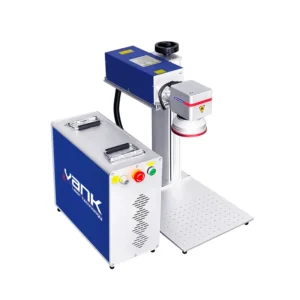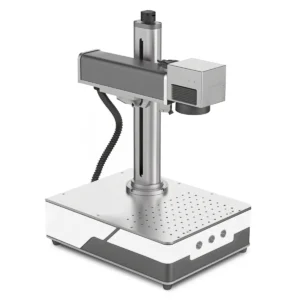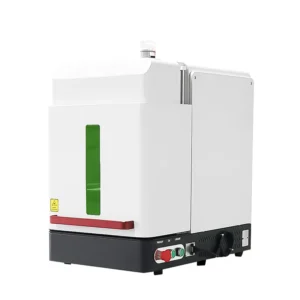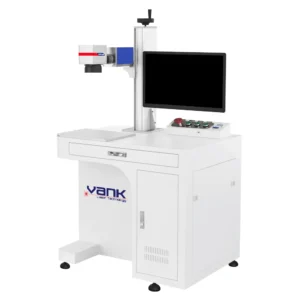



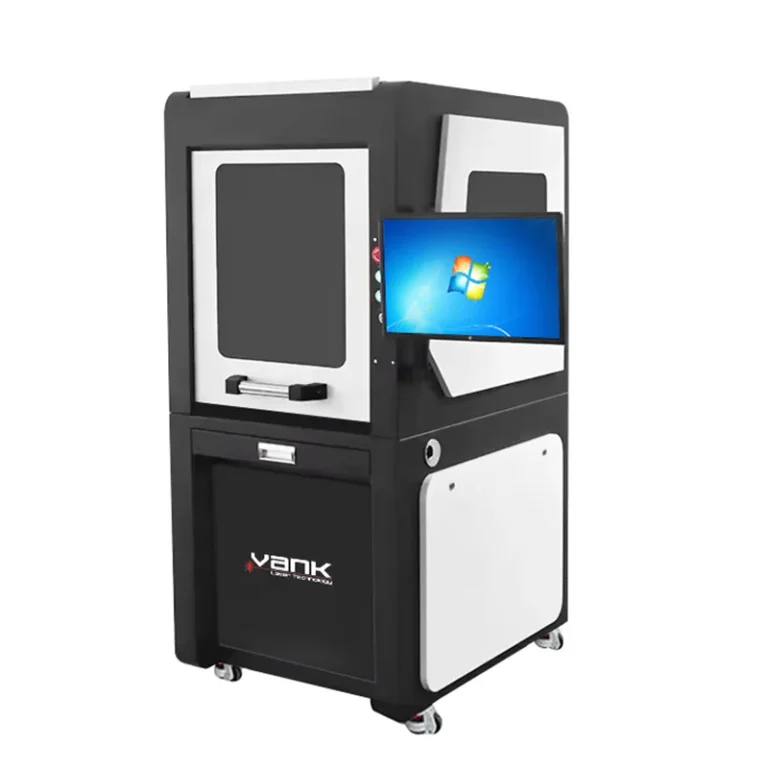
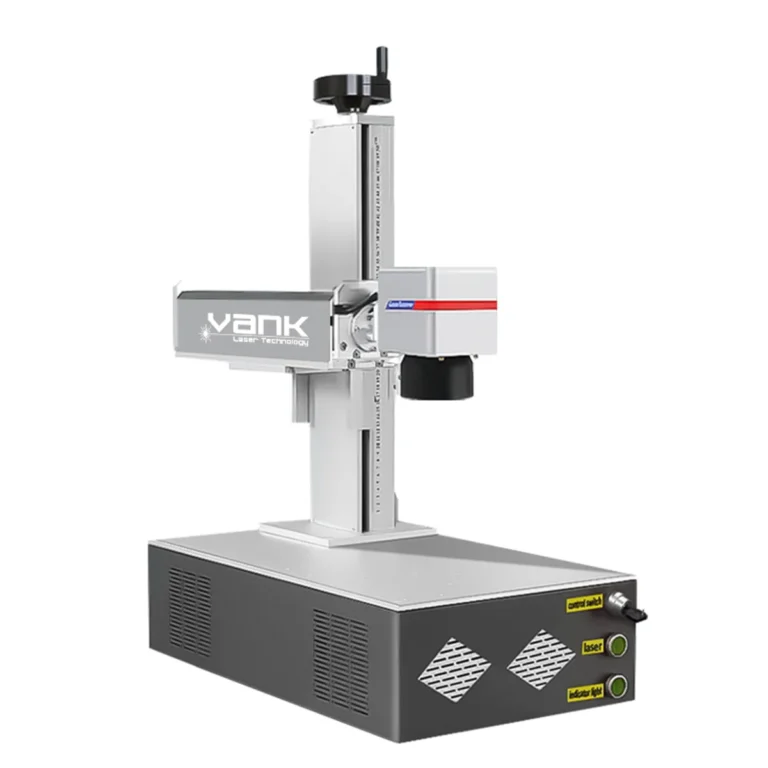
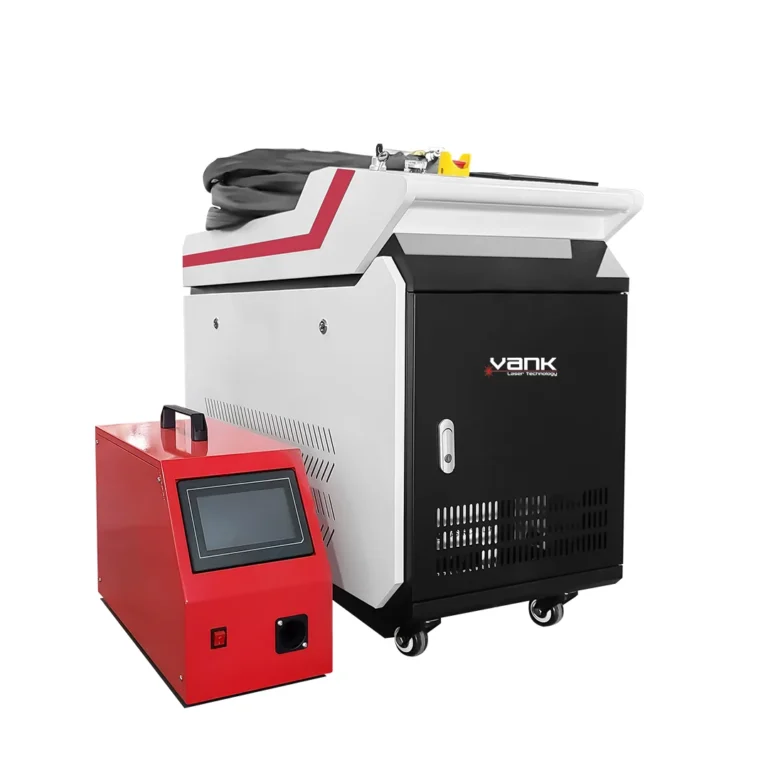
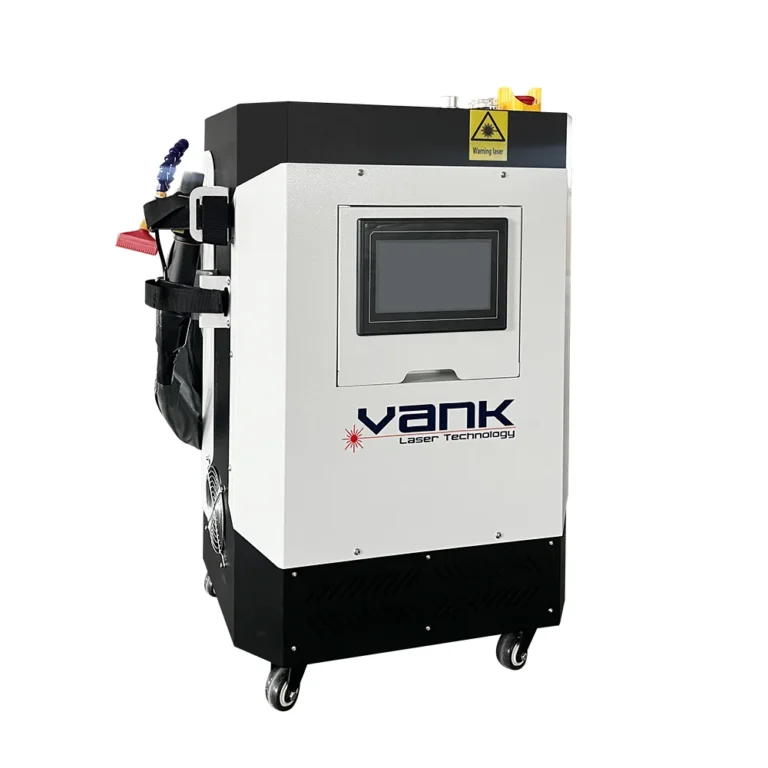


Application and model selection
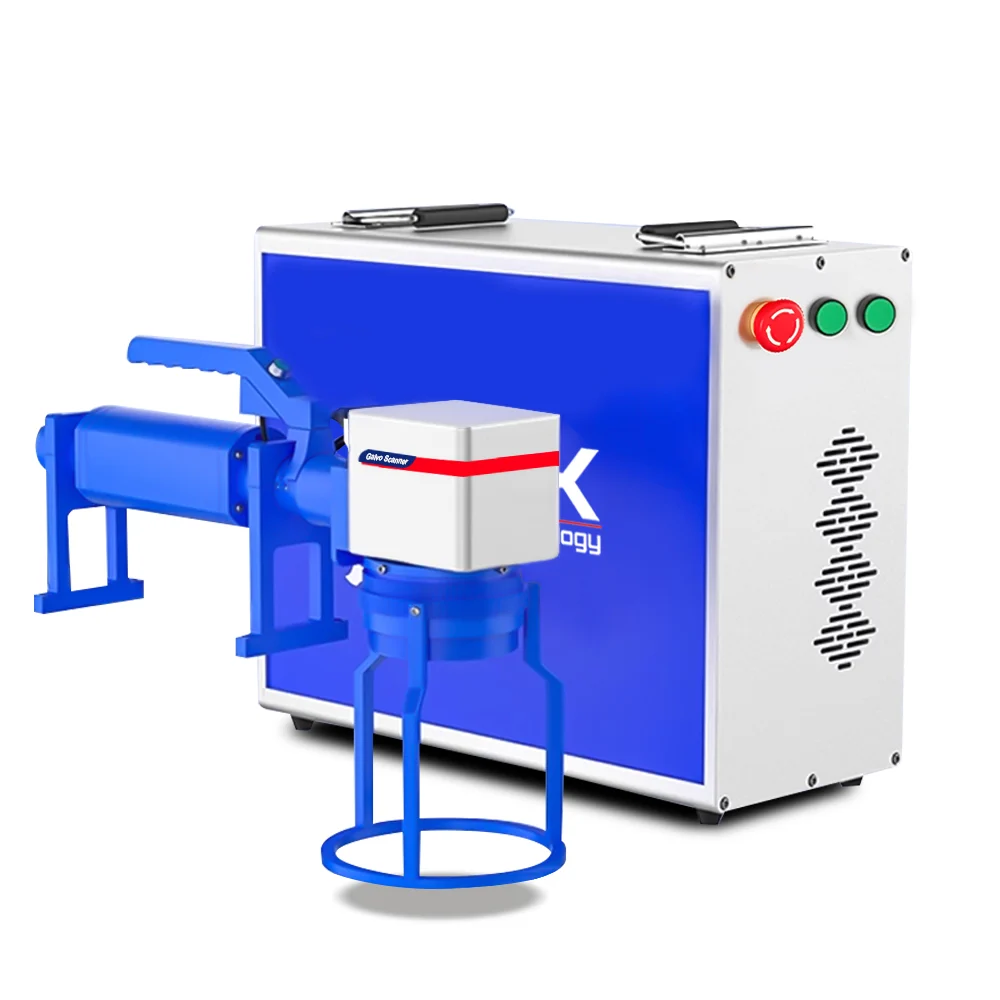
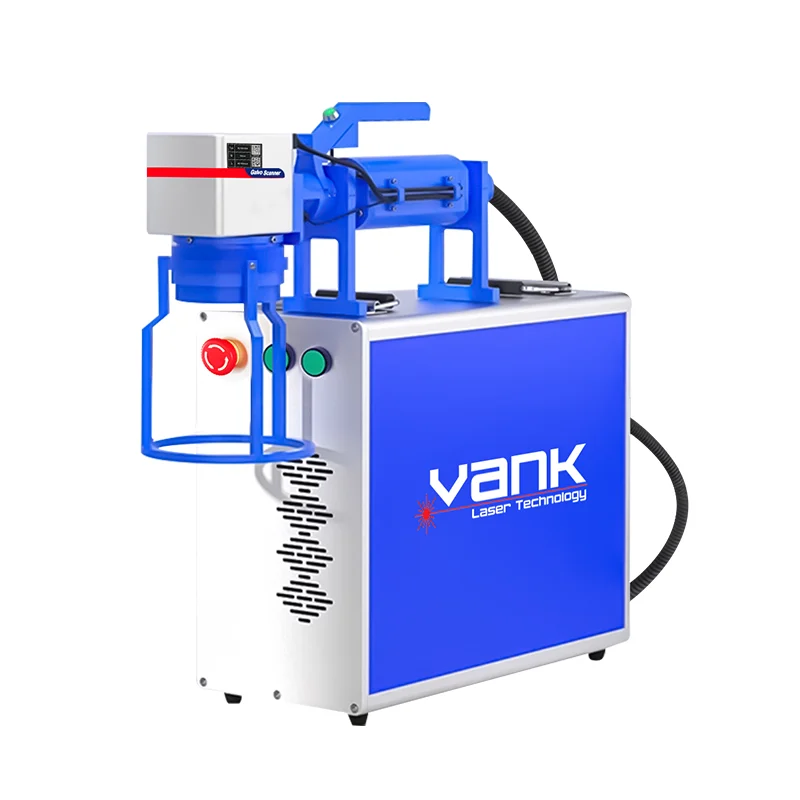
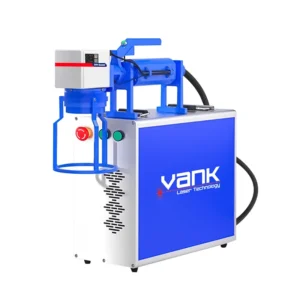
Hold the head against the specified reference spacer and keep it stable throughout the marking cycle. An optional battery, transport kit and data-transfer functions must be identified in the quotation. Request the model-specific datasheet, head weight and battery test conditions; the general desktop marking catalogue does not establish those values. Mobile use requires a controlled laser area at every work location.
Configuration and specifications
| Parameter | Product configuration |
|---|---|
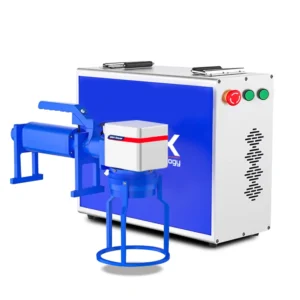
| Model / format | J20H |
| Machine format | Tethered handheld marking head |
| Laser power options | 20 W |
| Nominal wavelength | 1064 nm |
| Laser source | Q-switched fiber source |
| Marking field | 90 × 90 mm |
| Controller / software | Embedded touchscreen; file transfer as quoted |
| Cooling | Air cooling; final source requirements govern |
The values below identify this product and its listed options. The selected source, optics, controller, accessories and site utilities must be named in the quotation. Motion speed and positioning figures do not establish finished-part tolerance or production throughput.
Materials and process limits
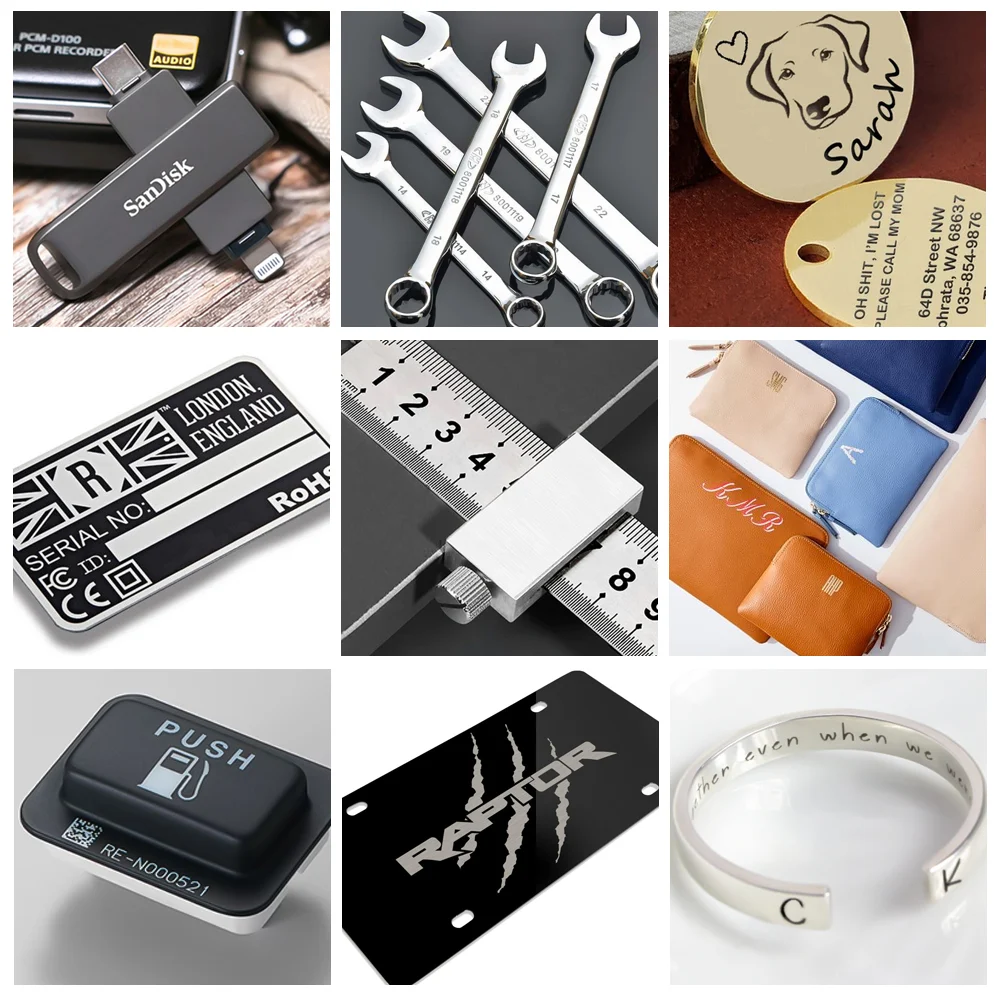
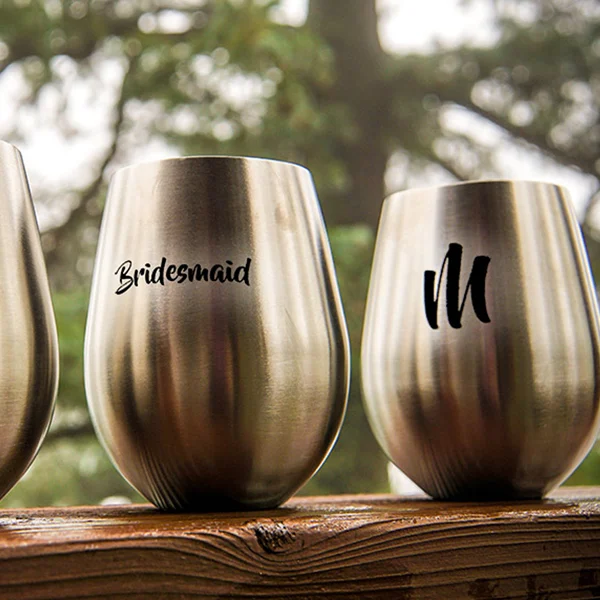
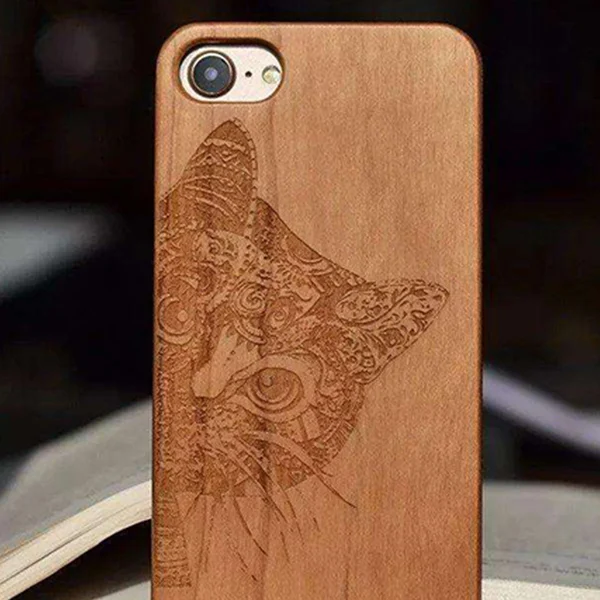
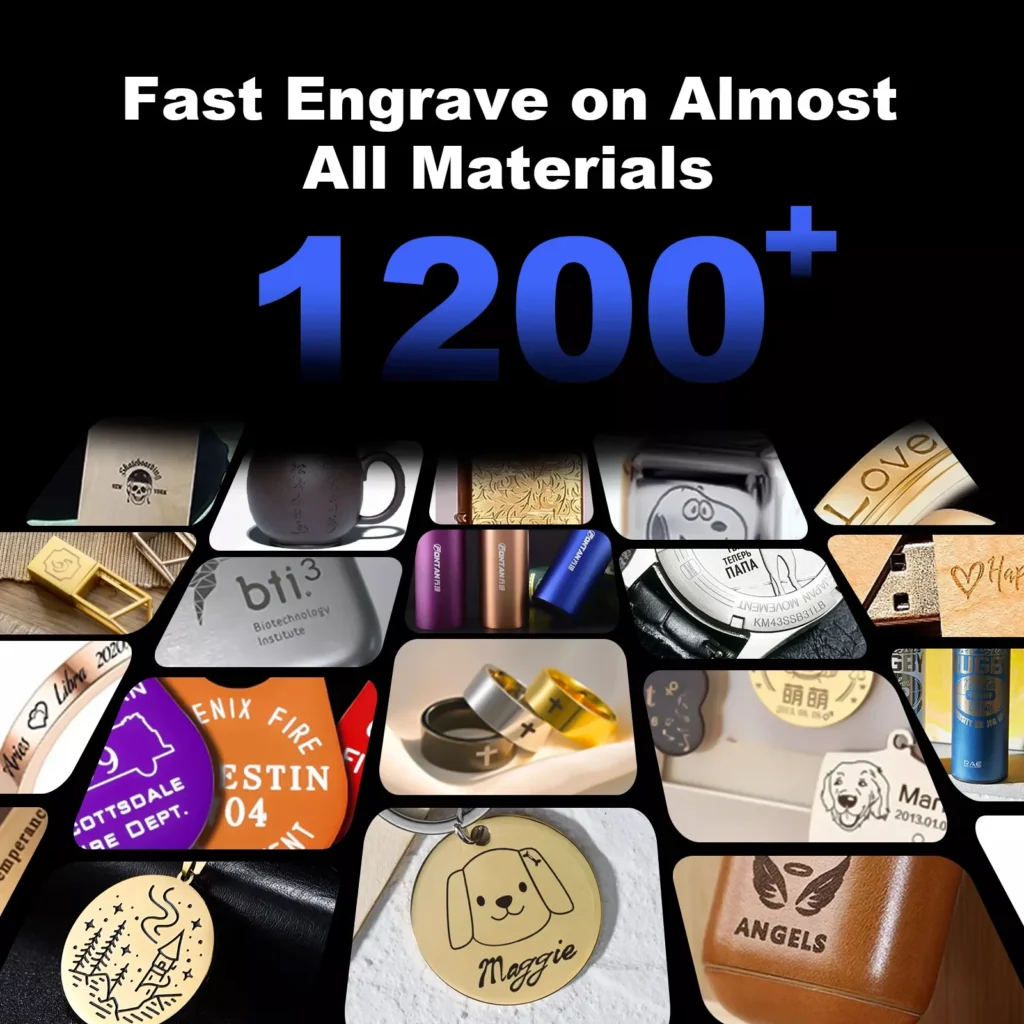
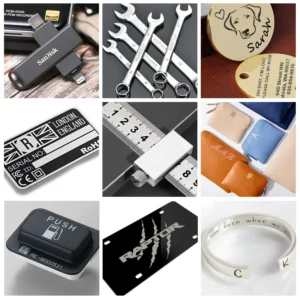
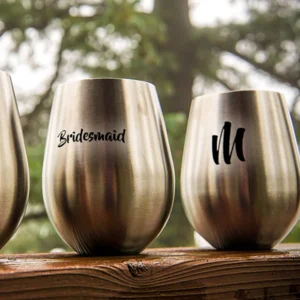
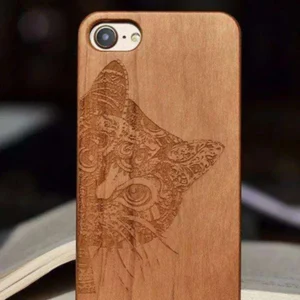
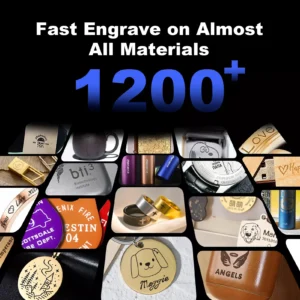
The 1064 nm fiber process is mainly used for stainless steel, carbon steel, aluminum, brass, copper, titanium, precious metals and compatible coatings. Some engineering plastics mark well after testing. Glass, clear acrylic, wood, leather, fabric and stone usually need a UV or CO2 machine. Plating, pigments and heat-sensitive inserts can change the result.
Production workflow
Prepare the identification file in the supplied touchscreen application. Confirm supported file formats and transfer method, check the spacer and focus, then test the mark on a representative surface. Secure the workpiece and keep the head steady for the full cycle. A desktop software workflow is not assumed for this embedded controller.
Options to specify
Confirm the battery or mains package, cable length, head support and transport accessories. Check working orientation and access on the actual component. Contact sensing is a supplementary safeguard; establish beam containment, controlled access, suitable eyewear and local extraction before each mobile job.
Plan suitable guarding, interlocks, emergency stops, extraction and operator training for the supplied laser system. The finished machine classification must be verified; an enclosure alone is not proof of Class 1 compliance. Follow the supplied operating and maintenance instructions.
Sample test and acceptance
Approve a representative sample and the written configuration before ordering. Record the material, source, settings, lens or nozzle, fixture, appearance, dimensions and complete cycle time. Keep those results as the production acceptance reference.
Deep engraving and color marking
Deep engraving and color marking require a defined material and process test. Depth depends on source, lens, passes, hatch and permitted cycle time. Color effects depend on alloy, surface and pulse control and are not a universal feature of every fiber source. Specify measured depth, appearance and durability as acceptance criteria.
Installation, service and documentation
Ask Vank Laser to include the machine layout, electrical requirements, supplied software, operating instructions, maintenance schedule and recommended spare parts in the technical proposal. Agree commissioning, operator training, support language, warranty coverage and service responsibilities before shipment. Request conformity documents for the actual machine and destination.
Request a sample test and quotation
Send the alloy or polymer grade, coating, part dimensions, marking area, artwork, smallest code, contrast or depth target, cycle time and fixture needs.
Send the destination country, installation voltage and required delivery scope with your inquiry. Ask for sample photos or video, measured results and a configuration-specific quotation.
Request a sample test and configuration quote