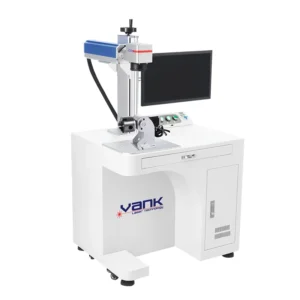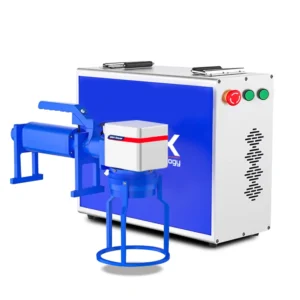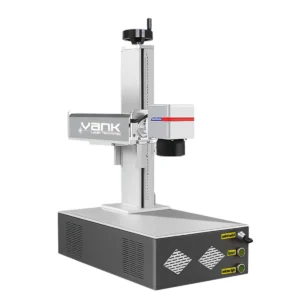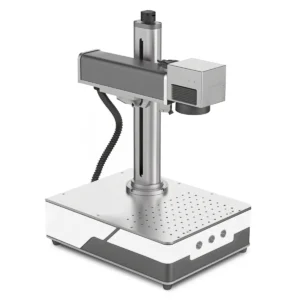

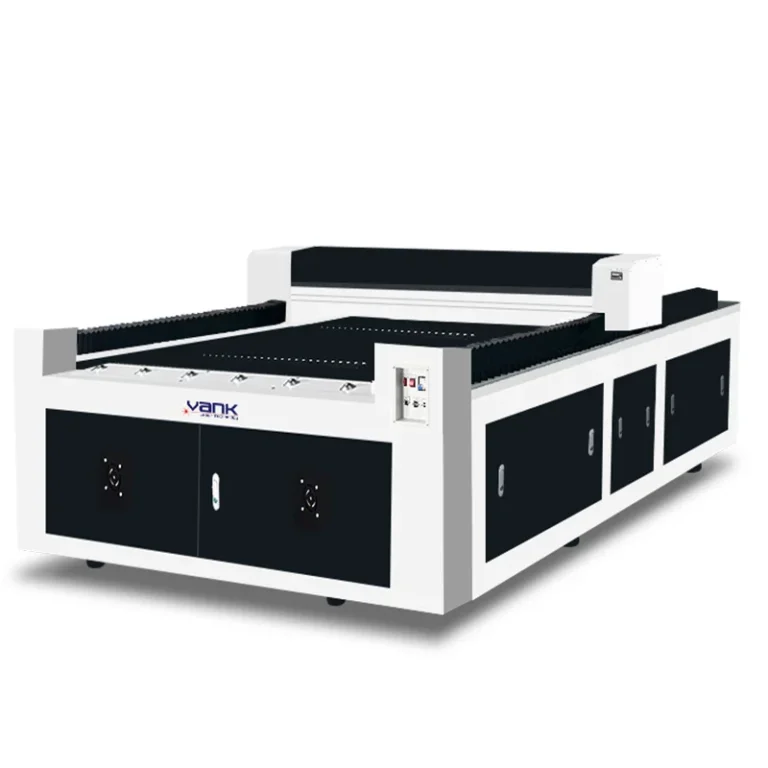
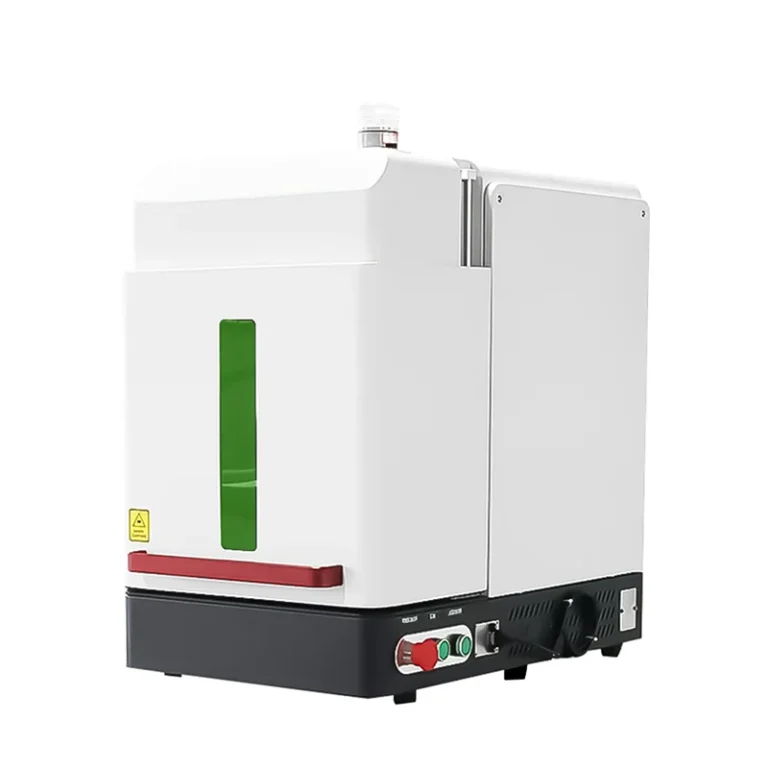
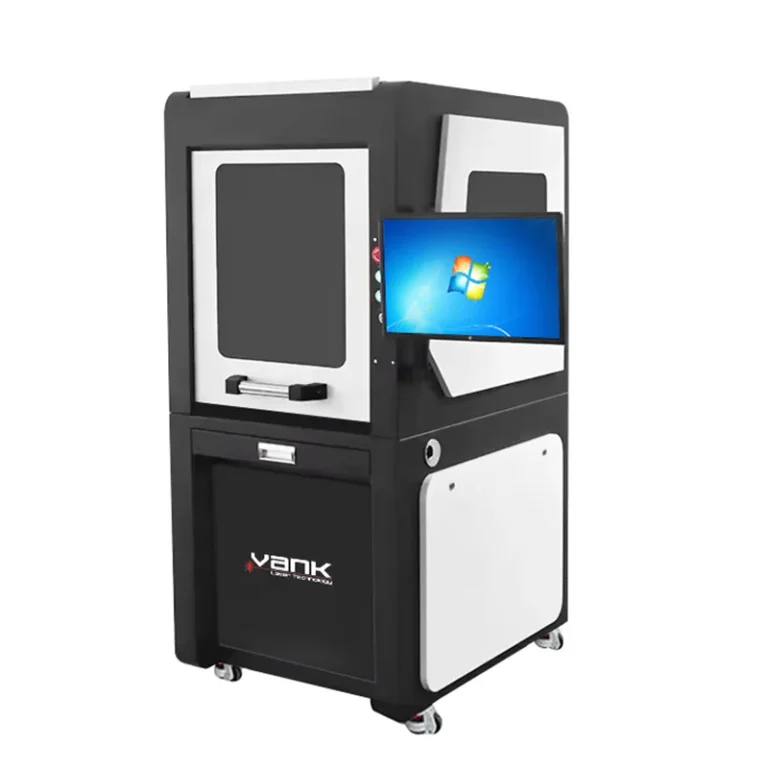
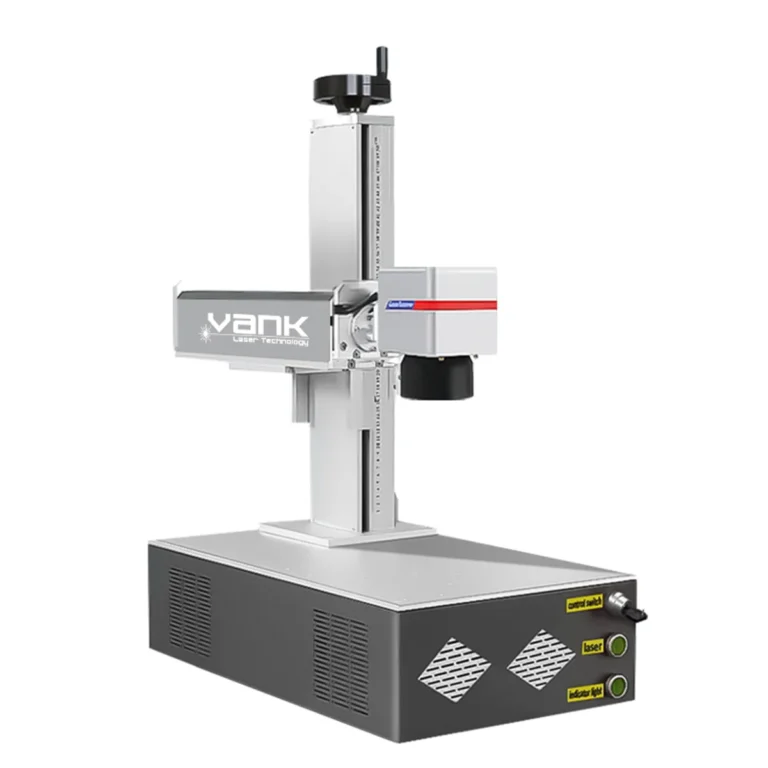
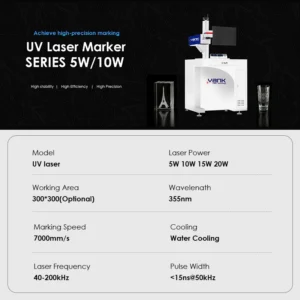
Desktop 355 nm UV Laser Marking
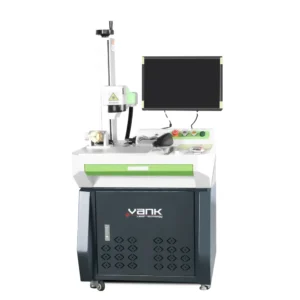
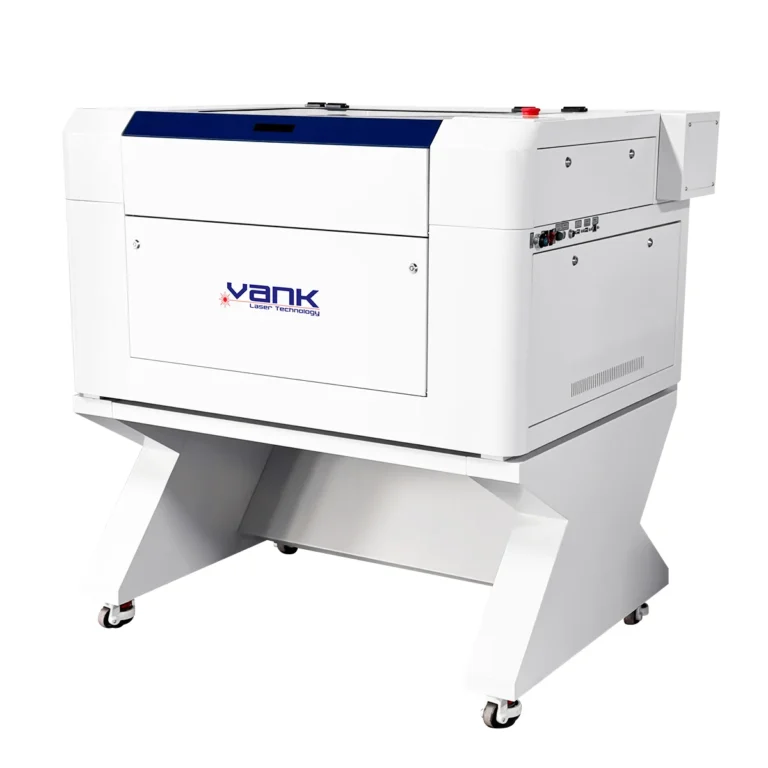
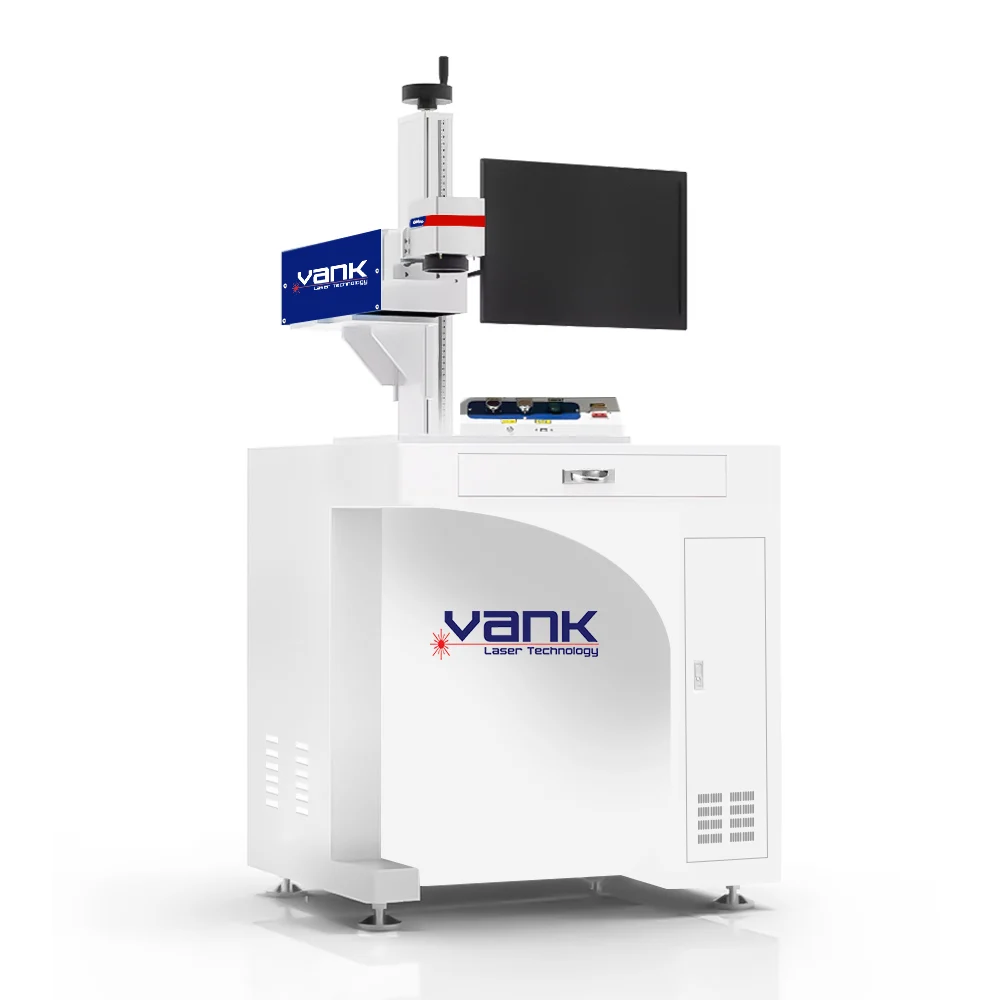
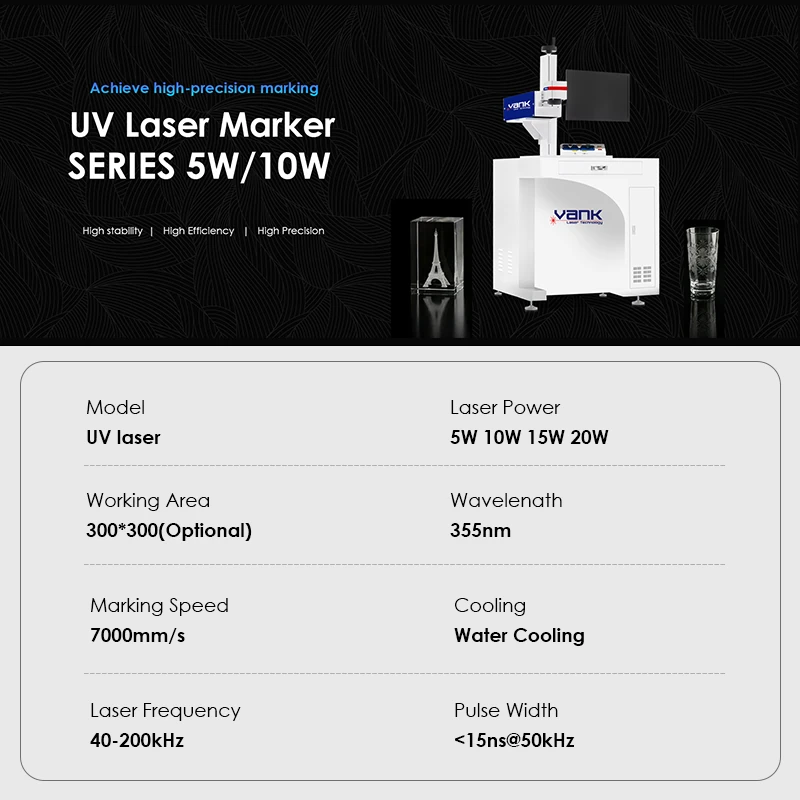
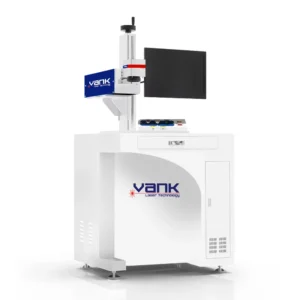
This desktop UV laser marking machine is a compact, open-frame galvo workstation built around a 355 nm solid-state source, galvo head, controller and source-matched water cooling. Many polymers, coatings, glass compositions and electronics absorb 355 nm more effectively than 1064 nm, which can reduce the heat-affected zone for fine surface marking. It is not heat-free or handheld: every material, fixture, extraction method and laser-safety control must be qualified before production.


Fine, Low-Heat Marking
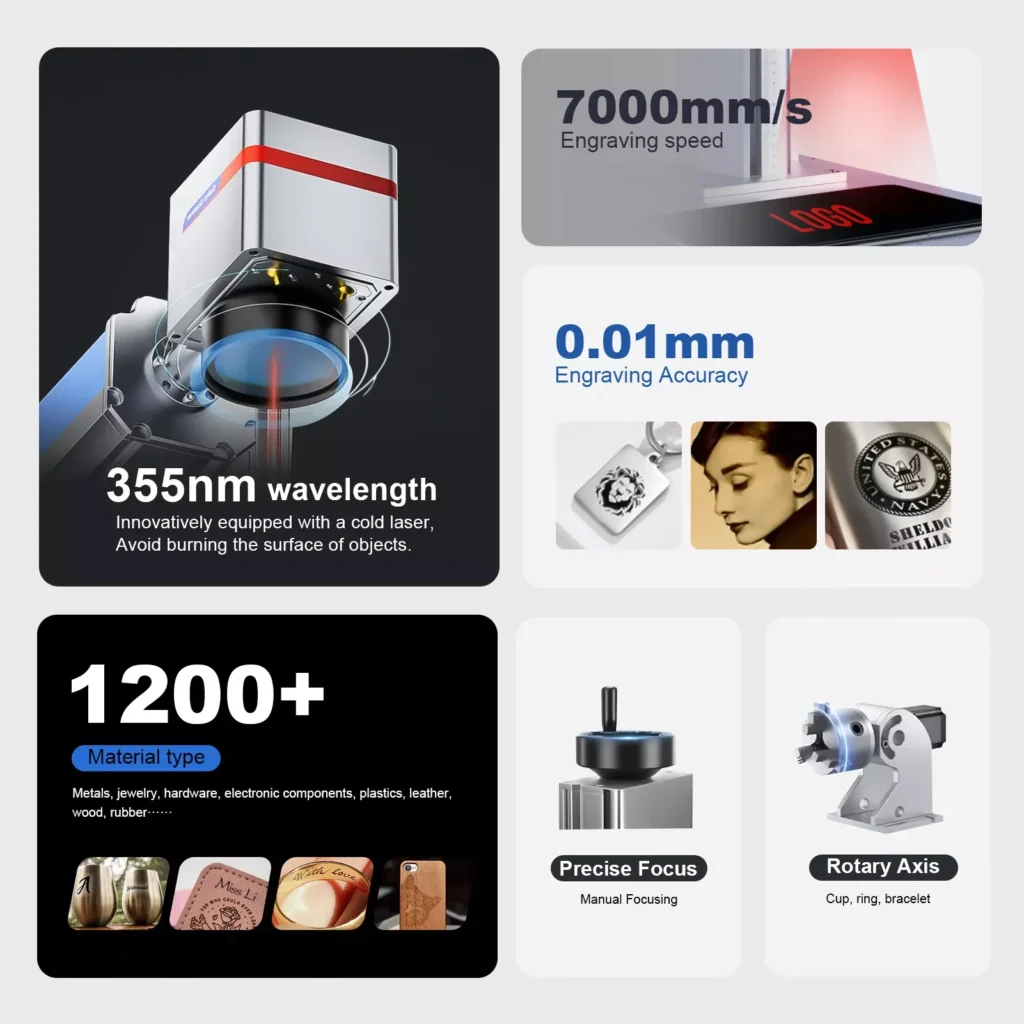
A 355 nm source and matched F-theta lens can produce a fine focused spot. Line width, character size and finished-part tolerance are verified on the selected field and customer sample.

Controller-Specific Software
The supplied controller and software manage artwork, variable data and lens correction. LightBurn Pro is optional only for a currently supported board, driver and UV-source protocol.

Flat and Fixture-Assisted Parts
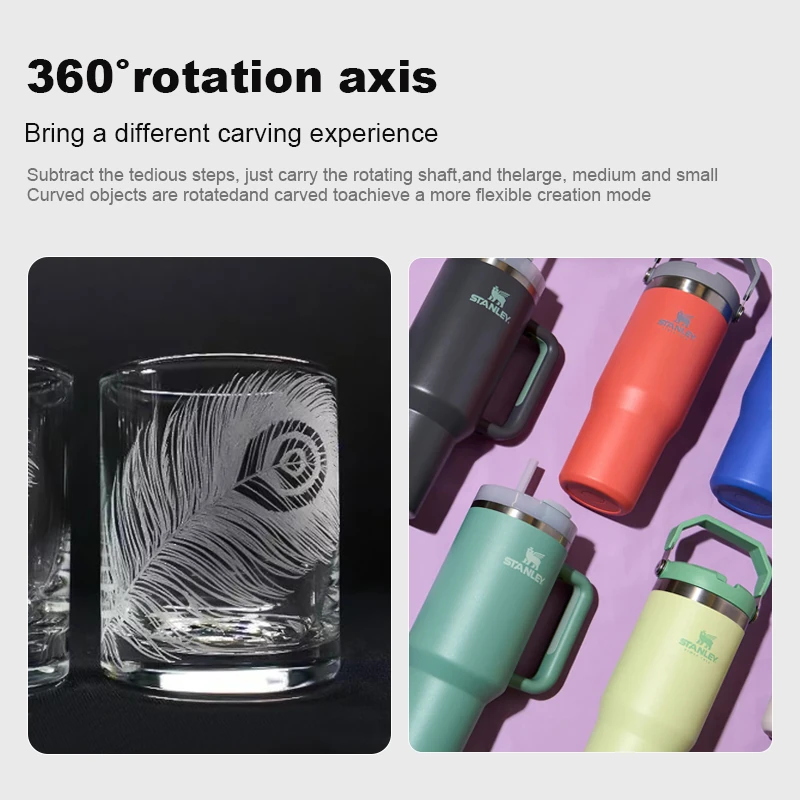
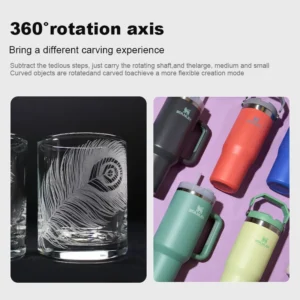
The standard galvo field is best suited to flat parts held at the calibrated focus. Cylinders require a compatible rotary; curved or height-varying surfaces require approved geometry, focus strategy or a separately quoted 3D system.
Desktop UV Marker Specifications
| Specification | Desktop 355 nm UV Marking Workstation |
|---|---|
| Model | Desktop UV Laser Marking Machine (configured order) |
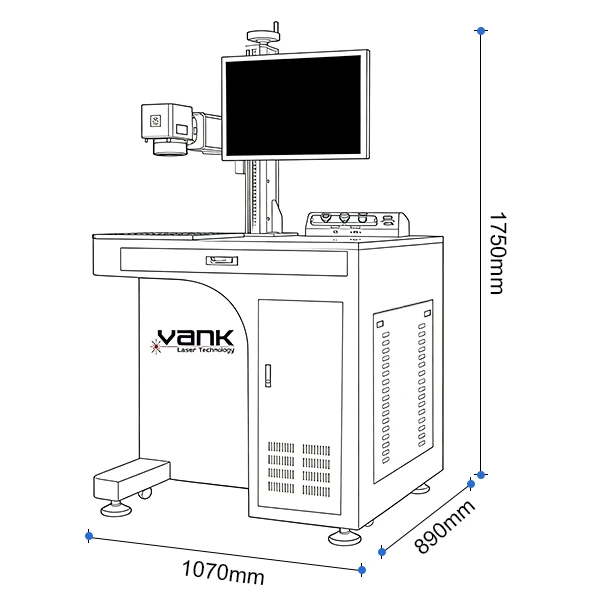
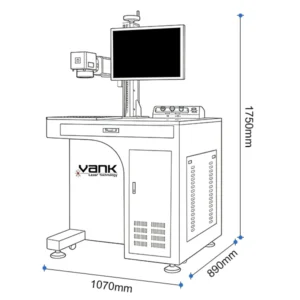
| Machine Format | Compact open-frame desktop workstation with integrated cabinet; not a handheld laser |
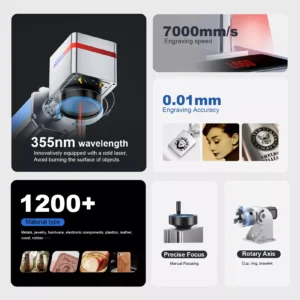
| Wavelength | 355 nm solid-state UV laser |
| Rated Power Options | 5 / 10 / 15 / 20 W as quoted |
| Laser Source | Exact manufacturer, model, frequency range, pulse width, beam quality and warranty confirmed in the quotation |
| Marking Field | 70 × 70 / 110 × 110 / 150 × 150 / 175 × 175 / 200 × 200 / 300 × 300 mm as quoted; not every field suits every power or spot requirement |
| F-theta Lens | 355 nm lens matched to field, spot requirement and working distance |
| Focus / Z Axis | Manual height and focus unless a motorized option is quoted; recalibration is required after moving or changing optics |
| Scan Head | UV-compatible dual-axis galvanometer with lens-specific correction file |
| Controller | JCZ/EZCAD2, DLC/EZCAD3, BSL/SeaCAD or other controller as quoted; exact revision and source protocol confirmed |
| Software | Supplied control software; LightBurn Pro only when the current version supports the delivered board, driver and UV source |
| File Workflow | Vector, raster, text, serial data, barcode and Data Matrix imports subject to supplied software and file testing |
| Production Speed | Qualified by sample for material, artwork, fill density, contrast or depth and heat limit; scanner travel speed is not cycle time |
| Mark Quality | Line width, smallest character, field distortion, repeatability and surface effect verified on approved samples |
| Cooling | Source-matched active water chiller unless the exact source specifies another method |
| Rotary / Fixtures | Optional flat-part, ring or cylindrical fixtures selected for material, diameter, weight, clearance and indexing |
| Extraction | Local fume and particle extraction or filtration matched to the material, coating and duty cycle |
| Laser Safety | Open-beam Class 4 workstation unless a tested protective enclosure is supplied; controlled area, guarding, interlocks, eyewear and trained operation are site-specific |
| Electrical Service | Voltage, frequency, connected load, grounding and chiller supply confirmed before shipment |
| Operating Environment | Temperature, humidity, dust and condensation limits follow the final source, controller and chiller manuals |
| Acceptance | Customer material and artwork approve mark quality, readability, cycle time, cooling, fixture and safety documentation |

Why 355 nm UV Marking
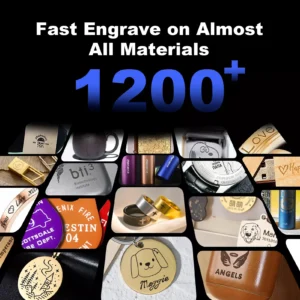
A 355 nm UV laser can couple effectively with many polymers, coatings, glass formulations and electronic materials. Compared with some infrared or CO2 processes, it can reduce the heat-affected zone for fine marking, but it is not a universal or heat-free process. Cutting carbon-fiber composites, unknown resins and hazardous materials is outside the standard marking claim and requires separate engineering and fume review.
These examples show why the exact grade, additives, surface treatment and acceptance test matter:
Silicone: selected formulations can produce a high-contrast color change or shallow mark. Debris, odor and readability depend on additives, pigment and parameters, so the SDS and representative sample must be approved.
Glass: results depend on composition, coating, thickness, stress, focus and whether the process is surface or subsurface. Cracking, chipping and strength changes remain possible; approve appearance and mechanical acceptance on the actual glass part.
Wood: some species and finishes can be marked with limited charring, but contrast, smoke, fire risk and throughput vary widely. A CO2 laser is often more productive for wood; compare approved samples before selecting the source.
UV Marking Samples and Qualification
Candidate Materials
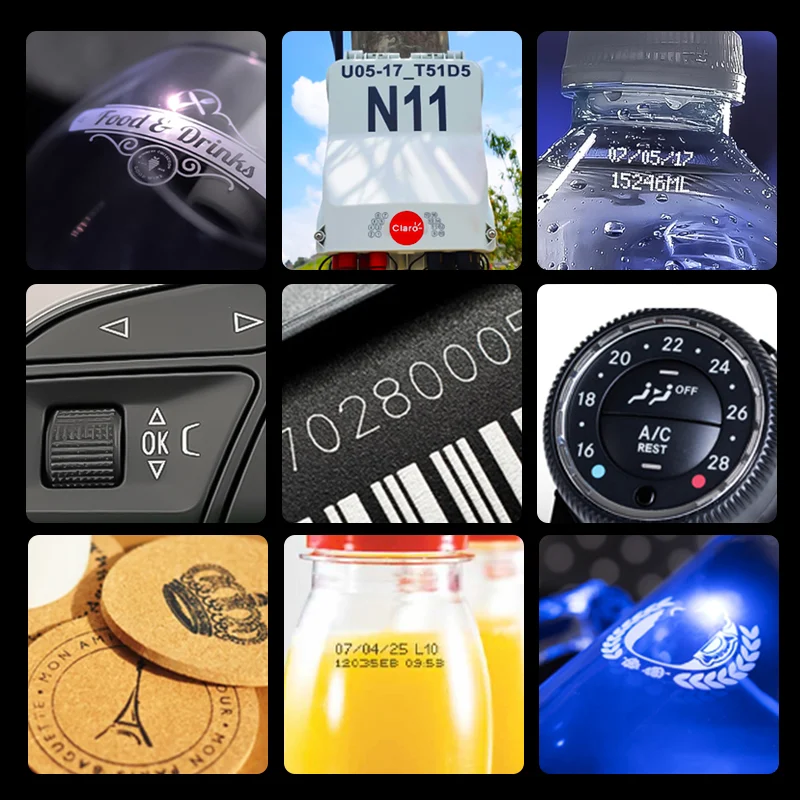
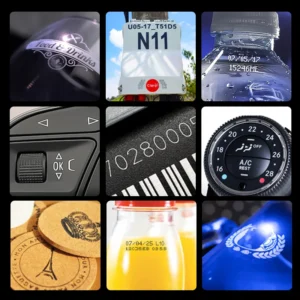
Common trials include packaging films, coated paperboard, selected polymers, silicone, glass surfaces, technical ceramics, electronic housings and coated metals. Food, pharmaceutical, medical and semiconductor uses require customer validation for contamination, particles, readability, product-contact rules and downstream performance. Micromachining, wafer cutting and glass separation are separate engineered processes.
Applicable Industries
Typical users include electronics, packaging, medical-device supply, cosmetics, laboratory products, watch and accessory manufacturers and other teams needing fine, low-heat marks. Reflectivity alone does not determine suitability; wavelength absorption, coating, finish, heat limit and required contrast must be tested.


Common UV Candidates
- PET films and containers
- Qualified polypropylene grades
- Qualified polyethylene grades
- ABS housings after SDS review
- Polyamide and nylon grades
- Polyimide films
- POM and acetal grades
- Selected silicone formulations
- Coated or treated glass
- Selected technical ceramics
- Printed and coated paperboard
- Electronic housings and connectors
- Medical and laboratory packaging
- Cosmetics packaging components
- Customer-approved coated surfaces

Metals Requiring Sample Approval
- Stainless steel surface marks
- Aluminum and anodized aluminum
- Titanium components
- Gold and precious-metal surfaces
- Silver surfaces
- Copper and copper alloys
- Brass parts
- Nickel and plated finishes
- Coated or painted metal
- Thin foils and precision parts

Polymers Requiring SDS Review
- PET
- Polycarbonate (PC)
- ABS
- Polyamide / nylon
- Polypropylene (PP)
- Polyethylene (PE)
- POM / acetal
- Polyimide (PI)
- Polystyrene (PS)
- PMMA / acrylic
- Silicone formulations
- SDS-approved rubber
- PLA
- Tritan / copolyester
- Laser-additive polymers
Core UV Marking Components

Controller and UV Marking Software
The supplied controller and software manage source timing, galvo motion, lens correction, text, variable data, vectors and raster images. Exact board revision, firmware, UV-source protocol, driver and import formats are confirmed with the delivered machine. LightBurn Pro is optional only when its current compatibility list covers that hardware.

Configured 355 nm UV Laser Source
The quotation identifies the exact 355 nm source manufacturer, model, rated power, pulse-frequency range, pulse width, beam quality, cooling and warranty. Higher power does not automatically improve every material or fine feature. CO2, fiber MOPA and green lasers are separate machine configurations.

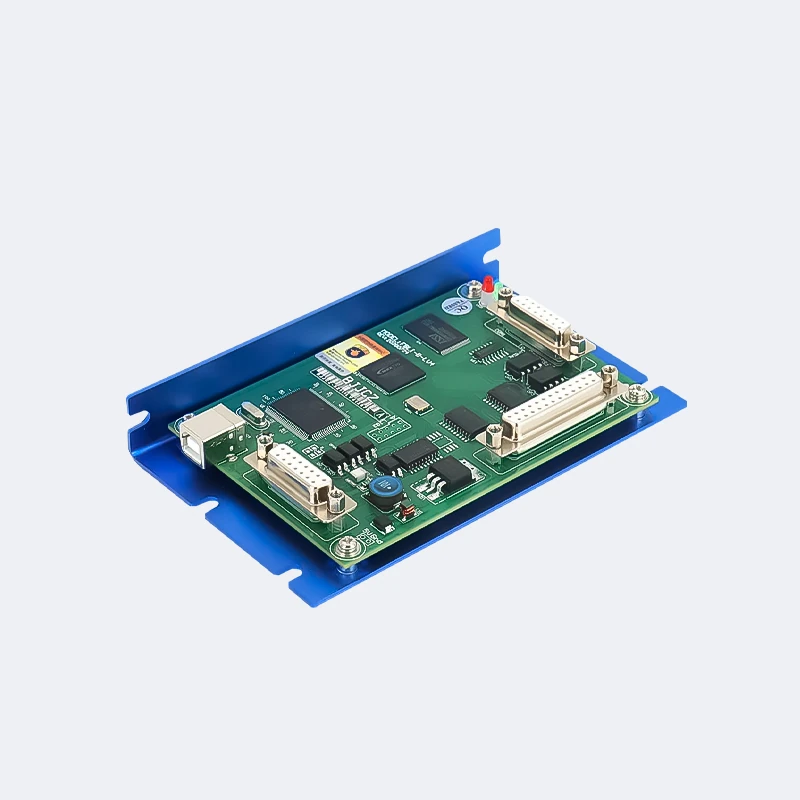
UV-Compatible Galvo Control Card
The control card must match the UV source protocol, galvanometer, correction file and software. Exact I/O, trigger behavior, driver and firmware are part of the delivered configuration; software control does not replace hardware laser-safety controls.

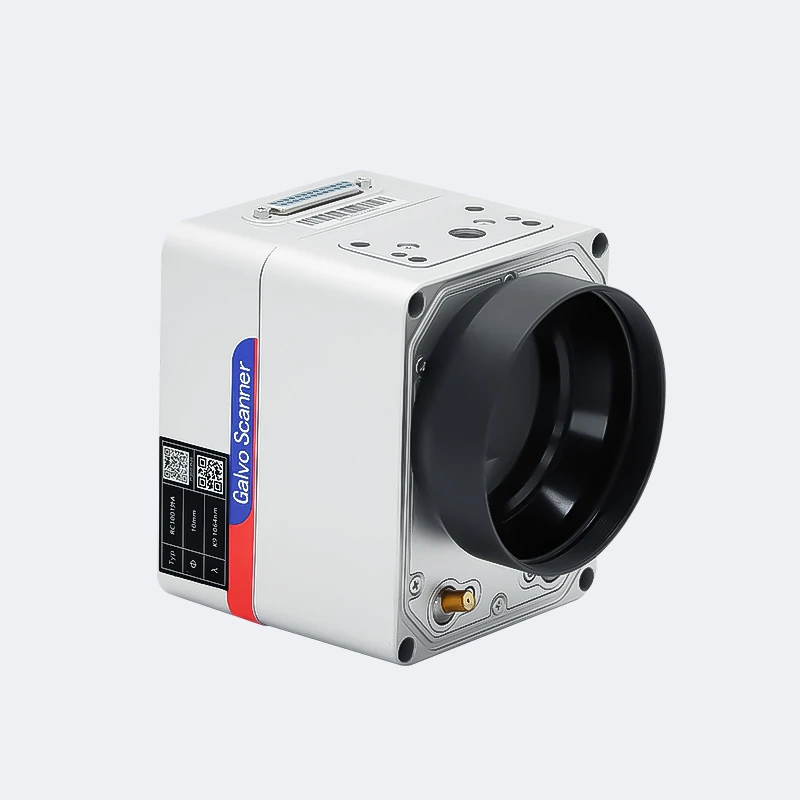
UV-Compatible Galvanometer Scanner
The dual-axis galvanometer positions the beam across the calibrated UV field. Production speed depends on artwork, material, fill, contrast or depth and heat limit. Auto-focus and 3D scanning are separately engineered options and are not included in the standard open-frame configuration.

Ring and Small-Part Rotary Fixture
A compact rotary can index compatible rings and small cylindrical parts. Chuck range, material, concentricity, step resolution, focal distance and machine clearance are confirmed on the customer sample.

Flat-Sheet and Small-Part Fixture
A flat-part fixture can locate films, labels, coupons and small components. Usable opening, jaw material, thickness, flatness, repeatability and protection against cosmetic damage are selected for the application.

Cylindrical Rotary Fixture
A chuck or roller rotary can index compatible cylindrical parts. Diameter, length, weight, taper, surface, focal position and cable routing are confirmed; glass marking still requires composition and strength testing.
Desktop UV Laser Marker FAQ
What materials can a desktop UV laser marker process?
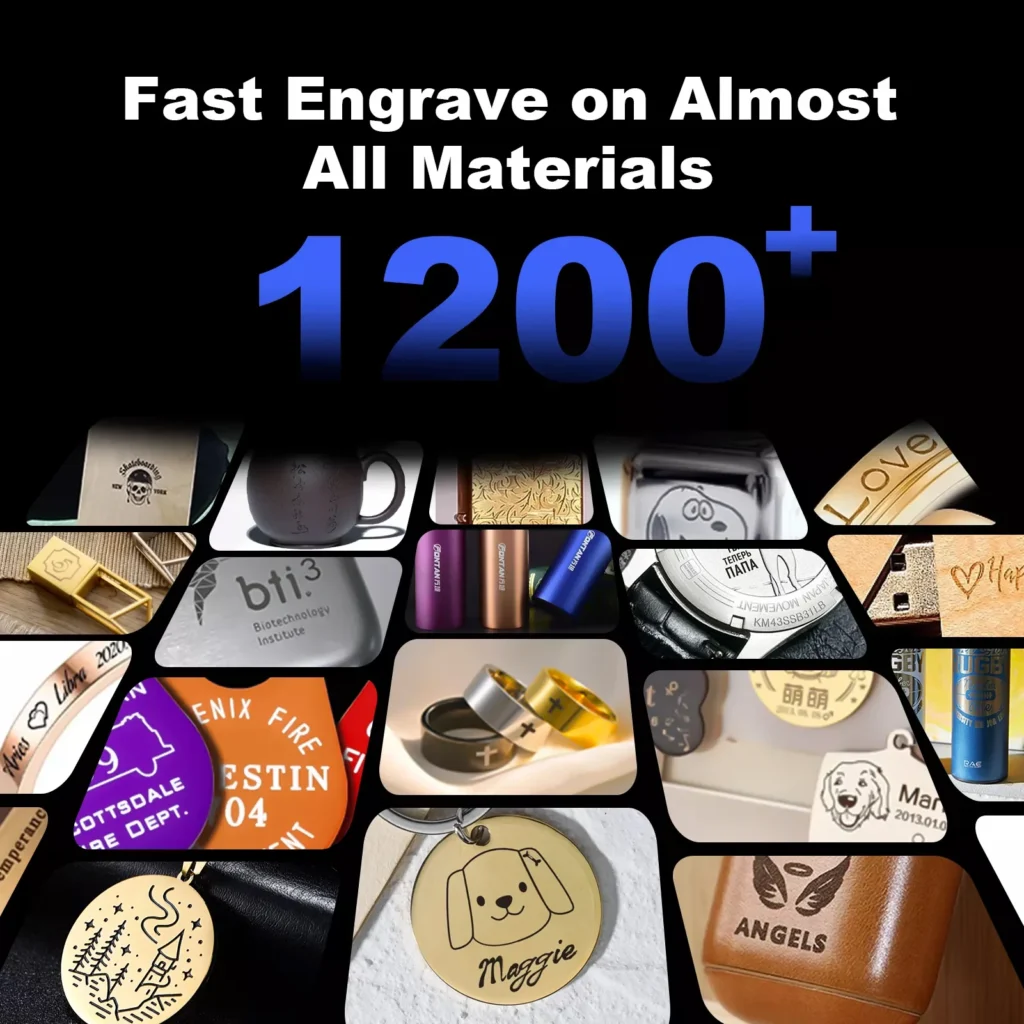
Common candidates include PET, selected polycarbonate, ABS, nylon, polyimide, silicone, coated glass, technical ceramics, packaging surfaces and some coated metals. The exact grade, pigment, additive, coating and SDS determine absorption and fume safety. PVC, PTFE, halogenated polymers and unidentified composites must not be processed.
Which 5-20 W UV laser power should I choose?
Available quoted classes are 5, 10, 15 and 20 W. Choose the exact source and field lens from the material, smallest feature, required contrast or shallow depth, heat limit and cycle time. Higher average power is not automatically better for sensitive polymers or fine glass work.
Is this UV marker intended for deep metal engraving?
No. This model is primarily for fine surface marking and shallow material modification. Metal response varies, and a 1064 nm fiber source is generally more appropriate for productive deep metal engraving. Any UV depth target must be measured on a representative sample.
How does 355 nm UV compare with fiber and CO2 marking?
355 nm UV is often chosen for fine, lower-heat marking on polymers, coatings, glass and electronic materials. A 1064 nm fiber laser is usually stronger for metal marking and deep metal engraving. A 10.6 µm CO2 laser is commonly better for wood, paper, leather, fabrics and acrylic. The material and result determine the source.
How are the UV optics and water chiller maintained?
Power down and isolate the source and chiller. Keep the work area, extraction path and protective optics clean. Do not touch the UV lens; use only approved optical-cleaning materials when inspection shows contamination. Maintain coolant type, level, temperature, filters and replacement interval according to the exact source and chiller manuals.
Which controller, software and file formats are supported?
The supplied EZCAD, EZCAD3, SeaCAD or other software depends on the delivered controller. Common workflows include vectors, raster images, text, serial data, barcodes and Data Matrix codes. LightBurn Pro is optional only for a supported board, driver and UV source; confirm the exact hardware and test customer files.
What source life and warranty are provided?
There is no universal guaranteed hour count. Life depends on the exact UV source, duty cycle, coolant condition, temperature, contamination, power quality and maintenance. The quotation must identify source and machine warranty terms, exclusions, service route and replacement support.
What are UV marking advantages versus inkjet or mechanical engraving?
UV marking is non-contact, supports software-driven variable data and can create fine durable marks without ink or cutting-tool wear. It can reduce heat input on suitable materials, but still requires extraction, guarding, cooling, fixtures, validated parameters and inspection. Inkjet remains useful for fast non-thermal coding, while mechanical engraving may suit deep tactile marks.