

Choosing a CO2 laser cutter for acrylic, wood and fabric starts with the actual parts, not a headline wattage. PMMA sheet, plywood, MDF and textiles differ in absorption, fumes, fire behavior, edge requirements and material handling. A configuration that is efficient for one job may be unsuitable for another.
Define the routine and peak material thickness, stock dimensions, files, accepted quality, production volume and facility conditions for each job. Then compare working area, laser source, optics, motion system, table, air assist, extraction, feeding, vision and software against those requirements.
Require sample processing and a written factory acceptance test using representative materials. The decision should be based on accepted parts per hour, dimensions, edge or engraving quality, emissions control, repeatability and total operating cost.
Start With a Material and Job Matrix
A CO2 laser can cut or engrave many approved non-metals, but suitability depends on the exact formulation, coating, adhesive and process. Record supplier documentation before treating any material name as laser-compatible.
For every recurring job, document at least:
| Material | Typical Jobs | Evidence to Approve |
|---|---|---|
| PMMA acrylic | Signs, displays, letters, panels and fixtures | Exact grade, film, edge quality, dimensions, cycle time and extraction |
| Wood / MDF / plywood | Crafts, models, packaging and decorative parts | Species or board grade, binders, coatings, charring, smoke and fire controls |
| Fabric / textile | Panels, sportswear, labels, soft signage and lace | Composition, handling, edge condition, feed tracking and registration |
| Documented leather | Patches, labels and selected accessory parts | SDS, no chromium(VI), no PVC/vinyl coating, emissions and edge test |
| Paper / cardboard | Packaging samples, models and templates | Coating and adhesive data, fine-detail test, smoke and fire control |
| Rubber / foam | Stamps, gaskets and inserts | Laser-grade composition, PVC-free status, fumes, depth and extraction |
If one machine must process several materials, configure and test it around the hardest frequent job while confirming that its power control, table and optics still meet fine-detail work.
Acrylic: Prove Edge Quality and Throughput
PMMA acrylic is common in signs, displays, illuminated panels, letters and fixtures. Cast and extruded grades can engrave and cut differently, while pigments, mirrored backings, adhesives and protective films can change results and safety requirements.
For acrylic work, confirm:
- the exact PMMA grade, color, backing and protective film;
- routine and peak sheet thickness;
- required edge appearance, dimensional tolerance and allowable taper;
- engraving detail, depth, contrast and surface protection;
- accepted parts per hour for representative nested files;
- maximum stock size, loading method and usable cutting envelope;
- whether printed panels require mark or contour recognition.
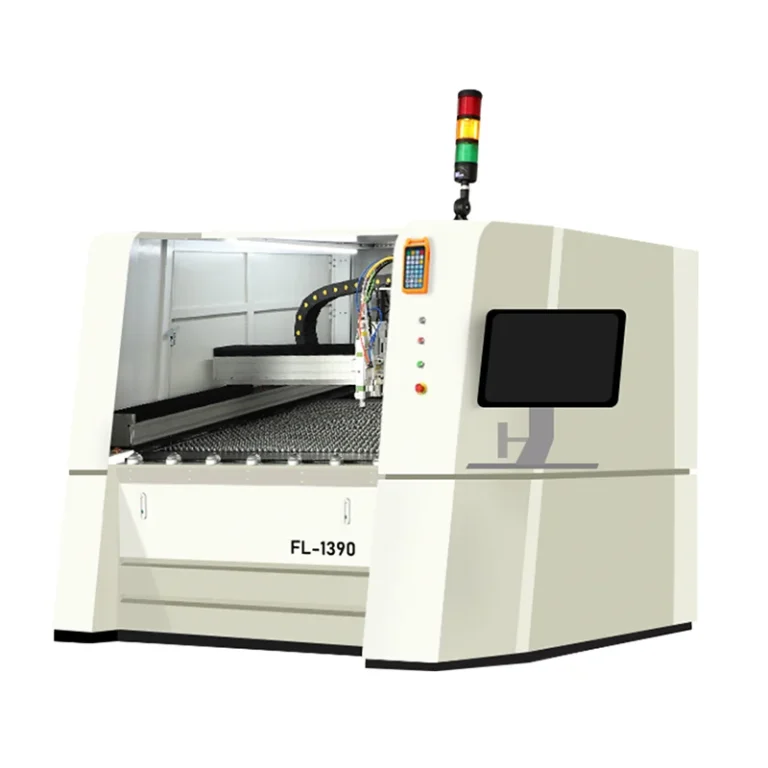
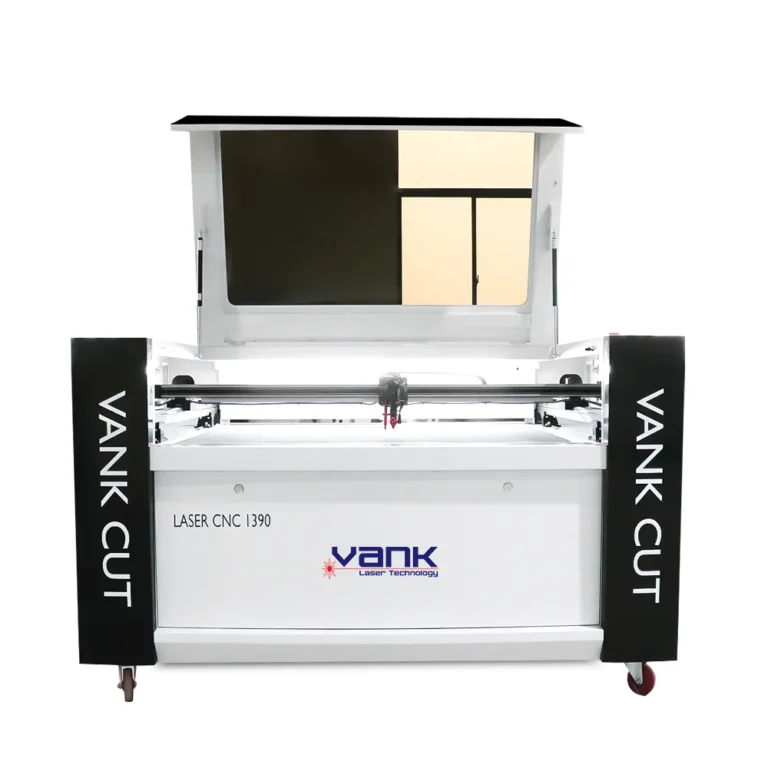
Product reference: 1490 CO2 Laser Engraving Cutting Machine. Verify the quoted working area, source configuration, bed type, optics and controller against the largest acrylic part and the required sample result.
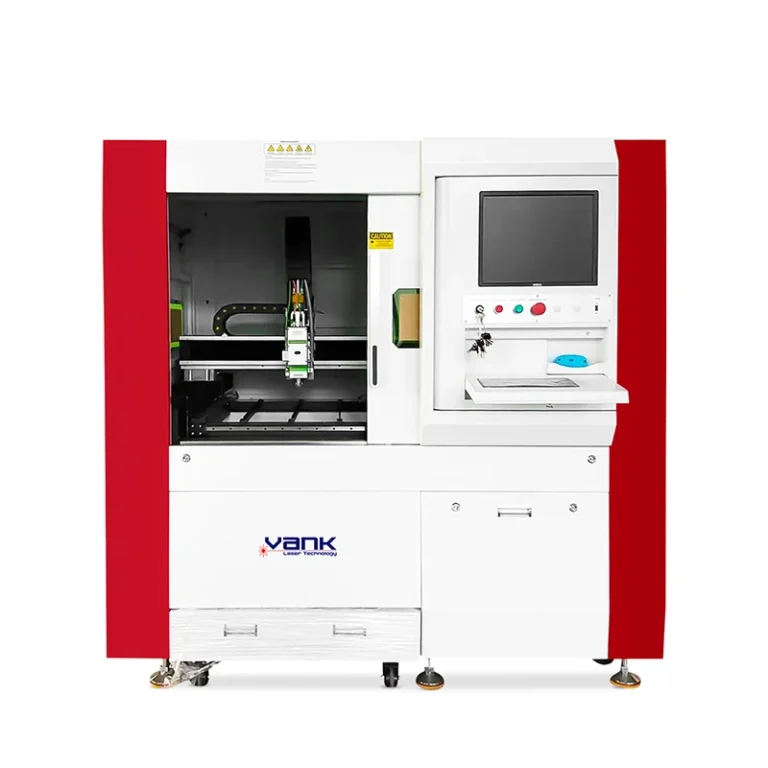
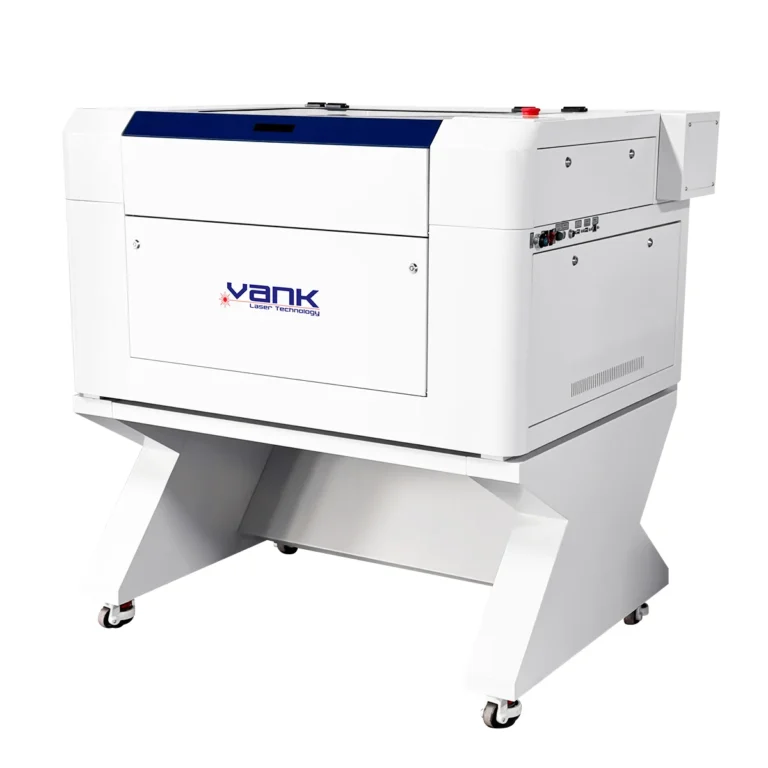
Compact-format reference: High Speed CO2 Laser Engraving Cutting Machine. Compare it for small parts and raster engraving only after confirming usable area, acceleration, small-feature quality, extraction and cycle time.
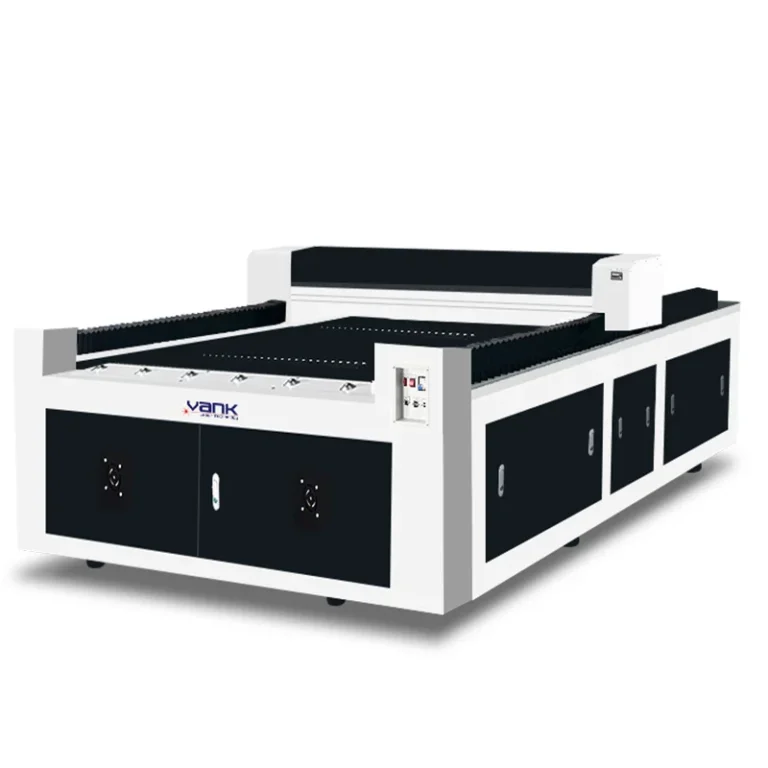
Large-format product range: Advertising Industry. Use the category to create a shortlist, then verify each exact model with full-sheet loading, edge-quality samples, installation space and exhaust requirements.
Wood, MDF and Plywood: Control Variation and Fire Risk
Natural wood, MDF, plywood, bamboo and veneers vary by species, density, moisture, resin, adhesive, coating and batch. Those variables affect ignition, smoke, residue, edge color, engraving contrast and achievable cycle time.
For wood-based materials, document:
- species, board grade, manufacturer and batch;
- routine and peak thickness plus density or moisture data when available;
- the split between vector cutting and raster engraving;
- acceptable charring, edge color, kerf and dimensional tolerance;
- local exhaust, filtration, air assist and fire-control requirements;
- adhesives, resins, laminates, coatings and supplier safety documentation;
- required engraving depth, contrast, small detail and repeatability.
Test several boards from the normal supply batch, not one ideal coupon. An extended run should reveal smoke deposition, optics contamination, flare-up behavior, edge variation and the cleaning interval. Never leave combustible material unattended during laser processing.
Product reference: 1610 CO2 Laser Engraving Cutting Machine. Confirm the exact power option, bed, air assist, extraction, file workflow and approved samples for the buyer’s acrylic and wood mix.
Fabric: Match Composition, Feeding and Registration
Textile selection depends on composition and handling as much as laser power. Woven, knitted, felt, lace, coated and laminated materials can stretch, curl, melt, char or emit different fumes. Obtain the supplier’s composition or SDS before testing.
A fixed bed may suit approved sheeted fabric and sample work. Continuous rolls may require a conveyor, controlled feeding and extraction that keeps lightweight material flat without pulling it off registration. Unknown leatherette or vinyl must not be treated as a routine laser material.
For textile applications, confirm:
- roll width and weight or sheet dimensions;
- exact fiber, coating, adhesive and supplier safety documentation;
- fabric construction, weight and surface finish;
- stretch, shrinkage, skew, curl and wrinkle behavior;
- largest panel, nesting method and registration tolerance;
- accepted parts per hour and normal shift length;
- whether graphics are printed before cutting;
- whether marks, contours or print distortion must be recognized.
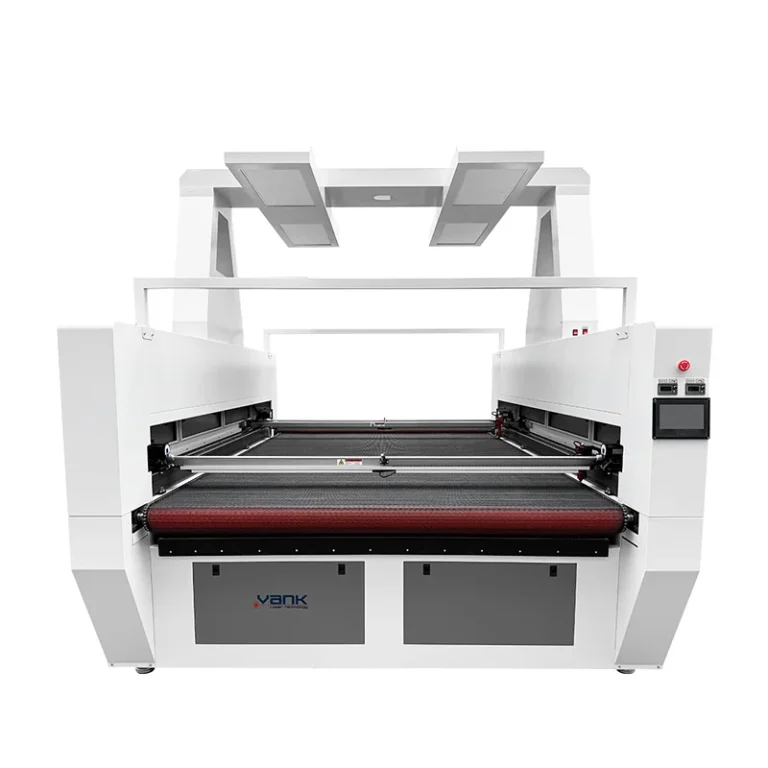
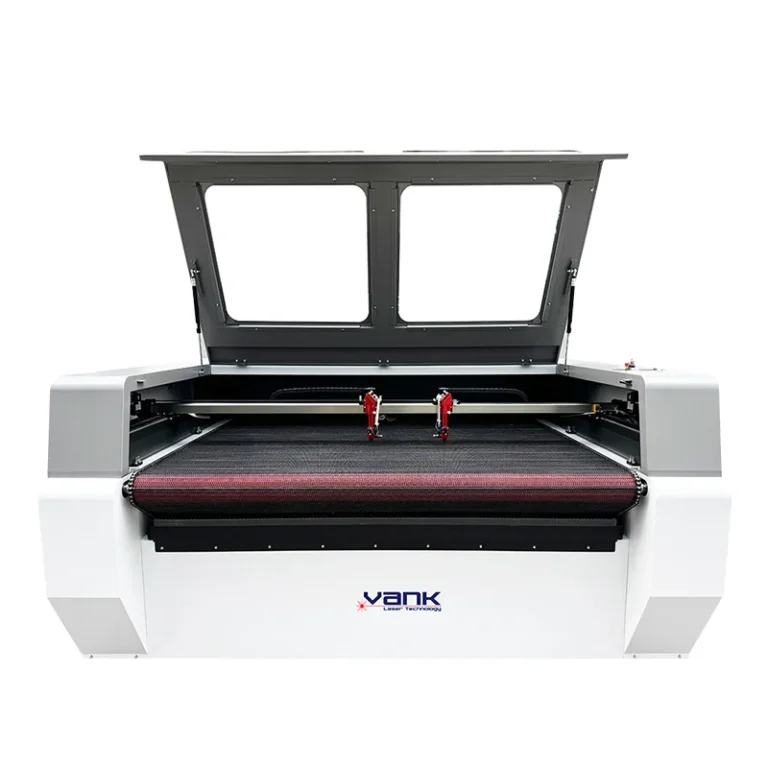
Product reference: CO2 Laser Fabric Cutter with Auto Feeding and Vision Camera. Validate it on a normal production roll for tracking, tension, first-to-last-part registration, edge condition and cycle time.
For printed textiles, compare camera performance at several positions across distorted or shifted graphics. A successful cut on one carefully placed sample does not establish production repeatability.
When Vision Registration Adds Value
A camera is useful when the cutting path must follow a printed contour or registration mark. It is not automatically required for blank stock, and its value depends on field of view, lighting, calibration, software logic and the type of print distortion.
Validate vision processing with the buyer’s artwork and material, including:
- registration marks and printed contour recognition;
- scale, rotation and local distortion across the print;
- small labels, patches and narrow printed borders;
- printed acrylic with known laser-safe ink and backing;
- printed paper or packaging prototypes with documented coatings;
- documented leather or textile parts with printed references;
- mixed orientations, nesting and repeated jobs.
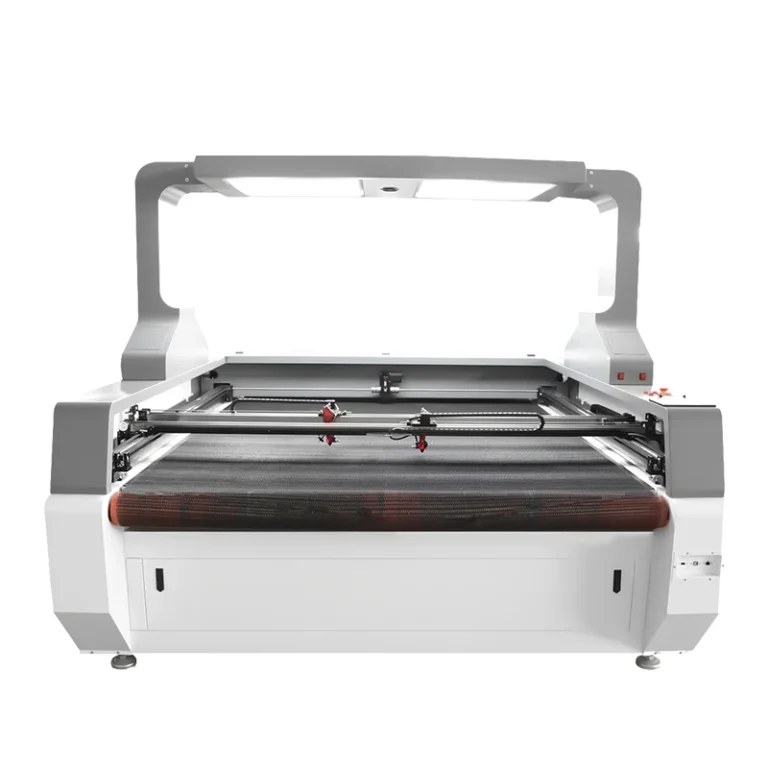
Product reference: CO2 Laser Cutting Machine with CCD Camera Visual. Measure registration error across the full usable area and confirm lighting, camera calibration, file preparation and cycle time during the sample test.
For blank acrylic, unprinted boards or simple sheet fabric, a standard coordinate workflow may be sufficient. Avoid adding camera complexity unless the application test shows a measurable quality or labor benefit.
Select Laser Power From Sample Evidence
Power affects process margin and throughput, but nominal wattage does not predict a complete result. Source condition, beam delivery, optics, focus, motion, air assist, material batch and extraction all influence cutting and engraving.
Compare candidate configurations using the same evidence:
| Application | Power-Selection Evidence |
|---|---|
| Fine acrylic engraving and cutting | Small-detail quality, low-power control, edge appearance and complete-nest time |
| Peak-thickness acrylic cutting | Passes, dimensions, edge quality, flame behavior and practical process margin |
| Wood engraving | Contrast, depth, fine detail, smoke deposition and repeatability |
| MDF / plywood cutting | Board batch, air assist, extraction, edge variation and extended-run stability |
| Fabric cutting | Composition, edge condition, accepted output, feeding and airflow |
| Printed-fabric contour cutting | Registration tolerance, distortion handling, tracking and first-to-last-part results |
Common wattage labels can be useful for creating a shortlist, but they are not universal thickness charts. Fine engraving may favor controlled low-power response and motion quality, while thicker cutting may require more process margin and stronger air assist.
Ask each supplier to run the same nested file on routine and peak materials. Record passes, settings, accepted parts, cycle time, edge condition, dimensions, residue, flame behavior and consumables before selecting power.
Choose the Usable Working Area
The usable envelope must fit the largest part with clamping, camera, head-clearance and loading margins. Nominal bed dimensions do not always equal the accessible processing area, and oversized equipment increases floor, freight, extraction and handling requirements.
Match the platform to the stock and workflow:
| Platform Type | Selection Check |
|---|---|
| Small fixed bed | Largest part, raster travel, loading clearance and small-job cycle time |
| Medium fixed bed | Routine sheet size, usable envelope, mixed cutting and engraving workflow |
| Large fixed bed | Full-sheet handling, stock weight, footprint, extraction and service access |
| Conveyor table | Usable roll width, weight, tension, tracking, flatness and feed repeatability |
| Vision-enabled table | Camera field, lighting, calibration and measured registration tolerance |
Model labels such as 1490, 1610 or 1325 are starting points only. Confirm actual X/Y travel, pass-through limits, table height, door clearance, maximum stock weight, machine footprint and service access in the quotation.
Choose the Table for Material Support
Table selection affects flatness, back reflections, airflow, small-part retention, residue and loading. Test the proposed support with the actual stock.
Honeycomb table: it can support thin approved sheets, paper, textiles and small parts. Check smoke staining, back marks, cleaning access and whether cut pieces remain secure.
Knife blade table: it reduces contact under rigid acrylic and wood sheets. Verify support spacing, part stability, back reflection, residue and safe handling of heavy stock.
Conveyor table: it supports approved roll textiles when paired with suitable feeding and tension control. Confirm tracking, usable width, roll weight, flatness and extraction under production airflow.
If interchangeable honeycomb and knife platforms are offered, confirm changeover time, working height, focus repeatability and which accessories are included in the final BOM.
Material Approval, Extraction and Fire Safety
Do not infer safety from a generic material name. Obtain the exact chemical composition or SDS, including coatings, adhesives, inks and protective films, and have the facility approve the material, extraction and operating procedure.
Examples that may be suitable after documentation and testing include:
- identified PMMA acrylic with documented films and backings;
- known solid-wood species without unsafe coatings;
- documented MDF with identified binders and finishes;
- documented plywood with identified adhesives and coatings;
- uncoated bamboo, veneer or cork with known composition;
- documented leather that does not contain chromium(VI);
- identified woven, knitted, felt or polyester textiles;
- known paper and cardboard without unsafe coatings;
- laser-grade rubber with supplier approval;
- PVC-free foam with complete composition data;
- specific identified plastics approved for CO2 processing.
Do not laser-process PVC or vinyl, PVB, PTFE, unknown halogenated plastics, chromium(VI)-containing leather or materials with unidentified coatings and adhesives. Unknown materials require composition review, not merely a trial cut.
For each approved material, document the parameter window, exhaust airflow, filtration, air assist, acceptable flame behavior and emergency response. A supervised sample test establishes quality; it does not replace chemical safety review or local compliance.
Separate Cutting and Engraving Acceptance
Cutting and raster engraving use different motion, focus and energy strategies. A machine can perform both, but each process needs its own representative test and acceptance criteria.
For vector cutting, record:
- routine and peak material, thickness and batch;
- complete-nest cutting time, passes and accepted parts;
- edge appearance, charring, melting, residue and hand feel;
- dimensions, kerf, taper and small-feature integrity;
- fume capture, airflow and optics contamination;
- air-assist setting, flame behavior and fire-control procedure;
- table marks, back reflection and part retention.
For raster engraving, record:
- resolution, scan spacing and representative artwork;
- depth, contrast and surface appearance;
- small text, fine lines and image detail;
- spot quality, focus consistency and motion artifacts;
- software import, raster settings and operator workflow;
- repeatability across several parts and production time.
Different applications weight these results differently: acrylic signs may prioritize edge appearance, wood products may prioritize engraving contrast, and textile parts may prioritize feed and registration.
Select the configuration that meets the written quality and throughput limits with a practical process margin, not automatically the highest-power option.
Build a Model-Specific Product Shortlist
Use the application matrix to narrow the product family, then request an exact model, BOM and test plan.
| Validated Requirement | Product Direction to Compare |
|---|---|
| Compact approved materials, small parts and raster engraving | High Speed CO2 Laser Engraving Cutting Machine |
| General acrylic, wood, paper and packaging work | 1490 CO2 Laser Engraving Cutting Machine |
| Medium-format mixed cutting and engraving | 1610 CO2 Laser Engraving Cutting Machine |
| Large acrylic, MDF and advertising panels | CO2 Laser Engraving Cutting Machines for Advertising |
| Printed labels, acrylic or packaging contour work | CO2 Laser Cutting Machine with CCD Camera Visual |
| Printed roll textile with feeding and registration | CO2 Laser Fabric Cutter with Auto Feeding and Vision Camera |
The comparison below is a routing guide, not a performance guarantee. Confirm source model, optics, bed, controller, accessories, safety equipment and acceptance results for the quoted configuration.
RFQ and Factory Acceptance Inputs
A useful quotation connects every option to a documented production requirement. Send the same information and sample files to each supplier so proposals remain comparable.
| RFQ Input | What to Provide |
|---|---|
| Material identity | Supplier, grade, composition or SDS, coating, adhesive, ink and film |
| Thickness range | Routine, peak and frequency by material |
| Stock and part size | Sheet or roll dimensions, weight, largest part and loading method |
| Process mix | Cutting, raster engraving, vector marking and contour registration share |
| Files and samples | Representative artwork, nested production files and normal material batches |
| Quality limits | Dimensions, edge condition, charring, contrast, depth and registration tolerance |
| Production target | Accepted parts per hour, shift length, changeovers and expected utilization |
| Facility controls | Power, compressed air, extraction, filtration, fire controls and local requirements |
| Installation and destination | Doorway, floor space, service access, voltage, delivery and commissioning site |
| Options and FAT | Bed, camera, feeder, rotary, heads, spares, training, warranty and acceptance plan |
For acrylic, provide PMMA grade, thickness range, stock size, artwork, edge and dimensional limits.
For wood or MDF, provide the board manufacturer, grade, density or moisture data, adhesives or coatings, process mix and acceptable charring.
For fabric, provide composition or SDS, roll dimensions, print method, registration tolerance, sample parts and target accepted output.
Frequently Asked Questions
What is the best CO2 laser cutter for acrylic?
The best fit is the model that passes the buyer’s PMMA sample for edge appearance, dimensions, complete-nest cycle time and repeatability. Confirm cast or extruded grade, thickness range, sheet size, bed, air assist, extraction and required engraving detail.
Can one CO2 laser process acrylic, wood and fabric?
One system may process documented, laser-compatible versions of all three, but the required tables, feeding, optics, extraction and settings can differ. Validate each material separately and exclude unsafe coatings, adhesives and plastics.
How should I choose power for acrylic cutting?
Use representative routine and peak sheets. Compare edge quality, dimensions, passes, accepted parts per hour, flame behavior and process margin on the complete quoted machine rather than applying a universal wattage-to-thickness rule.
Can a CO2 laser cut wood, MDF and plywood?
Many documented wood products can be processed, but species, density, moisture, binders, adhesives and coatings change the result and risk. Confirm composition, extraction, air assist, fire controls and samples from the normal material batch.
When is a vision camera needed?
Use vision when the path must follow printed marks or contours and the sample test proves the required registration tolerance. Blank stock can often use a standard coordinate workflow.
Which CO2 laser configuration suits fabric cutting?
Approved sheet fabric may suit a fixed bed; continuous rolls may need a conveyor and controlled feeding; printed rolls may also need vision registration. Confirm composition, usable width, tension, tracking, extraction, edge condition and accepted output.
Which materials must not be laser processed?
Do not process PVC/vinyl, PVB, PTFE, unknown halogenated plastics, chromium(VI)-containing leather or unidentified coatings and adhesives. Obtain composition or SDS documentation before testing any unfamiliar material.
What information is required for a CO2 laser quotation?
Provide material IDs and SDS, routine and peak thickness, stock size and weight, files, cut/engrave mix, quality limits, accepted-output target, utilities, extraction, installation constraints, destination, options and a proposed FAT.
Approve the Machine With Representative Tests
Acrylic, wood and fabric buyers need different evidence, but the approval method is the same: document the real material and workflow, compare equivalent sample results, and record measurable quality, throughput and safety criteria.
Vank Laser supplies CO2 cutting and engraving configurations for approved non-metals. Send material specifications or SDS, stock dimensions, artwork, sample parts, quality limits, target output and facility details to receive a model-specific proposal and factory acceptance plan.