


How to Choose a CO2 Laser Cutting and Engraving Machine for Acrylic, Wood and Fabric
CO2 laser cutting and engraving machines are widely used for non-metal materials such as acrylic, wood, MDF, plywood, fabric, leather, paper, rubber, foam, and packaging materials. For advertising workshops, sign makers, craft product suppliers, garment factories, textile processors, and small manufacturing businesses, one CO2 laser machine often needs to handle several types of cutting and engraving work.
The right machine should not be selected only by price or laser power. Acrylic cutting requires stable power and clean edges. Wood and MDF processing needs reliable smoke extraction and suitable cutting parameters. Fabric cutting may require a conveyor table, automatic feeding, or vision positioning when printed patterns are involved.
This guide explains how buyers can choose a CO2 laser cutting and engraving machine based on material type, working size, laser power, table structure, and production requirements.
Main Materials Processed by CO2 Laser Machines
A CO2 laser cutting and engraving machine is mainly used for non-metal materials. Before choosing a model, buyers should first confirm the materials they process most frequently.
Common materials include:
| Материал | Common Applications | Main Selection Concern |
|---|---|---|
| Акрил | Signs, display stands, letters, nameplates, panels | Clean edge, stable power, suitable table size |
| Wood / MDF / Plywood | Crafts, models, decoration, packaging, furniture parts | Smoke extraction, cutting thickness, edge color |
| Fabric / Textile | Garment panels, sportswear, labels, soft signage, lace | Feeding method, cutting speed, positioning accuracy |
| Leather / Leatherette | Bags, labels, patches, craft products | Edge quality, engraving effect, material thickness |
| Paper / Cardboard | Packaging samples, models, invitations, templates | Fine cutting, low burning, accurate layout |
| Rubber / Foam | Stamps, gaskets, inserts, packaging materials | Cutting depth, odor control, material safety |
If the machine will be used for several materials, the configuration should be selected around the most demanding daily application, not the easiest material.
Choosing a CO2 Laser Machine for Acrylic
Acrylic is one of the most common materials for CO2 laser cutting and engraving. It is used in advertising signs, display racks, LED light box panels, acrylic letters, nameplates, cosmetic display stands, and decorative products.
For acrylic processing, buyers should focus on:
- acrylic sheet thickness;
- maximum sheet size;
- required edge smoothness;
- engraving depth and detail;
- cutting speed;
- whether the work is mainly signs, displays, or small parts;
- whether printed acrylic panels need contour cutting.
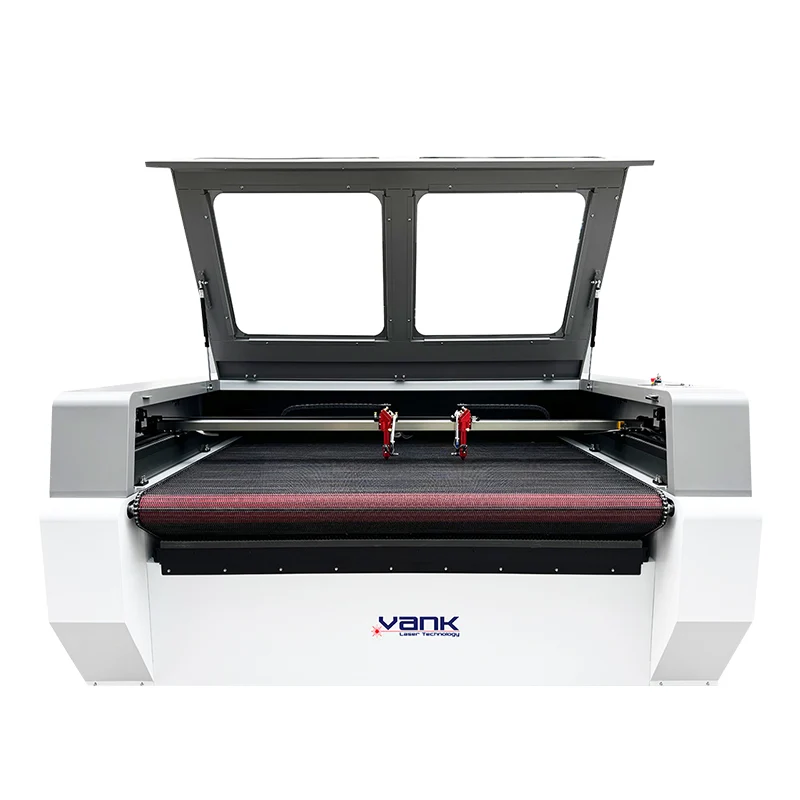
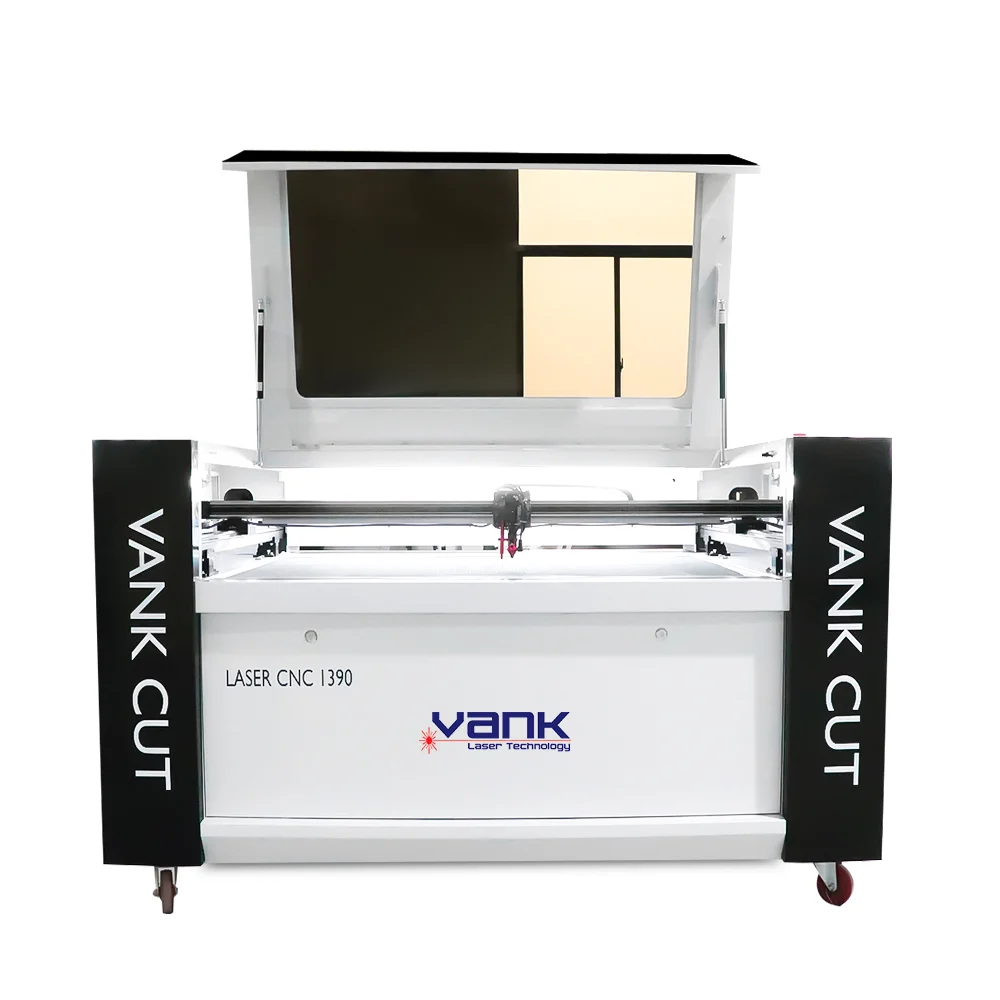
For small and medium acrylic work, a medium-format machine such as the 1490 CO2 лазерная гравировальная машина для резки is usually practical because it supports common advertising, craft, leather, packaging, acrylic cutting, and wood engraving applications. Vank Laser lists 900×600 mm, 1300×900 mm, 1600×1000 mm, and 1300×2500 mm working area options on the 1490 CO2 machine page, with honeycomb and knife blade platform options
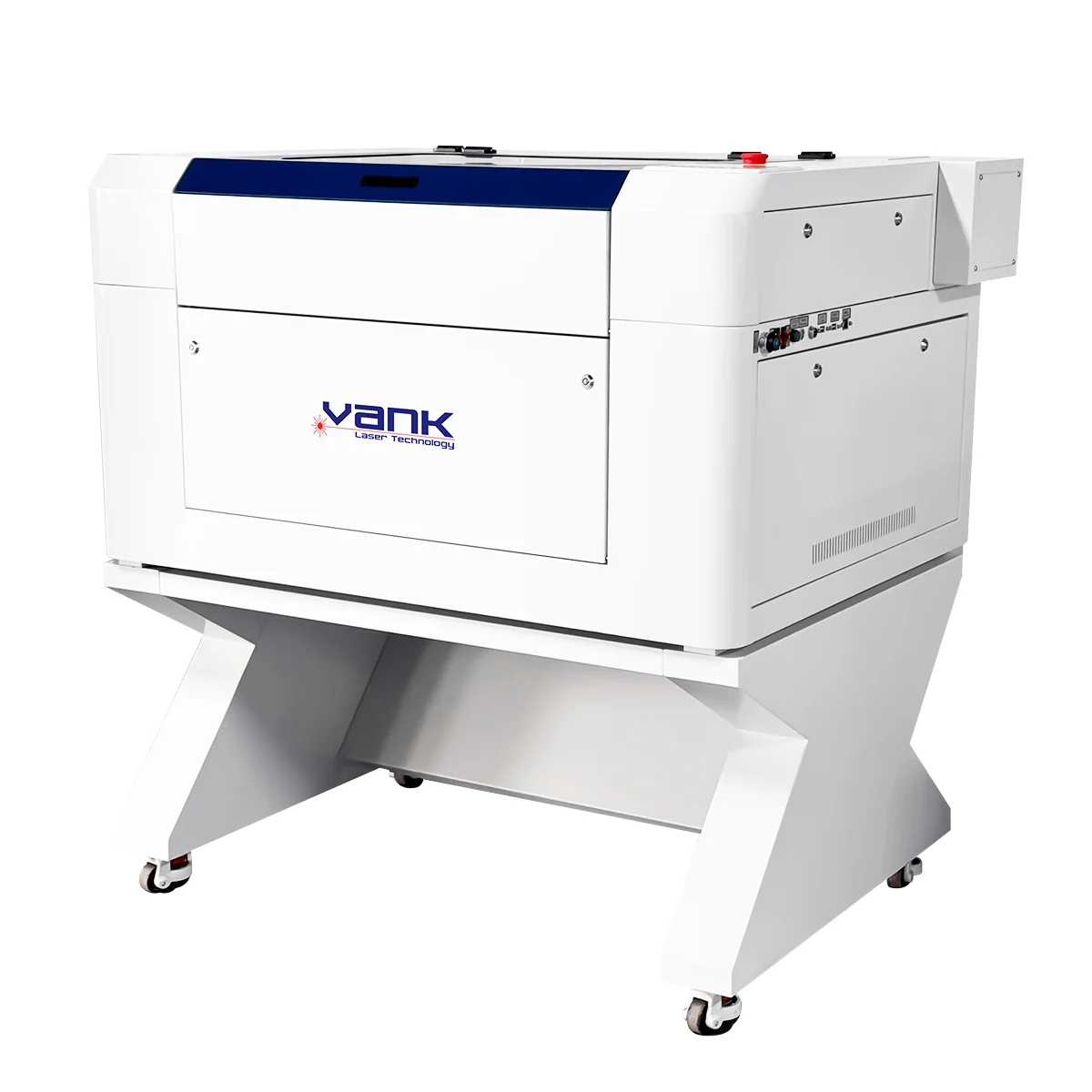
For smaller acrylic parts, sample work, craft engraving, paper cutting, and compact workshop use, the Высокоскоростной CO2 лазерный гравировальный станок для резки can be considered. Its product page lists smaller cutting areas such as 600×400 mm, 700×500 mm, and 900×600 mm, making it more suitable for smaller materials and limited workshop space
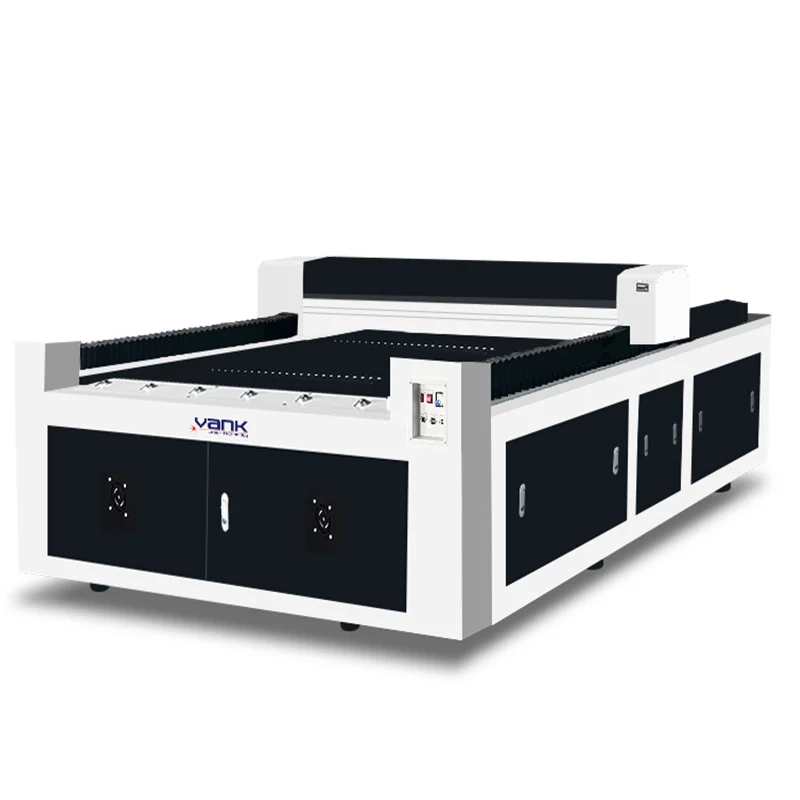
For large acrylic sheets, display boards, and advertising panels, buyers should consider a larger working area such as a 1325 platform. The Advertising Industry product category includes the 1325 Big Platform CO2 Laser Engraving Cutting Machine, 1610 CO2 models, CCD camera CO2 cutting machines, and mixed CO2 engraving cutting machines for sign and advertising-related work.
Choosing a CO2 Laser Machine for Wood, MDF and Plywood
Wood materials are not as consistent as acrylic. Natural wood, MDF, plywood, bamboo, and veneer boards may have different density, glue content, moisture level, coating, and surface finish. These factors affect cutting speed, smoke volume, edge color, and engraving depth.
For wood and MDF processing, buyers should confirm:
- wood type or board type;
- cutting thickness;
- whether the work is cutting, engraving, or both;
- expected edge color;
- smoke extraction requirements;
- whether the board surface is coated or laminated;
- whether the product requires fine engraving detail.
MDF and plywood usually create more smoke and residue than acrylic. A reliable exhaust fan, air assist, clean optical path, and suitable table structure are important for stable processing. For deeper engraving or thicker board cutting, the supplier should recommend laser power based on the actual material, not only a general wattage range.
For mixed acrylic and wood use, the 1610 CO2 лазерная гравировальная машина для резки can be used as an internal recommendation option. The page lists 70W–150W CO2 laser power, optional working areas, honeycomb and knife blade platforms, Ruida controller, LightBurn compatibility, and applications including advertising, crafts, leather, toys, clothing, models, packaging, paper, acrylic engraving, wood engraving, acrylic cutting, and wood cutting
Choosing a CO2 Laser Machine for Fabric
Fabric cutting is different from acrylic and wood processing. The main issue is often not only laser power, but also feeding, positioning, cutting speed, and material handling.
A basic flatbed CO2 laser machine may be enough for sheet fabric, felt, leatherette, samples, and small-batch work. For roll materials or continuous garment production, a conveyor table and automatic feeding system are usually more suitable.
Fabric buyers should confirm:
- roll width or sheet size;
- fabric type;
- whether the fabric is woven, knitted, felt, lace, polyester, nylon, or nonwoven;
- whether the material stretches during cutting;
- cutting pattern size;
- daily cutting quantity;
- whether the material is printed;
- whether contour cutting is required.
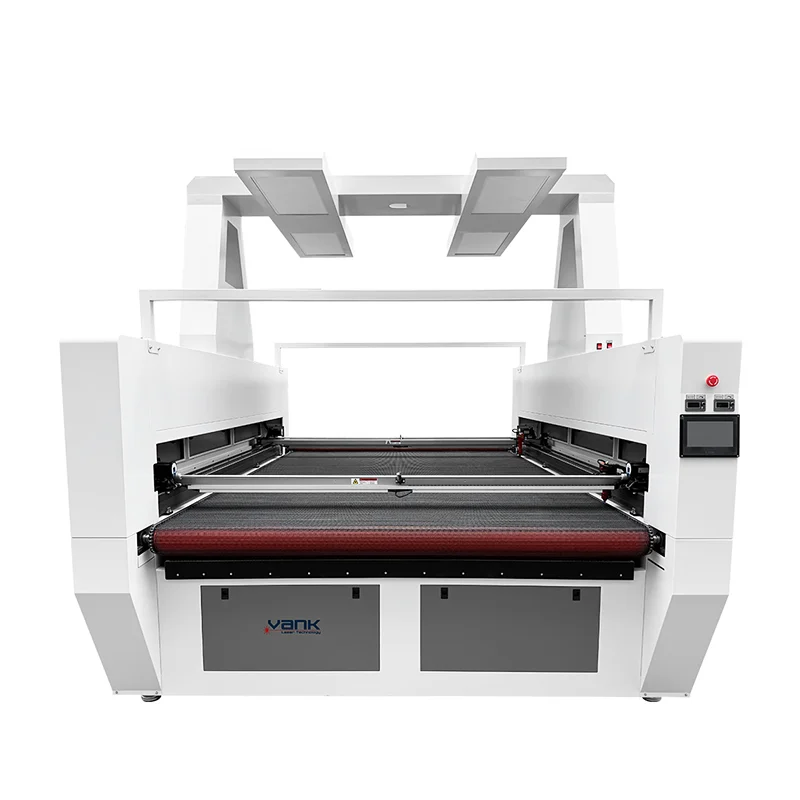
For printed textiles, sportswear, soft signage, lace, labels, and roll material processing, the CO2 Laser Fabric Cutter with Auto Feeding and Vision Camera is more suitable than a standard flatbed cutter. The product page describes it for sublimation prints, sportswear, soft signage, home textiles, customized apparel, embroidered fabrics, lace, and other roll materials requiring accurate contour cutting.
If the fabric has printed outlines, logos, patterns, or irregular layouts, the machine may need a camera positioning system. A standard cutting file is not always enough when the print position varies from piece to piece.
When to Choose CCD Camera Positioning
A CCD camera or visual positioning system is not necessary for every CO2 laser machine. It becomes useful when the cutting path must follow a printed outline or reference mark.
CCD camera positioning is suitable for:
- printed fabric contour cutting;
- sublimation sportswear;
- labels and patches;
- printed acrylic panels;
- packaging samples with printed outlines;
- leather pieces with printed or marked patterns;
- mixed layouts with different angles.
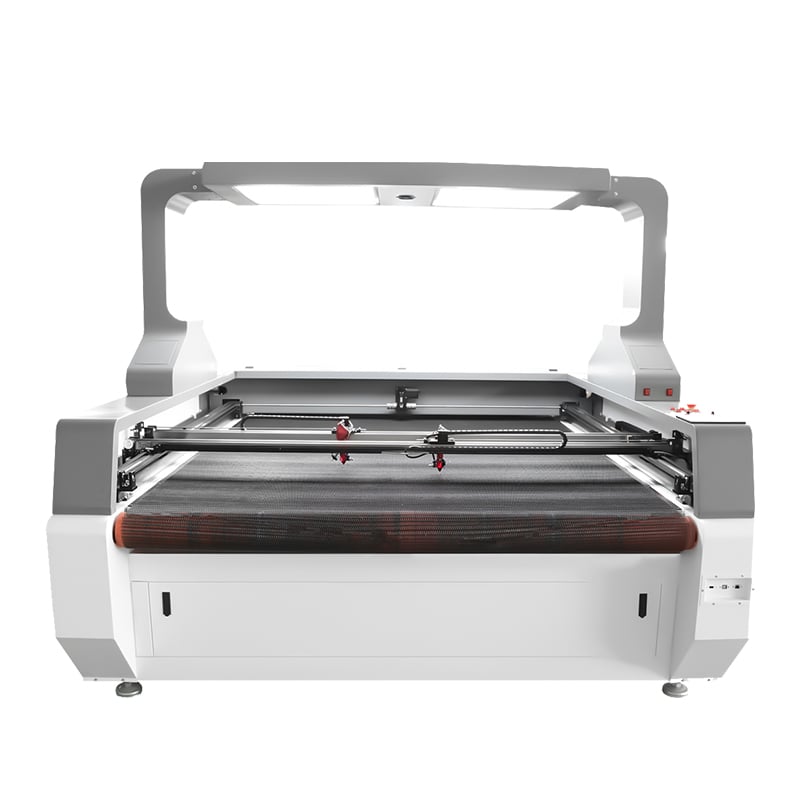
The CO2 Laser Cutting Machine with CCD Camera Visual is designed for accurate cutting and engraving of non-metal materials such as fabric, leather, acrylic, wood, paper, and plastic. Its page states that the CCD camera scans the working area, identifies reference marks or printed outlines, and improves positioning accuracy for more consistent cutting results
For blank acrylic sheets, normal wood panels, or simple fabric sheets, CCD may not be necessary. For printed materials, it can reduce manual alignment and improve batch consistency.
Laser Power Selection
Laser power affects cutting thickness, cutting speed, and processing stability. However, higher power is not always better. Fine engraving, thin material cutting, and fabric processing may require stable control more than maximum wattage.
General selection logic:
| Приложение | Power Consideration |
|---|---|
| Thin acrylic engraving and cutting | Moderate power with stable beam quality |
| Thick acrylic cutting | Higher power and stable output |
| Wood engraving | Stable control and suitable engraving parameters |
| MDF / plywood cutting | Higher power, air assist, and smoke extraction |
| Fabric cutting | Cutting speed, feeding system, and edge effect |
| Printed fabric contour cutting | Vision positioning is often more important than higher power |
For acrylic and wood workshops, buyers often compare 80W, 100W, 130W, and 150W configurations. For fabric, the suitable configuration depends more on fabric type, roll width, feeding method, and whether the material is printed.
The supplier should recommend power based on real material samples, thickness, and production goals. A buyer cutting 3 mm acrylic signs does not need the same configuration as a factory cutting thicker MDF every day.
Working Table Size
The working area should match the material size and production method. Choosing a table that is too small causes repeated repositioning. Choosing a table that is too large increases machine cost, shipping cost, floor space, and loading requirements.
Common selection logic:
| Working Area Type | Suitable Use |
|---|---|
| Small format | samples, gifts, labels, small craft engraving |
| Medium format | acrylic signs, wood crafts, leather, packaging, general workshop use |
| Large format | acrylic sheets, MDF panels, display boards, furniture decoration |
| Conveyor table | roll fabric, textile, leatherette, continuous cutting |
| Camera table | printed materials, contour cutting, label cutting |
For advertising workshops processing acrylic and wood, 1490 or 1610 machines are often practical. For larger panels and sheet processing, a 1325 big platform machine is more suitable. For roll fabric production, a conveyor and auto feeding system should be considered.
Honeycomb Table, Knife Blade Table or Conveyor Table
The table structure affects material support and cutting quality.
A honeycomb table is suitable for thin materials, paper, leather, fabric sheets, small parts, and engraving work. It supports flexible materials better and helps reduce deformation during processing.
A knife blade table is suitable for acrylic, wood, MDF, and larger sheet materials. It reduces the contact area under the workpiece and is practical for cutting thicker or rigid sheets.
A conveyor table is used for roll materials such as fabric, textiles, leatherette, soft signage, and lace. It is usually combined with automatic feeding for continuous production.
For buyers processing several material types, a machine that supports both honeycomb and knife blade platforms gives more flexibility. Vank Laser’s 1490 and 1610 CO2 product pages both list honeycomb and knife blade platform options.
Material Compatibility and Safety
CO2 laser machines are suitable for many non-metal materials, but buyers should not assume that every plastic or coated material can be processed safely.
Common suitable materials include:
- acrylic;
- wood;
- MDF;
- plywood;
- bamboo;
- leather and leatherette;
- fabric and textile;
- paper and cardboard;
- rubber;
- foam;
- selected plastic sheets.
PVC and chlorine-containing plastics should not be cut with a CO2 laser because they may release harmful gases and damage machine parts. Some coated boards, laminated materials, and unknown plastics should be checked before processing.
For unfamiliar materials, buyers should send the material name, photos, thickness, and sample if possible. A test cut is more reliable than only relying on a general material list.
Cutting and Engraving Are Different Requirements
Many buyers ask for a “CO2 laser cutting and engraving machine,” but cutting and engraving require different settings.
For cutting, the main concerns are:
- laser power;
- material thickness;
- cutting speed;
- edge quality;
- smoke extraction;
- air assist;
- table structure.
For engraving, the main concerns are:
- surface detail;
- engraving depth;
- motion accuracy;
- laser spot quality;
- software control;
- repeatability.
Acrylic sign makers usually care about clean cutting edges and stable production. Wood product suppliers may care more about engraving depth and contrast. Fabric factories usually focus on feeding, pattern accuracy, and production speed.
The best machine is not the one with the highest power. It is the one that matches the buyer’s real production process.
Recommended Vank Laser Product Directions
For different applications, buyers can compare these product directions:
| Buyer Requirement | Recommended Product Direction |
|---|---|
| Small acrylic, craft, paper, leather, and wood engraving | Высокоскоростной CO2 лазерный гравировальный станок для резки |
| General acrylic signs, wood, leather, packaging, advertising workshop use | 1490 CO2 лазерная гравировальная машина для резки |
| Medium and larger non-metal cutting and engraving work | 1610 CO2 лазерная гравировальная машина для резки |
| Large acrylic sheet, MDF panel, display board, and advertising panel work | CO2 Laser Engraving Cutting Machines for Advertising |
| Printed labels, printed acrylic, contour cutting, and multi-angle layouts | CO2 Laser Cutting Machine with CCD Camera Visual |
| Printed fabric, sublimation textile, sportswear, lace, and roll material cutting | CO2 Laser Fabric Cutter with Auto Feeding and Vision Camera |
This section is important for SEO and conversion because it connects the article with your real product pages instead of leaving the reader at a general information level.
What Buyers Should Send Before Requesting a Quote
To recommend a suitable CO2 laser cutting and engraving machine, the supplier needs more than a machine name. Buyers should prepare the following information:
| Information | Example |
|---|---|
| Main material | acrylic, MDF, plywood, fabric, leather |
| Material thickness | 3 mm acrylic, 6 mm MDF, 2 mm leather |
| Maximum material size | 1220 × 2440 mm sheet, 1600 mm fabric roll |
| Main process | cutting, engraving, marking, contour cutting |
| Daily production volume | sample work, small batch, continuous production |
| Required cutting edge | smooth edge, sealed edge, low burning, standard finish |
| Printed or blank material | determines whether CCD camera is needed |
| Sheet or roll material | determines table and feeding structure |
| Destination country | affects voltage, plug, packing, and shipping |
| Special configuration | auto feeding, dual heads, rotary device, CCD camera |
For acrylic, buyers should send sheet thickness, sheet size, product photos, and edge requirements.
For wood or MDF, buyers should send board type, thickness, density if available, and whether the job is cutting or engraving.
For fabric, buyers should send roll width, fabric type, printed pattern photos, and whether contour cutting is required.
ЧАСТО ЗАДАВАЕМЫЕ ВОПРОСЫ
What is the best CO2 laser cutting and engraving machine for acrylic?
For general acrylic signs, display parts, nameplates, and advertising materials, a medium-format CO2 laser engraving cutting machine such as a 1490 or 1610 model is often practical. For large acrylic sheets or display panels, a larger platform should be considered.
Can one CO2 laser machine cut acrylic, wood and fabric?
Yes, one CO2 laser cutting and engraving machine can process acrylic, wood, MDF, plywood, fabric, leather, paper, and other non-metal materials if the configuration is selected properly. The buyer should confirm material thickness, table size, feeding method, and whether camera positioning is needed.
What laser power should I choose for acrylic cutting?
The suitable laser power depends on acrylic thickness, cutting speed, and edge quality requirements. Thin acrylic can be processed with moderate power, while thicker acrylic usually requires higher power and stable laser output.
Is a CO2 laser machine suitable for wood and MDF?
Yes. CO2 laser machines are widely used for wood, MDF, plywood, bamboo, veneer, craft products, models, and decorative parts. For MDF and plywood, smoke extraction and air assist are important because these materials produce more smoke and residue.
Do I need a CCD camera for CO2 laser cutting?
A CCD camera is recommended when the machine needs to cut along printed outlines, labels, patches, sublimation fabric, printed acrylic panels, or irregular layouts. For blank sheet cutting, a standard CO2 laser machine may be enough.
What CO2 laser machine is suitable for fabric cutting?
For sheet fabric and sample cutting, a standard flatbed CO2 laser machine may be used. For roll fabric, sportswear, sublimation textile, lace, and printed fabric contour cutting, a CO2 laser fabric cutter with automatic feeding and vision camera is more suitable.
What materials should not be cut with a CO2 laser?
PVC and chlorine-containing plastics should not be cut with a CO2 laser because they may release harmful gases and damage the machine. Unknown plastics, coated sheets, and laminated materials should be checked before cutting.
What information is needed for a CO2 laser machine quotation?
Buyers should provide material type, thickness, maximum size, cutting or engraving requirements, sample photos or drawings, daily production volume, destination country, and any special needs such as CCD camera, auto feeding, rotary attachment, dual heads, or large-format table.
How to Get a Suitable CO2 Laser Machine Recommendation
Choosing a CO2 laser cutting and engraving machine should start from the material, not from the machine price alone. Acrylic buyers should focus on clean cutting edges, stable laser power, and suitable working size. Wood and MDF users should check cutting thickness, smoke extraction, air assist, and engraving detail. Fabric buyers should consider roll width, feeding method, cutting speed, and whether printed pattern positioning is required.
Vank Laser supplies different CO2 laser machine configurations for advertising signs, acrylic sheets, wood engraving, fabric cutting, printed textile contour cutting, labels, packaging, leather goods, and other non-metal material applications. To receive a practical recommendation, buyers can send material type, thickness, maximum size, sample photos, expected production volume, destination country, and special configuration requirements.