


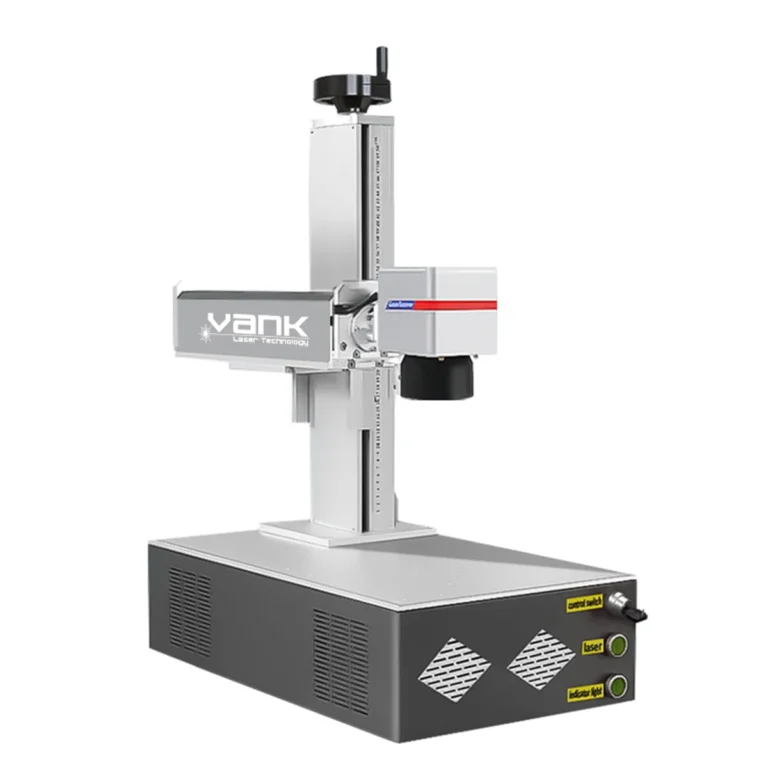
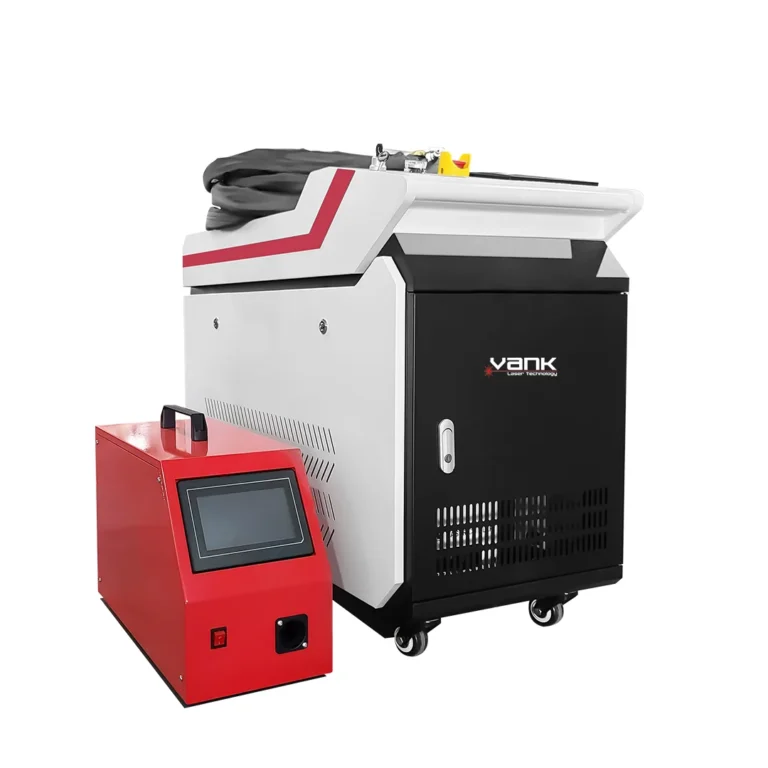
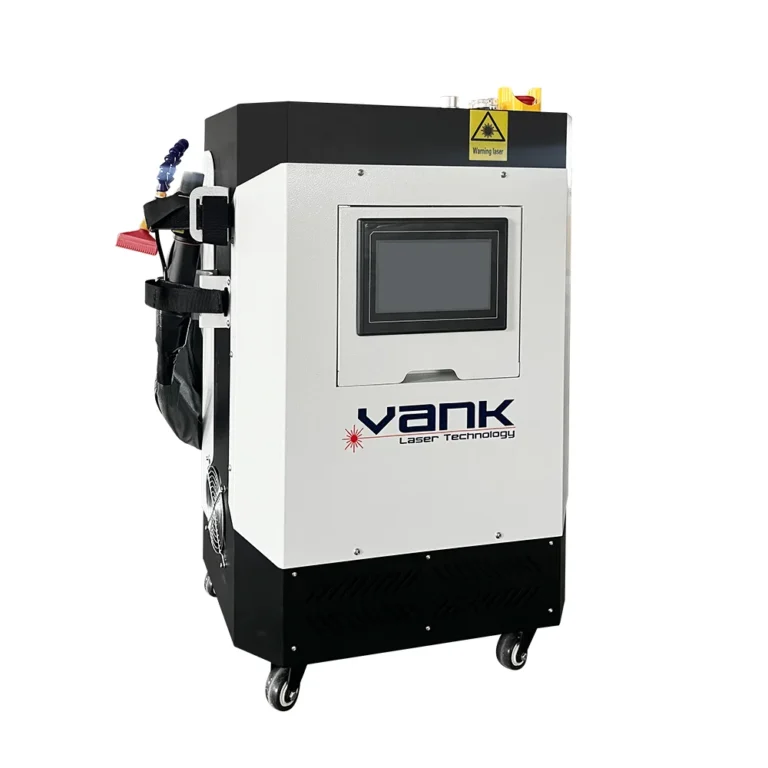
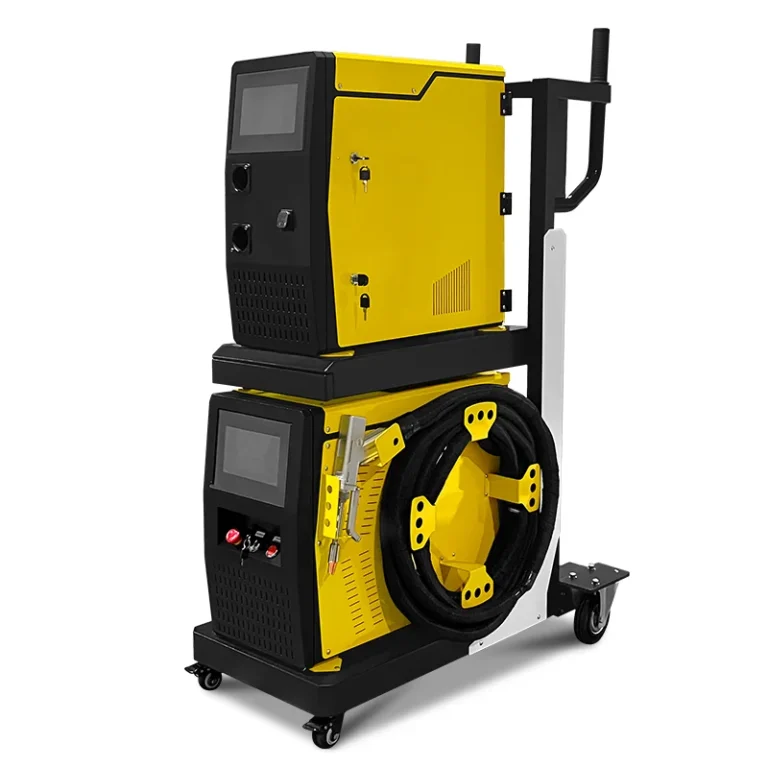
If you have searched for "how does fiber laser welding work, the short answer is that a fiber lasergenerates an intense beam of light carries it through a flexible optical fiber, focuses it onto a tiny spot onthe metal, and malts the joint so that two parts fuse as the molten pool cools At any single point the wholeevent lasts only a fraction of a second, which is why the heat stays local and the finished seam looks cleanThis guide explains every stage in plain language so that buyers, fabricators and students can understandwhat really happens between pressing the trigger and seeing a finished weld.
How Does Fiber Laser Welding Work in Simple Terms
Fiber laser welding is a non-contact joining process. No electrode touches the part and no electric arc jumps across a gap. Instead, the machine converts electrical energy into a beam of near infrared light with a wavelength of about 1070 nanometers. That beam is concentrated into a spot only a fraction of a millimeter wide, and the energy density at this spot is high enough to push steel past its melting point within milliseconds. The metal absorbs the light, forms a small liquid pool, and solidifies into a strong joint as soon as the beam moves along.
It helps to picture the process as five cooperating parts. The laser source produces the light, the optical fiber carries it, the welding head shapes and aims it, the shielding gas protects the molten pool, and the water chiller keeps every component at a stable temperature.
Inside the Fiber Laser Source and the Optical Fiber
The heart of the machine is the laser source. Inside it, a long glass fiber is doped with a rare earth element called ytterbium. Pump diodes shine light into this fiber and excite the ytterbium ions, while reflective gratings at both ends make the light travel back and forth and grow stronger until a stable, powerful beam emerges. Because the fiber itself is the gain medium, there are no mirrors to realign and no gas to refill. This makes the source compact, energy efficient and far easier to maintain than older lamp pumped crystal lasers or CO2 units.
Conduction Mode and Keyhole Mode Welding
We When the beam reaches the workpiece, the metal reacts in one of two ways depending on the power density. In conduction mode the density is moderate, so the surface melts and heat flows downward by conduction. The result is a wide and shallow pool with a smooth, attractive surface, which is ideal for thin sheets, visible seams and delicate parts.provide three optional laser power versions to match different processing requirements:
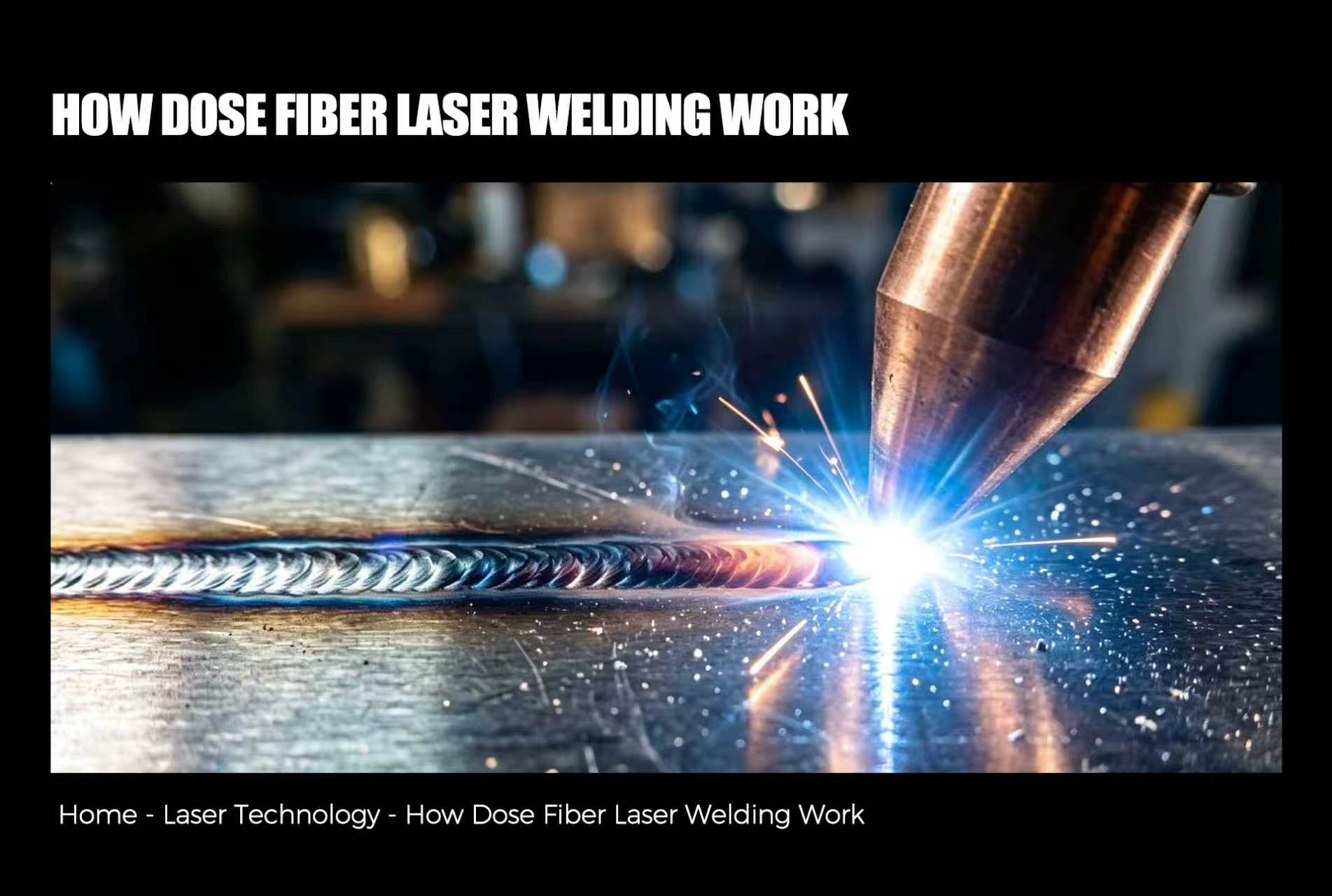
In keyhole mode the density is so high that metal at the center of the spot begins to vaporize. The pressure of that vapor pushes the liquid metal aside and opens a narrow, deep channel that looks like a keyhole. The beam travels down inside this channel and is absorbed along its walls, which explains why a very thin beam can create a deep and narrow weld. As the beam advances, molten metal flows in behind it and closes the channel. This ability to switch between shallow and deep melting is the physical core behind “how does fiber laser welding work” for engineers, and operators control it by changing power, travel speed and focus position.
The Welding Head, Wobble Motion and Shielding Gas
At the end of the delivery fiber sits the laser welding head. It contains a collimating lens that straightens the diverging beam, a focusing lens that concentrates it, and a laser protective glass that shields the optics from spatter and fumes. A welding nozzle at the tip guides the gas flow and keeps the lens at a safe distance from the molten pool.
Many handheld heads also include a small oscillating mirror that sweeps the beam in a line, circle or zigzag pattern. This wobble motion widens the seam, tolerates small gaps between parts and makes manual welding forgiving. When the joint has a larger gap, a wire feeder can add filler metal to bridge it.
Shielding gas, usually argon or nitrogen, flows through the nozzle and covers the pool while it cools. It prevents oxidation, reduces spatter and helps protect the lens. Too little flow leaves dark discoloration and tiny pores in the weld.
Continuous Wave and Pulsed Operation
A continuous wave laser delivers a steady beam and works best for long seams, deeper penetration and high speed welding of steel and stainless steel. A pulsed laser releases its energy in short bursts, which gives the operator tight control over heat input. Pulsed output is well suited to spot welds, very thin parts, heat sensitive components and fine work such as jewelry repair.
A QCW fiber laser sits between the two. It produces pulses with very high peak power but a low average power, so it can melt metal quickly without overheating the surrounding area. The right choice depends on material, thickness and the appearance you expect from the final seam.
Materials, Thickness and Typical Results
How does fiber laser welding work on different metals? The process handles stainless steel, carbon steel, galvanized steel, aluminum alloys, copper, brass, titanium and several nickel alloys. Shiny metals such as aluminum and copper reflect more infrared light at the start of the weld, so they need higher power density, correct focus and sometimes a pulsed start. Once the surface turns liquid, absorption rises sharply and the weld stabilizes.
Achievable thickness depends mainly on power. As a rough guide, a 1500 watt handheld laser welder can join stainless or carbon steel up to about 3 millimeters in a single pass, and higher power extends that range, although joint design and travel speed also matter. The narrow heat affected zone means parts warp less and need little grinding afterward. Factories that weld the same part thousands of times a day often move to a robotic laser welding machine, while small workshops that handle gold or silver items choose a compact jewelry laser welder.Safety and Setup Basics
An industrial welding laser is a Class 4 device, and its beam is invisible. Direct or reflected light can injure eyes and skin in an instant, so every operator needs goggles rated for the 1070 nanometer wavelength, and the work area should be shielded or enclosed. Quality laser safety products such as goggles, curtains and interlocked barriers are therefore part of the machine setup rather than an optional extra.
Welding stainless steel and coated metals also releases fine fumes, so a laser fume extractor should run close to the work zone. Clean surfaces, tight joint fit up and removal of oil or paint before welding all improve results, and the chiller must always hold the correct water temperature.
FAQS
Widely applicable for precision processing of hardware accessories, electronic parts, kitchen hardware, metal crafts, signage and models. It is also perfectly suitable for school laboratory teaching, maker space research and development, personal DIY creation, small-batch customized processing, and advertising craft production.
With multiple power options, desktop compact design and versatile processing capabilities, the 4040 bench-top laser cutter What type of laser is used in fiber laser welding?
Fiber laser welding uses a solid state laser whose gain medium is an optical fiber doped with ytterbium. It emits near infrared light at about 1070 nanometers, which metals absorb efficiently.
Is fiber laser welding better than TIG welding for thin stainless steel?
For thin stainless sheets it is usually faster and produces less distortion because the heat input is lower and the seam is narrower. TIG welding still has value for thick sections and for very irregular joints, so the best choice depends on the job.
Can a fiber laser welder weld aluminum and copper?
Yes, although these metals reflect more light and conduct heat quickly. Higher power density, careful focus, clean surfaces and suitable shielding gas help avoid cracks and porosity.
Do I need shielding gas for fiber laser welding?
In almost every case yes. Argon or nitrogen protects the molten pool from oxygen, improves the look of the seam and reduces spatter on the lens.
How long does a fiber laser source last?
With proper cooling and clean working conditions, many manufacturers rate their sources at around 100,000 hours of operation.is a cost-effective all-round machine for both personal hobby creation and small commercial production. We sincerely welcome global customers and agents to consult and cooperate.
Conclusion
Understanding the answer to “how does fiber laser welding work” removes most of the mystery around the technology. A ytterbium fiber source creates the beam, a flexible fiber delivers it, the welding head focuses it, and the shielding gas and chiller keep the process stable while conduction or keyhole melting forms the joint. The result is a fast, clean and low distortion weld that suits everything from thin kitchenware to automotive parts. If you are comparing options for your workshop, a reliable fiber laser welding machine with the right power, cooling and safety accessories will give the most consistent results over the long term