


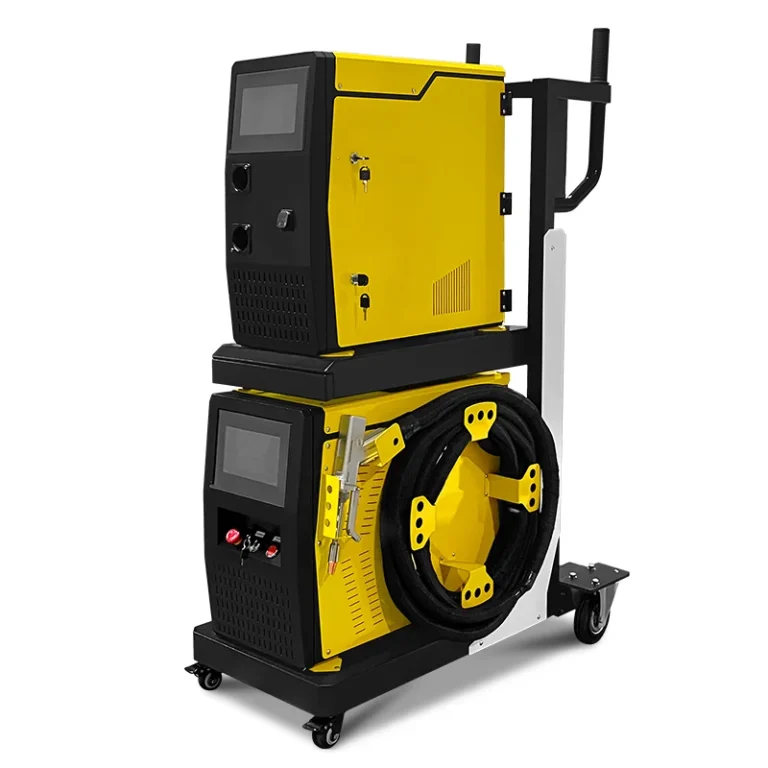
How should a buyer choose a wholesale laser welding machine?
Start with a written production requirement, not a catalog power rating. Record the material grade, thickness range, joint type and gap, target weld profile, filler-wire need, shielding gas, daily volume and downstream finish.
The right supplier is the one that can demonstrate the required joint on representative parts, document the tested configuration and acceptance results, and support installation, training, safety controls, maintenance and spare parts in the destination market.
Compare Supplier Routes Before You Buy
Before requesting a quotation, prepare the following application inputs:
- Material grades, thicknesses, coatings, joint drawings, fit-up tolerance and representative samples.
- Target penetration, weld profile, strength, leak, appearance, distortion and any required destructive or nondestructive tests.
- Expected shifts, part mix, cycle time, filler-wire demand, shielding gas and automation interfaces.
- Destination voltage, environmental limits, applicable conformity documents, laser safety controls, extraction, training and service expectations.
| Buying Route | Potential Benefit | Due Diligence Required |
|---|---|---|
| Direct manufacturer | Configuration access and factory testing | Confirm export support, local service, compliance and delivery responsibility |
| Authorized distributor | Local installation, training and support | Confirm manufacturer authorization, configuration limits and warranty ownership |
| Marketplace or independent reseller | Fast price discovery and broad listings | Verify seller identity, machine origin, integration quality, safety package and after-sales support |
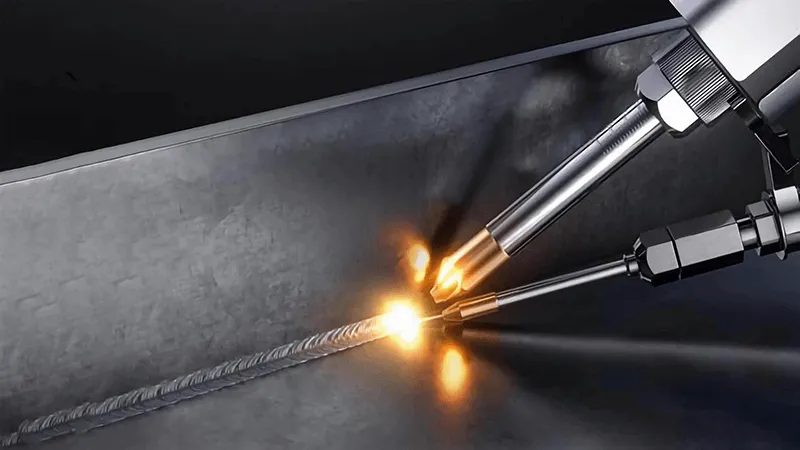
What Determines Laser Welding Machine Cost?
Purchase price is only one part of the installed cost. An incomplete package can add unexpected expense for safety controls, extraction, power conversion, gas supply, tooling, freight, duties, commissioning and operator training.
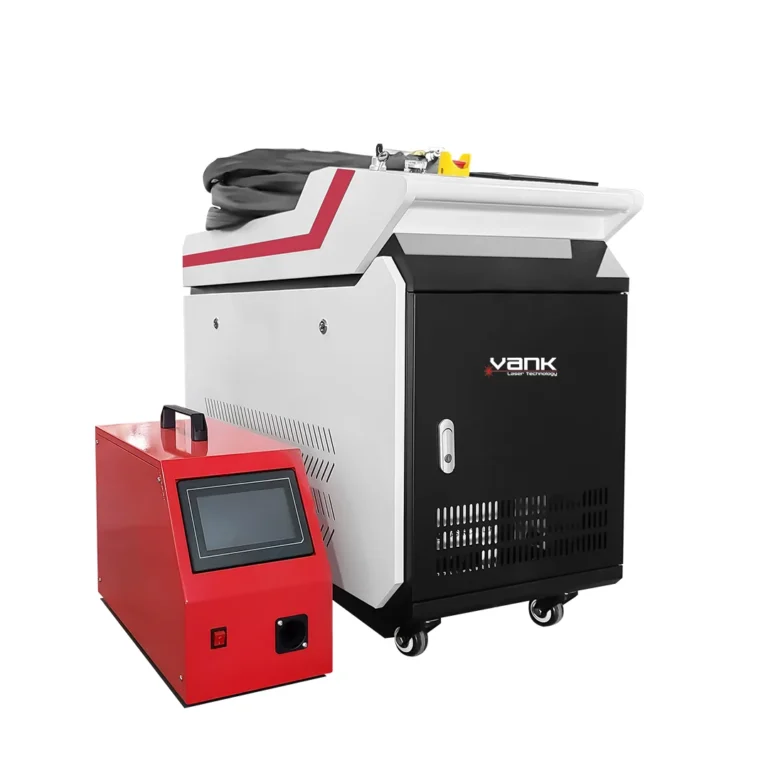
There is no responsible universal price range for a handheld laser welding system. Request an itemized quotation tied to the exact laser source, welding head, chiller, wire feeder, controls, safety package, warranty, delivery terms and included services.
Build a Like-for-Like Cost Model
Compare each supplier against the same scope:
| Cost Group | Typical Impact | What to Compare |
|---|---|---|
| System configuration | High | Laser source, rated power, wobble head, wire feeder, chiller, controls and automation interfaces |
| Safety package | High | Guarding or controlled area, interlocks, emergency stop, beam stops, extraction and risk-assessed PPE |
| Process package | Medium to high | Sample trials, parameter files, fixtures, weld procedure support and acceptance testing |
| Service and spares | Medium | Warranty scope, response time, technicians, remote diagnostics, lenses, nozzles and critical spares |
| Logistics and compliance | Variable | Freight, insurance, duties, voltage, documentation, inspection and destination requirements |
Estimate payback from accepted sample data: measured cycle time, first-pass yield, filler and gas consumption, finishing labor, planned maintenance, consumables and realistic utilization. Do not use an unverified claim of instant payback.
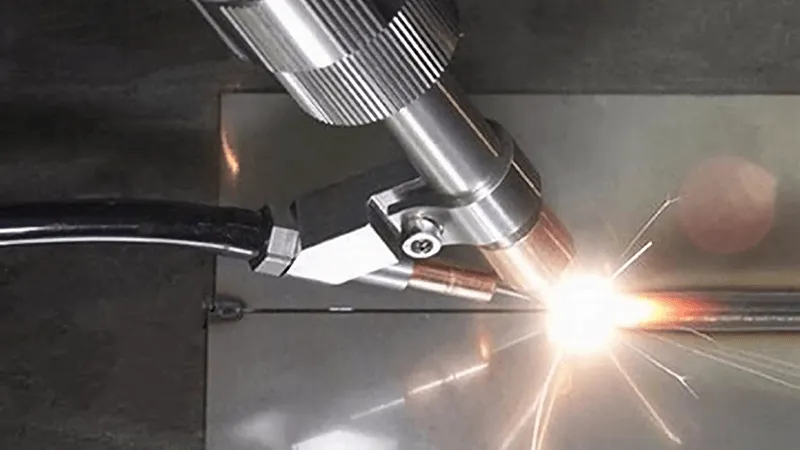
Keep a line-by-line quotation comparison and record every exclusion, option, delivery responsibility and warranty condition before placing the order.
How Do You Select the Right Laser Welding System?
Selection starts with the weld specification and acceptance criteria. Power alone does not determine penetration, strength, porosity, spatter, heat tint or distortion.
Match the process to the alloy, thickness, joint geometry, fit-up and required code or customer specification. Qualify welding parameters and operators when the product or jurisdiction requires a documented procedure.
Use a Documented Selection Framework
1. Qualify Materials and Joints
| Material Family | Qualification Variables | Acceptance Checks |
|---|---|---|
| Carbon and low-alloy steel | Grade, coating, thickness, joint gap and filler wire | Penetration, profile, spatter, strength, distortion and coating removal |
| Stainless steel | Grade, finish, shielding gas and cleanliness | Penetration, heat tint, oxidation, corrosion requirements and cleanability |
| Aluminum alloys | Alloy, temper, oxide condition, fit-up and filler wire | Porosity, cracking, penetration, distortion and surface finish |
2. Define Throughput and Automation
Decide whether the real workflow needs handheld operation, a positioning table, seam tracking, synchronized wire feeding or robotic automation. Include loading, tacking, turning, inspection and finishing time when calculating throughput.
3. Verify Supplier Evidence
Verify the legal supplier name, manufacturing address, serial-number system, conformity documents, manuals, electrical drawings, software licenses, warranty exclusions, spare-parts list, training scope and response path for service.
Require a factory acceptance test on agreed samples and data, followed by installation and site acceptance checks. Retain parameter files, weld records, inspection results and operator sign-off instead of relying on a sales demonstration.
How Long Can a Handheld Laser Welder Remain Serviceable?
Service life affects total cost, but a calendar-year promise is not a useful purchasing specification. Uptime depends on operating conditions, cooling, contamination control, consumables, maintenance discipline and parts availability.
Ask for the laser-source and chiller warranties, rated environmental limits, duty-cycle conditions, alarm history access, preventive-maintenance schedule and end-of-warranty service options. Avoid fixed lifespan claims that are not backed by the component manufacturer.
Service Life Depends on Maintenance and Support
1. Control Cooling and Environment
Maintain coolant type, temperature, flow, filters and ambient conditions exactly as the manufacturer specifies. Trend alarms and stop production when cooling or condensation falls outside the approved range.
2. Protect the Optical Path
Protective lenses, nozzles, windows, fiber connectors and the welding head are sensitive to spatter, smoke, dust and incorrect cleaning. Use approved inspection methods and replace consumables before contamination damages higher-value optics.
3. Respect the Rated Operating Window
Operate only within the rated process window. Continuous high-load production must be confirmed by the source, chiller and integrator specifications; an arbitrary percentage such as 70 or 80 percent is not a universal rule.
| Component | Evidence to Request | Preventive Care |
|---|---|---|
| Laser source | Warranty, rated duty, environmental limits and diagnostic logs | Maintain cooling and ambient conditions within the approved range |
| Handheld head and optics | Spare list, protective-lens life and contamination indicators | Inspect and clean by the approved method; replace wear parts on condition |
| Chiller and filters | Capacity, alarms, coolant specification and service schedule | Maintain temperature, flow, filters and coolant to the manufacturer schedule |
| Controls and wire feeder | Software backup, parts availability and calibration instructions | Check grounding, cables, rollers, liner, feeding stability and parameter backups |
Treat serviceability as evidence: documented maintenance intervals, stocked wear parts, remote diagnostics, qualified technicians, repair turnaround and version-controlled backups.
Record coolant service, filter changes, protective-lens consumption, alarms, parameter revisions and repair history so recurring problems are visible before they become downtime.
Are Compact Handheld Laser Welders Suitable for Production?
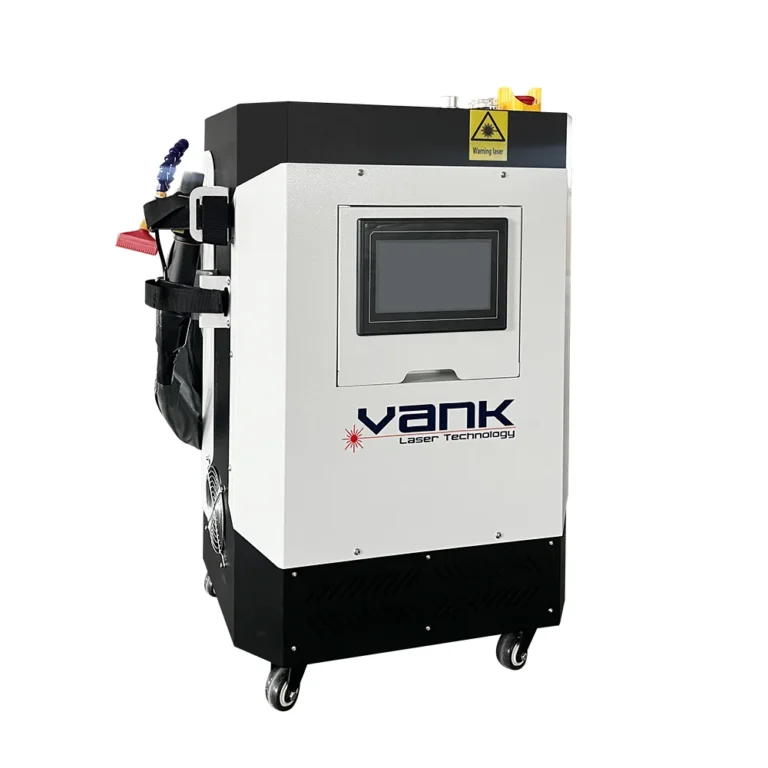
Compact handheld systems can be productive when the application, fit-up, safety plan and quality controls have been qualified. Small cabinet size does not make the laser hazard or welding risk small.
They are commonly evaluated for thin-gauge sheet-metal seams and fabricated assemblies with repeatable access. Micro-welding, battery tabs, jewelry and safety-critical repairs may require different pulsed systems, fixtures, monitoring or code qualification.
Evaluate Compact Systems by Application, Not Size
1. Combine Mobility with Engineered Safety
Portability must not bypass beam control. Treat an open-beam handheld welder as a high-power laser process: complete a site-specific hazard assessment and provide controlled access, interlocks or engineered guarding, beam stops, wavelength-specific protection, extraction, fire controls and trained operators.
2. Choose Suitable Production Uses
| Production Area | Typical Application | Qualification Focus |
|---|---|---|
| Sheet-metal fabrication | Thin-gauge corner, lap and butt seams | Sample weld, joint gap, penetration, strength, spatter and distortion |
| Cabinets and food-service equipment | Stainless enclosures, frames, sinks and seams | Finish, heat tint, leakage, cleanability and corrosion requirements |
| Automotive and general fabrication | Approved new assemblies and non-safety-critical repair work | Application approval and any required procedure, operator or code qualification |
3. Define Distributor Responsibilities
For distributors, the obligation continues after the sale. Provide the correct manuals and labels, preserve safety interlocks, verify destination voltage and compliance, train the customer, define escalation routes and stock the consumables promised in the quotation.
Release a wholesale laser welding machine only after the customer application, supplied configuration, safety controls, acceptance samples, documentation, training and service responsibilities are recorded and signed off.
- Send representative parts and the completed requirement checklist to the supplier; approve the machine only after documented sample, safety and acceptance reviews.